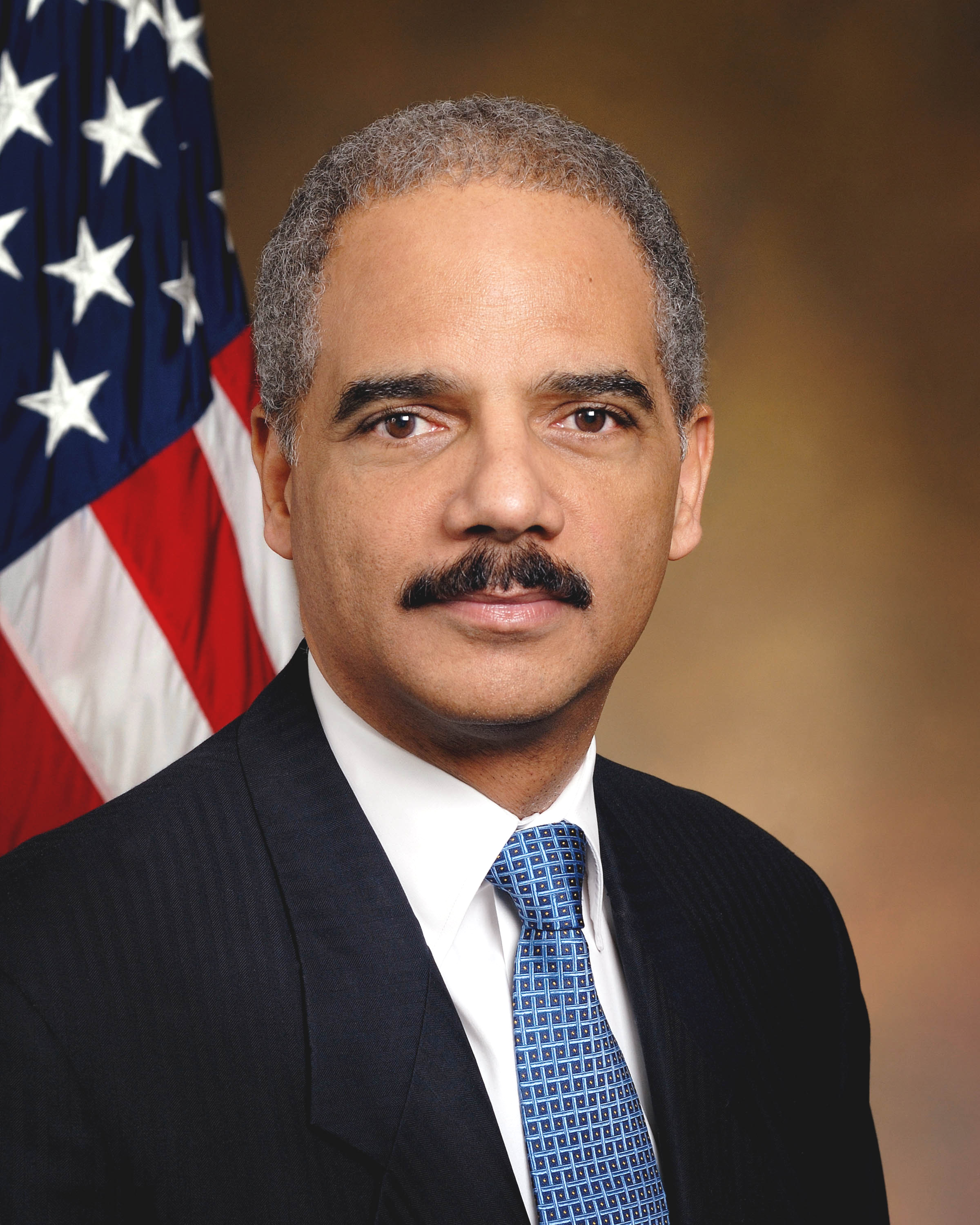
Eric Holder
Lawyer and former United States Attorney General
30
APPEARANCES
21
PODCASTS
Nov 6, 2026

speaker_0ADVERTISER
too good a job.

Eric HolderGUEST
And so what we have tried to do is to come up with ways in which through litigation, through activating citizens to protest, ways in which their abilities to cast votes in a meaningful way was taken away.
Eric HolderGUEST
And it not only becomes a question of politicians picking their voters, it also has come to symbolize in ways in which politicians are trying to take power away from, rights away from certain communities.
Eric HolderGUEST
And if you look at what happened in the South after the Calais decision from the Supreme Court just recently, you know, trying to take away black representation, Latino representation.
5 MINS LATER

Michael SteeleHOST
So how do you continue to educate people in the work you're doing about what this process is and why it's so valuable to their ability to access the franchise? And how do you at a state by state level push back against these efforts, as Simone noted, you know, where the legislature is saying, well, we're just going to go ahead and start another midterm redistricting effort.


Andrew GillumHOST
I'm just curious, what lesson do you think If they were listening, the people in the back of the room, and those would be the Republicans who thought they could heist the country with this redistricting scheme, what's the lesson? What should they pick up from this? And how should it instruct members of Congress as they come back of how we can restrengthen the Voting Rights Act so these aren't our fights?
Eric HolderGUEST
Well, I think people, we need to learn from the effort that we put together to dismantle the Republican effort to gerrymander their way to a House majority.
Eric HolderGUEST
People expected Democrats, when Trump said, I need those five extra seats to clutch our pearls, that I go on, come on, talk to you guys, do something on the internet, maybe write an op-ed.
Eric HolderGUEST
to respond in California, to file lawsuits, to get people to come out and voice their opposition.


Ben MeiselasHOST
I'd love to hear as much as you can share about what that looks like, because I think after I spoke with Raskin and Himes, the audience felt a little bit more confident and comfortable that there were, look, Trump's going to throw everything, but we have top level people who are thinking through each of these steps.
Eric HolderGUEST
One I did up on the Hill, and we had various members of Congress playing different people.
Eric HolderGUEST
I mean, you know, somebody played Mike Johnson, somebody played the DHS secretary, and we went through a whole range of scenarios.
Eric HolderGUEST
No, I'll just say Mark Elias was there in addition to other lawyers to try to figure out how are we going to respond if the Republicans tried to do, you know, name, fill in the blank.
11 MINS LATER
Ben MeiselasHOST
What's your message? What's your message to people right now on election day, Attorney General Holder?

Eric HolderGUEST
She ran a campaign and said a whole bunch of negative things that were true about Mike Rogers, and then she's standing next to him and still professing to want to be a good Democrat opposing Donald Trump, knowing that Mike Rogers is just going to be another senator who will support the policies that she says she's against.
Eric HolderGUEST
And then to do it so late in the campaign to do it in the setting that you talked about.
7 MINS LATER

Don LemonHOST
What are you hearing from Black folks, and why is that message so important right now?

Eric HolderGUEST
And, you know, the other thing you have to ask yourself is what's the harm here? Again, the appearances are not good.
Eric HolderGUEST
But in terms of substance, the people of Alaska have the ability, if you look at the ballot next to Senator Sullivan, it says incumbent.
Eric HolderGUEST
And so if you want to vote for Senator Sullivan, you just look there and read that.

Kaitlan CollinsHOST
Now that we're getting closer, Do you think it maybe backfired on Republicans or how are you looking at it now, politically speaking?

Eric HolderGUEST
Well, what I've said is that given the moment in which we find ourselves, Republicans are attacking our system.
Eric HolderGUEST
And so what are Democrats supposed to do? Nothing while they actually destroy the system.
Eric HolderGUEST
And so what I've said is that we have to take necessary steps on a temporary basis, save our democracy, and then ultimately heal it.
Eric HolderGUEST
And I think what the governor is talking about in Maryland, something that I support and what I also supported, I also supported what Governor Newsom did in California, again, on a temporary basis, is to respond to that which Republicans have started.
Eric HolderGUEST
said, I want five extra seats in Texas, the question was, what are Democrats going to do in response? I think a lot of people expected us to clutch our pearls, to write op-eds, come on, talk to you on television.
Eric HolderGUEST
But what we decided to do, and I'm head of the National Democratic Redistricting Committee, what we decided to do was to fight back.

Eric HolderGUEST
Well, what I've said is that given the moment in which we find ourselves, Republicans are attacking our system.
Eric HolderGUEST
And so what are Democrats supposed to do? Nothing while they actually destroy the system.
Eric HolderGUEST
And so what I've said is that we have to take necessary steps on a temporary basis, save our democracy, and then ultimately heal it.
Eric HolderGUEST
And I think what the governor is talking about in Maryland, something that I support and what I also supported, I also supported what Governor Newsom did in California, again, on a temporary basis, is to respond to that which Republicans have started.
Eric HolderGUEST
said, I want five extra seats in Texas, the question was, what are Democrats going to do in response? I think a lot of people expected us to clutch our pearls, to write op-eds, come on, talk to you on television.
Eric HolderGUEST
But what we decided to do, and I'm head of the National Democratic Redistricting Committee, what we decided to do was to fight back.

6:27

But did you ever think that the Republicans would go so far as to do a mid-cycle redistricting for the sole purpose of rigging an election to try to ensure that Republicans would have a majority?
Eric HolderGUEST
never quite understood what it is that they were going to do to try to rig the system, but they've certainly gone beyond whatever my most concerning expectations were.
Eric HolderGUEST
When they made the determination, or Trump made the determination that he was gonna seek five seats in Texas mid-cycle, We didn't just flush our pearls, have me come on the show and complain to you guys, write an op-ed.

Jackie AlemanyHOST
How do you square that with former Attorney General Merrick Garland being one of the most unpopular attorney generals in the aftermath of the Biden years, who faced a lot of criticism over his institutionalist approach and that independence that you refer to that he so rigidly adhered to?


Alex WagnerHOST
OK, so he's talking about the before, during and after the elections, right? What is the right way? Is this the strategy Democrats and people who care about democracy should use, like telegraphing ahead and dismissing the inevitable conspiracy theories? What is the best way to talk about these threats in a way that doesn't stoke fear among the public and make them feel like their votes won't count, but also preemptively neutralizes any ridiculous arguments Trump and his allies will make about why ballots need to be seized or the vote was fraudulent?
Eric HolderGUEST
Yeah, we do have to find that sweet spot so that we are putting out there that which we are concerned about so that people get, I guess, desensitized to the impact that, you know, things that Trump or his minions might say in terms of, you know, what some foreign country has done or just things about fraud more generally.
Eric HolderGUEST
But not be alarmist and say things in such a way that people get either freaked out and decide, again, not to participate or concerned about what their individual safety might be if they're going to be approaching a ballot.
Eric HolderGUEST
And so I think, you know, it's incumbent upon us to be responsible, to share facts with people and say, you know, this is what you're likely to hear.
Eric HolderGUEST
And so, and really emphasize again to people that the great likelihood is that you're gonna be able to just cast your ballot, make that plan, cast your ballot, your ballot is gonna be counted appropriately.
41 MINS LATER


Chris HayesHOST
What do you think about where things stand now, and how important the election night's results are to whatever course correction needs to happen so that we are not mired in this cycle indefinitely?
Eric HolderGUEST
I mean, first off, why are they doing this? Well, they're doing this because they're unbelievably unpopular.
Eric HolderGUEST
And so as a result of that, they decided that what they needed to do was to cheat to try to keep control of the House of Representatives.


David FrumHOST
As the Voting Rights Act has been r- reduced in scope by the courts, what does that mean for the future of free and fair elections in the United States, and, and how do you- How do you move to a more colorblind system of, of seat allocation while protecting the often infringed upon rights of minority voters to have their votes taken seriously, count, and count equally?
Eric HolderGUEST
Yeah, you know, there's not a tension necessarily between trying to protect the rights of people of color and making sure that, uh, lines are drawn in such a way that they are more generally fair.
Eric HolderGUEST
Um, to allow communities, various communities of interest to vote in a cohesive way is not inconsistent with having a system that is perceived to be, um, fair.
Eric HolderGUEST
The Voting Rights Act was, uh, I think, uh, really it's, it was the crown jewel of, uh, of the civil rights movement, and allowed for the registration of African Americans, particularly in the South, the flowering of African American political power, and then after that, Hispanic political power.
Eric HolderGUEST
The retreat by this Supreme Court, or the demolition of the Voting Rights Act by this Supreme Court, I think has had, and will continue to have, a negative impact on fairness, um, around the country.
Eric HolderGUEST
But I also think it's an interesting thing, i- if you, again, ban partisan gerrymandering, in those places where you have a history of, uh, racialized, um, racialized voting, polarized, uh, polarized in racial voting, uh, banning partisan gerrymandering has the, uh, the equal effect of eli- eliminating, um, racial gerrymandering, particularly in, in the, in the South.


Alicia MenendezHOST
And so I wonder for you, as you have this chance to reflect back, what to you remains undone?
Eric HolderGUEST
You know, I think history is going to be kind to Barack Obama and I think kind to our administration.
Eric HolderGUEST
And I'm concerned about the ways in which, you know... people, powers being taken away from the people.
Eric HolderGUEST
If we had had the ability to get through a gerrymandered congressional legislature, some of the things that we were thinking about, I think protections could have been put in place.
Eric HolderGUEST
And so I think it's going to be up to another president, another Congress, to look at the things that this administration is doing, what this Republican Party is doing, and to do things like banning partisan gerrymandering.
Alicia MenendezHOST
That is the short-term answer, and I wonder if you believe that is the case.


Jen PsakiHOST
I- is this a precedent that, that we should be worried about down the road, I mean, leading up to this November, past this November?canceling elections, I should say.
Eric HolderGUEST
About 42,000 people had already cast their votes and then the governor declares an emergency.
Eric HolderGUEST
Now, first off, the governor can't declare an emergency in the way that he's trying to do.
Eric HolderGUEST
The Louisiana State Constitution says only the legislature can make decisions about the timing of elections, but he declares an emergency.
6 MINS LATER
Jen PsakiHOST
But this reporting on the polygraph tests being used across the FBI, a law enforcement agency that is full of non-political career servants trying to keep our country safe, I, I just wonder what, what goes through your mind when you hear that?

Pamela BrownHOST
So where do you see this redistricting arms race heading after the Supreme Court opinion and Tuesday's elections?
Eric HolderGUEST
You know, the Supreme Court is saying that, well, we're going to allow racial gerrymandering.
Eric HolderGUEST
What people need to understand is that that's taking power away from the American people, regardless of your race.
Eric HolderGUEST
I mean, you see what's going on in Tennessee now where they're going to draw these lines in such a way that there is not a majority.
3:36
Just give us your reaction to the Supreme Court's decision, and what does it mean for the nation going forward?
Eric HolderGUEST
Well, this is a continuation of a r- a s- a radical path that this court has been on since Citizens United.
Eric HolderGUEST
There's a suite of anti-democracy cases that the Roberts Court has put in place: Citizens United; um, the Shelby County case, as you indicate, which took away from the Justice Department its ability to pre-clear changes that were made in states that had, um, historically deprived African Americans of their right to vote; the Rucho case, which said you can't bring partisan gerrymandering cases in federal courts, and that, if the case had gone the other way, we would not be in the midst of this redistricting crisis, this gerrymandering crisis that we're now in; and now this latest case, Kelay, which essentially takes out of the hands of those of us who want to try to protect our democracy a vital tool that the '65 Voting Rights Act, um, gave to us.
Eric HolderGUEST
I mean, the '65 Voting Rights Act is the crown jewel of the civil rights movement.
Eric HolderGUEST
It increased Black voter participation, made it easier for people to vote in those places where they historically had been denied that opportunity.
Jackie AlemanyHOST
Given the power grab that you just laid out, as the chairman of the National Democratic Redistricting Committee, what do you do next w- w- given everything that we're hearing from all of these GOP-led states about efforts to continue to redraw their maps?

speaker_2SOUNDBITE_SPEAKER
It's taken the Justice Department not off the field, but certainly taken away from the Justice Department a lot of the tools, um, that it want- that it once had.
Eric HolderGUEST
had.And so in, you know, in an effort to sort of push back, you've been, you know, a big part of your organization is also highlighting some of those purges as it relates to the voting rolls, uh, highlighting some of what is just overt voter suppression, uh, activities as it relates to reducing the number of polling options and places.
Eric HolderGUEST
And, and it led to a lot of victories, and I think what I'd love to highlight is not just the, the problem, but some of your success in terms of what your organization has been able to achieve.
Eric HolderGUEST
And I wanna get back to Prop 50, I wanna get back to what's happening not just in Texas, but across this country at this moment.
Eric HolderGUEST
But talk to me a little bit about what you were able to achieve with the organization in 2018, '19, '20, uh, over the course of the last decade or so.
6 MINS LATER
speaker_2SOUNDBITE_SPEAKER
Um, in addition to having the people ultimately vote on it, which is not what happened in Texas, it only will exist until after the, uh, the next census.

Eric HolderGUEST
Beyond that, I think we have to come up with ways in which we pass federal legislation that bans partisan gerrymandering, that bans racial gerrymandering, and that puts in place those things that were contained in the John Lewis Voting Rights Advancement Act that would protect people's right to vote and make it easy for people to vote in this nation.
Eric HolderGUEST
I don't understand why Republicans fear the very people who they say they want to lead, and why in particular they want to make it more difficult for African Americans, Hispanics, uh, to vote.
Eric HolderGUEST
You know, I, I, I think that they have become comfortable being, in terms of popular support, a minority party that has majority power.

Laura CoatesHOST
Do you think that part of the conversation moving forward should involve the composition or the numbers in the Supreme Court?

30:22

Uh, redistrict in, in New York actually takes two years, uh, but sh- but, uh, she's gonna try to do something so that at least would be a, a factor in the next presidential election.
Eric HolderGUEST
Yeah, and I, I think we have to look at all the ways in which we can combat that which the Supreme Court has done, which Republicans are continuing to try to do.
Eric HolderGUEST
We've seen what they're gonna try to do in Florida by gerrymandering there, even though the map in Florida is already gerrymandered.
Eric HolderGUEST
They don't think that they can go to the voters with the policies that they have put in place, with the candidates that they have.
Chris HayesHOST
But how important do you think it is that in California and now Virginia voters have had an opportunity to actually weigh in, whereas in Texas-The state house just did it in a few [laughs] days and then we're like, "That's it."
Eric HolderGUEST
One is the fact that the voters get to decide whether or not the maps should be redrawn.
Eric HolderGUEST
That happened in California, that's happening in Virginia, did not happen in Texas, did not happen in North Carolina, did not happen in Missouri.


Margaret BrennanHOST
But how is drawing a map along partisan lines, how is that not just stacking the deck? How is that about fairness?
Eric HolderGUEST
And when the president told Governor Abbott in Texas, I need five additional seats in the House of Representatives, there had to be a response to that.
Eric HolderGUEST
And the governor in California decided, all right, we'll ask the people of California, do you want to respond to what has happened in Texas? We're asking the people of Virginia, do you want to respond to what's happened not only in Texas, but in Missouri as well and in North Carolina as well? And what we're trying to do is come up with a system whereby the people actually decide what's the composition of the House of Representatives so that it can be an effective check on this president.
Eric HolderGUEST
So what Virginia is doing, what California did, is only in response to that which Republicans started in Texas.


Eric HolderGUEST
And then you had to have a bunch of people who were spineless, not committed to the rule of law, give in to that which the president said.
Eric HolderGUEST
You know, when I was attorney general, you get to put up four portraits of your predecessors.
Eric HolderGUEST
And one of the people I had up there in my conference room was Elliot Richardson.
Eric HolderGUEST
And he was there to remind me that if I got an order from the White House that I couldn't agree with, I would say I wouldn't do it.
13 MINS LATER
Chris HayesHOST
And granting that there are genuine difficult logistical issues with managing this number of files, your reaction to what we've seen tonight in terms of whether it complies with the law and whether it's above board and can be trusted.
Eric HolderGUEST
The material that is in the possession of the United States Department of Justice, all of the material is supposed to be, uh, disclosed.
Eric HolderGUEST
Um, there was a review of this material in the middle part of the year, so there was a familiarity with the ma- materials.
6 MINS LATER
Chris HayesHOST
Where do you think that effort stands, given what's happened, given that, that huge success in California, given noises happening in other states as well? Where do you see things standing right now?
Ben MeiselasHOST
I mean, look at it, everybody." What, what do you make of the broader context of what's taking place?
Eric HolderGUEST
Um, whether it's doing gerrymandering mid-cycle, um, whether it's, you know, trying to have a, a compliant Congress, whether it's a s- a s- supine, um, Supreme Court, it's all about power.
Eric HolderGUEST
That's the thing that explains everything that they are doing, and it's what authoritarians do.
Eric HolderGUEST
You know, they have elections in, in Russia, and Putin, as you said, gets, you know, 95, 93% of the vote.
8 MINS LATER
Ben MeiselasHOST
I mean, look at it, everybody." What, what do you, what do you make of the broader context of what's taken place?
Eric HolderGUEST
Um, whether it's doing gerrymandering mid-cycle, um, whether it's, you know, trying to have a, a compliant Congress, whether it's a, a, a supine, um, Supreme Court, it's all about power.
Eric HolderGUEST
That's the thing that explains everything that they are doing, and it's what authoritarians do.
Eric HolderGUEST
You know, they have elections in, in Russia, and Putin, as you said, gets, you know, 95, 93% of the vote.
8 MINS LATER
Ben MeiselasHOST
But then you're seeing the Supreme Court issue these shadow docket rulings, and people are like, "What is this? We've never even seen the shadow docket, and these seems to be substantive ruling masquerading as shadow docket rulings." What do you make of that?
Eric HolderGUEST
Yeah, I mean, as I was leaving office, um, he and I sat down and talked about, all right, l- let's kind of look back and, and see what is it that, um, we didn't accomplish and what were the reasons why we were not as, as successful as we might have been.
Eric HolderGUEST
Um, and we looked at a variety of things and, you know, it really kind of, we kind of tried to figure out, well, why, why, why? And we really came to the conclusion that gerrymandering, um, was a, a, a problem that prevented him from getting in full, um, his agenda, though he had significant accomplishments.
Eric HolderGUEST
And now as we looked more, we said, you know, and a lot of the stuff that's coming out of the states is unpopular, um, and nevertheless gets passed, and that was a- also as a result of gerrymandering in, in state legislatures.
Eric HolderGUEST
And so we said, "All right, let's go after that problem." And so we formed up the National Democratic Redistricting Committee in January of 2017 to really promote fairness in the redistricting, um, process.
Eric HolderGUEST
Republicans had put together through a thing called Project Red Map in 20, uh, pre- 2011, um, gerrymanders, um, in a whole variety of states that have endured, endured through the course of that whole, um, decade, and put in place measures at the state level that, um, you know, people didn't like, but nevertheless, Republicans did it and didn't suffer any political consequence because of the gerrymanders.
Eric HolderGUEST
And then we had a gerrymandered House of Representatives, um, and if you look when we started out, um, Democrats had to overperform by about 22% in order to get to 50-50 in the House of Representatives.
28 MINS LATER

Gavin NewsomHOST
But in that spirit, in that space, what, what, what, what can we be doing more of and what gives you some confidence and hope a- about the future and how we can shape-shift things?
Scroll for more appearances