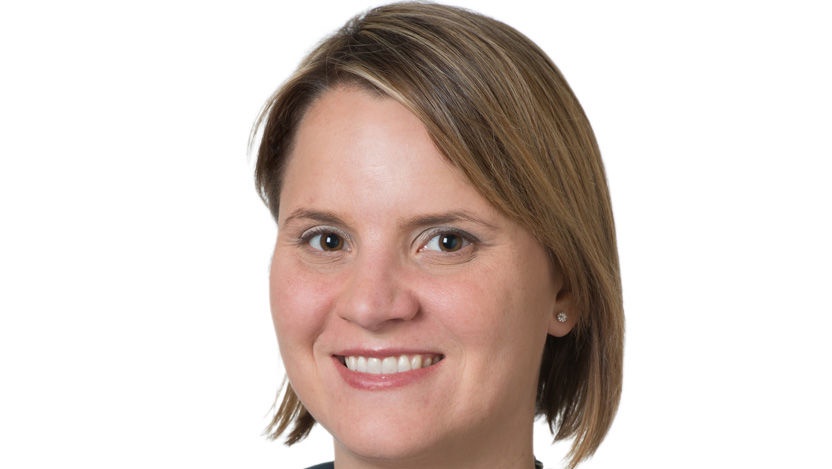
Emily Rogalski
Researcher
3
APPEARANCES
2
PODCASTS
Sep 23, 2026

KathrynHOST
So let's start with what first drew you to study exceptional cognitive aging?

Emily RogalskiGUEST
I grew up the daughter of a school teacher, and my mom taught kids with learning challenges.
Emily RogalskiGUEST
And that's really what got me interested in the brain and how the brain functions differently across different individuals.
Emily RogalskiGUEST
And I was always so impressed by these kids who some might call think about the negativity with which they learned a little bit differently, but I was really inspired by how brilliant they were and thought, you know, as a very young, as a young person, what is it about their brain that makes that possible? And so I thought and that really propelled my interest in the brain and in medical science and clinical science.
Emily RogalskiGUEST
And as I ended up in graduate school in neuroscience, I started in a lab for kids exploring some of those questions.
Emily RogalskiGUEST
But as you have those opportunities, you also do rotations in graduate school.
12 MINS LATER
KathrynHOST
So this was quite astonishing

Ryan Van PattenHOST
So, Emily, tell us a little bit about your Healthy Aging and Alzheimer's Research Center, HARC, at the University of Chicago.
Emily RogalskiGUEST
So I had the opportunity to start a new center at the University of Chicago in 2023, recognizing that there was a lot of aging and dementia research that had been happening at the University of Chicago, but there was no physical home or theoretical space that brought aging and dementia researchers together.
Emily RogalskiGUEST
In addition, the south side of Chicago, where University of Chicago is located, is situated in a neighborhood where there is less participation in research historically from groups that are both underrepresented in research but overrepresented in risk for disease.
Emily RogalskiGUEST
So our mission really is to be community-oriented, community-driven, and to use a multidisciplinary approach to understand and support individuals in our community and beyond.
Emily RogalskiGUEST
So we want to be that hub for discovery and thinking about resilience and resistance.
Emily RogalskiGUEST
in there, because we don't want to think about aging just as the negative trajectory, but also to recognize that Alzheimer's and related dementias are still a significant challenge.
John BelloneHOST
Can you tell us a bit about the super aging research initiative now through the Hark and what the program is and what it does in general?
Ryan Van PattenHOST
But for now, what else should we know about the definition and the core clinical characteristics of PPA?
Emily RogalskiGUEST
When we think about PPA in general, the one favor that the name did for us is it actually builds in the definition into the syndrome title.
Emily RogalskiGUEST
And that's often not the case in neurodegenerative diseases or other diseases.
Emily RogalskiGUEST
They are sometimes named after someone else, and you don't have those semantic clues to really define it.
Emily RogalskiGUEST
So You did a really elegant job of saying, yeah, there's these three features.
Emily RogalskiGUEST
And so if you kind of go from the bottom up, it's an aphasia because there's a loss of language.
1 HR 14 MINS LATER
John BelloneHOST
Tell us about the approach, some of the specific techniques used, and the evidence supporting it to date.