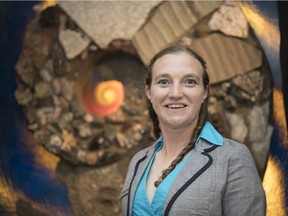
Emily L. Bamforth
Paleontologist
4
APPEARANCES
4
PODCASTS
Sep 4, 2026


Cleo AbramHOST
Skin doesn't preserve color but they have found shading meaning that some dinosaurs likely had stripes.

Emily BamforthGUEST
We don't know if those stripes were black and white, you know, if they were tan and black.
Emily BamforthGUEST
The dinosaurs that you see reconstructed, it's based on our understanding of modern animals, how modern animals are colored.
Emily BamforthGUEST
You can think of, of fossil bones as basically an exact copy of the bone just made out of rock.
Emily BamforthGUEST
The original bone material is there but over millions of years the minerals replaced the bone kind of like cell by cell basically, and so it's an exact copy of what the bone looked like.

Belinda SmithCORRESPONDENT
This is Dr. Emily Bamforth, paleontologist and curator at the Philip J. Currie Dinosaur Museum in Alberta.
Emily BamforthGUEST
So the Pipestone Creek Bonebed is one of the largest and densest dinosaur deposits in North America, if not the entire world, for about 90% of the material in this bonebed belongs to one species of dinosaur.
Emily BamforthGUEST
It's a dinosaur called Pachyrhinosaurus, and these animals died in a mass death event.
Emily BamforthGUEST
So we believe that they were traveling in a m- a herd, potentially a herd of up to 10,000 animals, and then one terrible day, for them, something happened that wiped out, if not this entire herd, then a good portion of it, and this is where they were buried, and of course, where they eventually were preserved and fossilized for us to find.
Emily BamforthGUEST
And so it's partly the sheer density of fossils at this site, so we're looking at something like 100 to 300 bones per square meter at this one site.

Emily BamforthGUEST
One of the unique things about Pachyrhinosaur is that we have a huge sample size of a single species of dinosaur from a snapshot in, in geologic time.
Emily BamforthGUEST
It's like we, we went back in a time machine, and we opened the door in the late Cretaceous, and we're looking at that herd.
Emily BamforthGUEST
So we can study things like what the adults look like, what the juveniles look like, what the babies look like, and we can establish a growth series.
Emily BamforthGUEST
So we understand what they look like when they were babies and what they looked like when they were adults and how they changed over time, which seems pretty standard if you think of a modern animal.
Emily BamforthGUEST
But it's actually very difficult to do for a group of animals that really have no modern equivalent.

speaker_5ADVERTISER
I live in San Diego, California, uh, and I am four years old, and my question is, why do dinosaurs don't live so much?
Emily BamforthGUEST
So the dinosaur mass extinction is, is, has been a huge debate for a really long time, and I remember when, when I was a kid, it was still very much a question about what killed the dinosaurs.
Emily BamforthGUEST
And there's been a lot of work that's been done pretty much since the 1980s that, and now we've, we've pretty well established that the big thing that caused that extinction was a meteorite impact or what, what geologists would call a bolide impact.
Emily BamforthGUEST
Basically, a giant piece of space rock came and, and hit the Earth probably around the Yucatan Peninsula in Mexico and basically caused a whole bunch of bad things to happen all at once, so like forest fires and, and acid rain and earthquakes and volcanic eruptions and, uh, it would've been a very bad day on planet Earth.
Emily BamforthGUEST
So we think that that, that event probably almost instantly wiped out the big dinosaurs, at least in North America.
Emily BamforthGUEST
Um, and after that happened, their ecosystems, so kind of all of the, um, you know, the things that were happening around them also collapsed.
Emily BamforthGUEST
Um, and so we know from the mass extinction that nothing big survived, so nothing bigger than basically like a golden retriever dog survived.
14 MINS LATER
