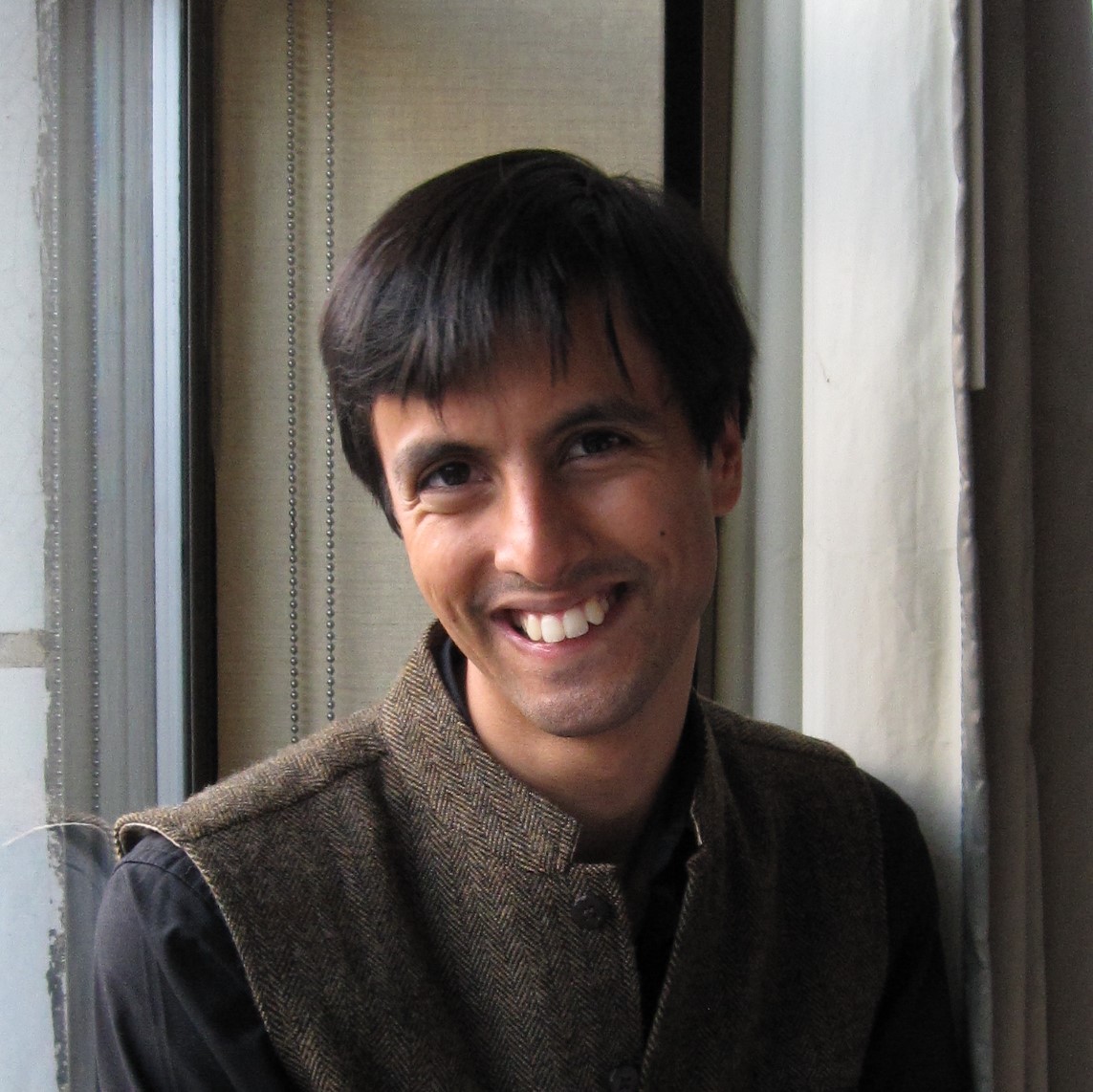
Emile Chabal
Historian
10
APPEARANCES
10
PODCASTS
Oct 22, 2026


Matthew AmhaHOST
How much of the anger that we're seeing today do you think is rooted in people's ability to make ends meet, you know, about their access to these public services and the general anxiety over the future? Like, is it that France is in worse economic shape than its European contemporaries, or Are the French just more prone to revolt?

Emile ChabalGUEST
The cost of living crisis across Europe, certainly since the war in Ukraine, is real.
Emile ChabalGUEST
especially in rising energy prices, which have a knock-on impact on transport and domestic heating, but also on the cost of almost everything that people buy because it ties into the overhead costs for businesses.
Matthew AmhaHOST
But for you, what do you think has made protests such an enduring or consequential part of France's political life and culture?


Emile ChabalGUEST
I mean, it's tempting to say that he sold many, many copies of his books because he was very good at what he did, which was write the history of particular historical epochs.
Emile ChabalGUEST
And that's clearly true if If anyone has read Eric Hobsbawm, they will know that his ability to capture the broad sweep of a historical moment is really impressive.
Emile ChabalGUEST
I mean, I'm a historian by training and by trade, and I try and do this every day with my students, and it's a real challenge.
Emile ChabalGUEST
But I think we also have to understand his success as part of what Sophie was talking about earlier on.
19 MINS LATER

Ryan TrippHOST
Which stood out, and what were the circumstances of him joining the Apostles? Um, and, uh, did the Annales School, uh, impact him?
Emile ChabalGUEST
Yeah, I mean, it's worth, uh, worth really kind of taking a moment to resituate Hobsbawm's arrival in the UK and then his, uh, his, uh, undergraduate studies at Cambridge within their wider context.
Emile ChabalGUEST
So, um, he leaves Berlin, uh, in 1934 and comes to London, where he is immediately put in school, uh, in a British school.
Emile ChabalGUEST
Um, and he spoke English, so he, he wasn't coming as a, as a Central European exile, uh, of whom there were many, actually, in, in, um, in Britain at the time, uh, in the run-up to Second World War, and of course, during the Second World War as well.
Emile ChabalGUEST
Um, so he entered the British school system, um, at a point where he was, uh, very, very British, but had not really spent any, much time in Britain and had not really been fully acculturated as British.
24 MINS LATER
Ryan TrippHOST
Um, I don't mean to inordinately, uh, focus on Peru, but, uh, I think it, for me at least, it was important.

Ryan TrippHOST
I just, maybe a brief rundown on, you know, total commitment, grounded pedagogy, the Marxist totality of history, and that web.
Emile ChabalGUEST
yeah absolutely well i yeah i i'd love to talk more about culture and jazz and and and uh and you know maybe that's that's something for another time because there's there's a lot that's really interesting that i make i make quite a lot of that in the book the whole chapter on on culture and trying to take uh hobson's theory of of culture and popular culture seriously um despite its limitations is i mean there's a really fascinating body of work but um But yeah, no, coming back to the idea of grounded pedagogy and the way that Hobsbawm wrote.
Emile ChabalGUEST
So this is really delving, I suppose, into... what I was talking about earlier, which is how did he package his ideas? And so how did he conceptualize writing large-scale history? Because that's what he does a lot of.
Emile ChabalGUEST
He writes a lot of large-scale history, so covering decades, sometimes centuries, often many, many countries, entire regions, sometimes the entire world.
Emile ChabalGUEST
And I think to understand this, you've got to go back to his intellectual and political training.
Emile ChabalGUEST
you've got to say something about the Annales school, which we mentioned earlier, but which we should come back to now as, as really the primary form of total history that was available to, um, people in the period of the 1950s, um, in, uh, in Europe at a time when Hobsbawm was beginning to write this kind of large scale history.
32 MINS LATER
Ryan TrippHOST
Why did his support for the reformist wing of the Labour Party become a source of scholarly accusations for complicity or engagement, I don't know, in the rise of new Labour, in turn associated with however you want to approach neoliberalism?

Ryan TrippHOST
Within that milieu, please, that context, please briefly address that book sales table in your study and the expansion of global translations of its works.
Emile ChabalGUEST
There's this table in the book where I give some indication of the book sales in a particular period.
Emile ChabalGUEST
And I suppose what I'm trying to do with that and with this discussion about book selling in general is to get us to think a little bit about the interface between ideas and the infrastructure of ideas.
Emile ChabalGUEST
In other words, you can have an idea, but how are you going to get that idea out into the world? Um, uh, you know, in, in, in, in, in the 21st century with my podcast, you might go on YouTube by going tick tock.
13 MINS LATER
Ryan TrippHOST
I just, maybe a brief rundown on, you know, total commitment, grounded pedagogy, the Marxist totality of history, and that web.

Emile ChabalGUEST
You know, in the 21st century, we might podcast, we might go on YouTube, we might go on TikTok, we might write, we'd probably do that for an online platform.
Emile ChabalGUEST
And you hope that something's going to get picked up, you hope that something's going to go viral.
Emile ChabalGUEST
And in a sense, I think, Hobsbawm, he's very attuned to that dimension of the marketplace of ideas, as it were.
Emile ChabalGUEST
He does go viral, to use a very 21st century word, which I don't think he would have really recognized.
Emile ChabalGUEST
And he does that because he's really committed to writing for a larger audience.
Emile ChabalGUEST
I mentioned earlier about the generalist teaching he's doing during the war and after the war, and even when he starts his first job at Birkbeck, the University of London, where he's teaching mature students, adult students who are not traditional university students.
49 MINS LATER
Ryan TrippHOST
Why did his support for the reformist wing of the Labour Party become a source of scholarly accusations for complicity or engagement, I don't know, in the rise of new Labour, in turn associated with however you want to approach neoliberalism?

Ryan TrippHOST
I just, maybe a brief rundown on, you know, total commitment, grounded pedagogy, the Marxist totality of history, and that web.
Emile ChabalGUEST
I'd love to talk more about culture and jazz and maybe that's something for another time because there's a lot that's really interesting that I make.
Emile ChabalGUEST
I make quite a lot of that in the book, the whole chapter on culture and trying to take Hobsbawm's theory of culture and popular culture seriously.
Emile ChabalGUEST
But yeah, coming back to the idea of grounded pedagogy and the way that Hobsbawm wrote.
33 MINS LATER
Ryan TrippHOST
Why did his support for the reformist wing of the Labour Party become a source of scholarly accusations for complicity or engagement, I don't know, in the rise of new Labour, in turn associated with however you want to approach neoliberalism?

Ryan TrippHOST
Which stood out, and what were the circumstances of him joining the Apostles? Um, and, uh, did the Annales School, uh, impact him?
Emile ChabalGUEST
Yeah, I mean, it's worth, uh, worth really kind of taking a moment to resituate Hobsbawm's arrival in the UK and then his, uh, his, uh, undergraduate studies at Cambridge within their wider context.
Emile ChabalGUEST
So, um, he leaves Berlin, uh, in 1934 and comes to London, where he is immediately put in school, uh, in a British school.
Emile ChabalGUEST
Um, and he spoke English, so he, he wasn't coming as a, as a Central European exile, uh, of whom there were many actually in, in, um, in Britain at the time, uh, in the run-up to Second World War, and of course, during the Second World War as well.
Emile ChabalGUEST
Um, so he entered the British school system, um, at a point where he was, uh, very, very British, but had not really spent any, much time in Britain and had not really been fully acculturated as British.
24 MINS LATER
Ryan TrippHOST
Um, I don't mean to inordinately, uh, focus on Peru, but, uh, I think it, for me at least, it was important.

Ryan TrippHOST
I just, maybe a brief rundown on, you know, total commitment, grounded pedagogy, the Marxist totality of history, and that web.
Emile ChabalGUEST
I'd love to talk more about culture and jazz and maybe that's something for another time because there's a lot that's really interesting that I make.
Emile ChabalGUEST
I make quite a lot of that in the book, the whole chapter on culture and trying to take Hobsbawm's theory of culture and popular culture seriously.
Emile ChabalGUEST
But yeah, coming back to the idea of grounded pedagogy and the way that Hobsbawm wrote.
34 MINS LATER
Ryan TrippHOST
Why did his support for the reformist wing of the Labour Party become a source of scholarly accusations for complicity or engagement, I don't know, in the rise of new Labour, in turn associated with however you want to approach neoliberalism?

Ryan TrippHOST
Which stood out, and what were the circumstances of him joining the Apostles? Um, and, uh, did the Annales School, uh, impact him?
Emile ChabalGUEST
Yeah, I mean, it's worth, uh, worth really kind of taking a moment to resituate Hobsbawm's arrival in the UK and then his, uh, his, uh, undergraduate studies at Cambridge within their wider context.
Emile ChabalGUEST
So, um, he leaves Berlin, uh, in 1934 and comes to London, where he is immediately put in school, uh, in a British school.
Emile ChabalGUEST
Um, and he spoke English, so he, he wasn't coming as a, as a Central European exile, uh, of whom there were many actually in, in, um, in Britain at the time, uh, in the run-up to Second World War, and of course, during the Second World War as well.
Emile ChabalGUEST
Um, so he entered the British school system, um, at a point where he was, uh, very, very British, but had not really spent any much time in Britain and had not really been fully acculturated as British.
24 MINS LATER
Ryan TrippHOST
Um, I don't mean to inordinately, uh, focus on Peru, but, uh, I think it, for me at least, it was important.