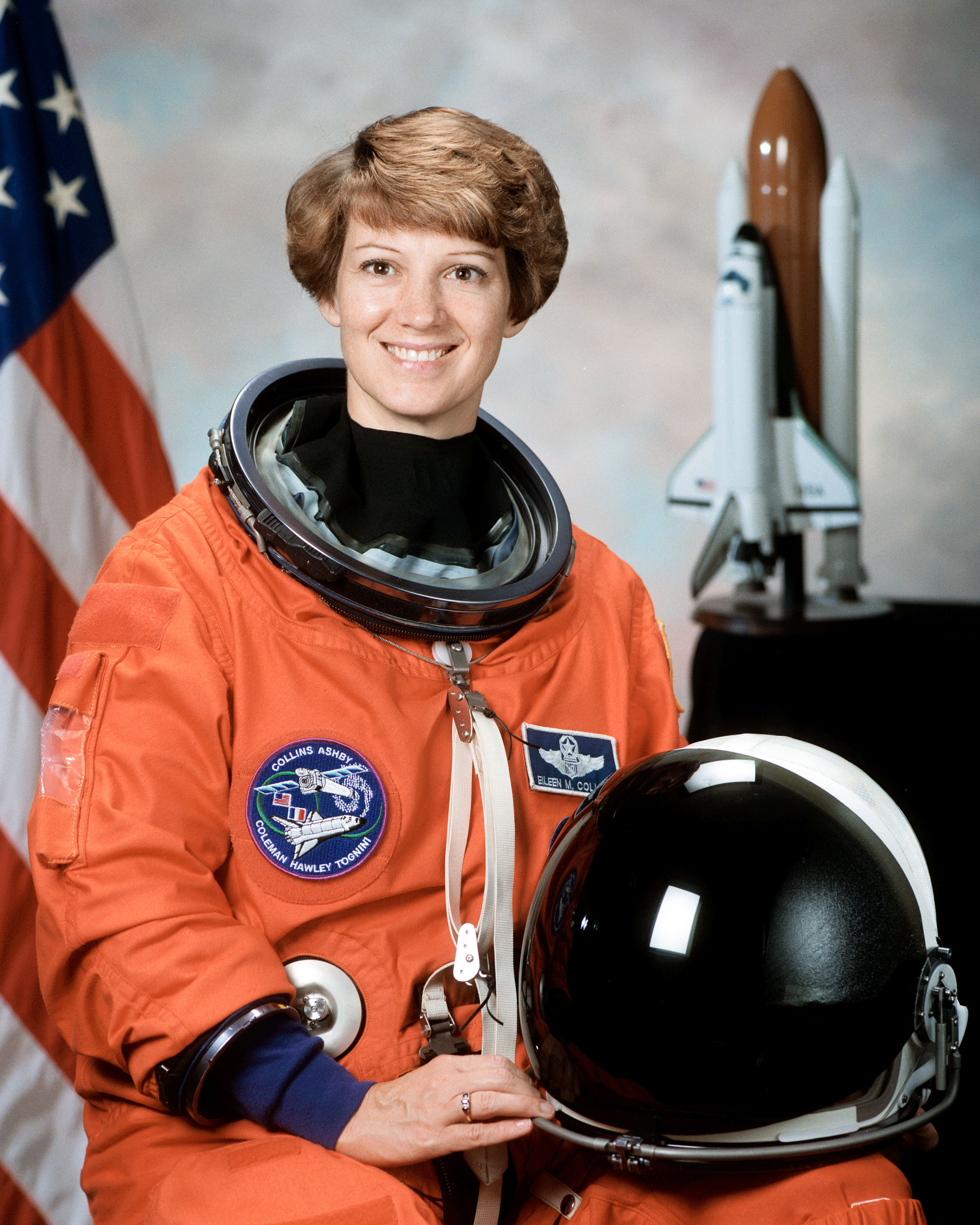
Eileen Collins
American astronaut
7
APPEARANCES
7
PODCASTS
Oct 20, 2026


Sharon CollinsHOST
The first thing I'm going to ask you to get us started is why did you put me into dance? What made you want to put me into dance and how did it come about?
Eileen CollinsGUEST
I was blessed to have two youthful children, a girl and a boy, which is a blessing in itself.
Eileen CollinsGUEST
And then, as you were very young, you know, it was a bit difficult because, you know, we lived in a masonette before we got a ground floor place, you know, and that.
6 MINS LATER
Sharon CollinsHOST
And often the classes would go over, wouldn't they? And my dad would be outside in the back.

5 MINS LATER
Jason FraleyHOST
And isn't it there where you like through their ROTC program, that's how you got commissioned to be an officer in the Air Force? Is that how it came about?

Eileen CollinsGUEST
I wanted to be an astronaut because they were, to me, they were an extension of pilots, because these guys were, they were all pilots.
Eileen CollinsGUEST
They were military pilots, and they were test pilots, and some of them were engineers.
Eileen CollinsGUEST
I wanna go explore space." And part of that came from some of the books I read, some of it came from some of the goofy shows I watched on television as a kid.
Eileen CollinsGUEST
Now, it became a reality in 1978 when NASA started the space shuttle program.
Lisa GarrHOST
Yes, and so you had to have specific qualifications as the same with everybody else, and you were accepted into this program to eventually knowing that you would eventually be traveling to space.


Sarah Al-AhmedHOST
How do you just stay calm and compartmentalized in a really tough situation like that?
Eileen CollinsGUEST
Yeah, well, without a doubt, it's the training, and I believe in the astronaut office, in, in the shuttle program, and at NASA overall, the investment that we put into training, not just building the best simulators.
Eileen CollinsGUEST
We had a motion-based simulator that we used for ascent and entry with all the noise and the shaking and the lights flashing, and it, during an ascent into space, a, you have got to stay focused on your instruments, your performance, are, how the engines operating, are we going where we're supposed to go, what's our energy level.
Eileen CollinsGUEST
And if you're distracted by all of these external cues like the shaking, the lights flashing, the noise, you know, it sounds like you're in a room on, on fire, and those external cues need to be filtered out of your thinking, and the way we do that is by simulator after simulator, years and years of this before I...
Eileen CollinsGUEST
I mean, five years of simulators before my first flight, and the motion base helped me screen all that out and just pay attention to what's changing, what's different that I haven't seen in my training.
Eileen CollinsGUEST
And I would say the fact that we trained malfunctions, and as astronauts, we knew how to identify what is the problem and then what procedure do I go to, and once you find the procedure, how do I execute that, going through the steps quickly but not making a mistake.
7 MINS LATER


Ann Marie ChakerHOST
So talk to us, if you would, about how motherhood changed your relationship to risk and how you spoke with your daughter about the dangers ahead.
Eileen CollinsGUEST
I don't recommend people wait that long, but I was thirty-eight years old when my daughter was born.
Eileen CollinsGUEST
And then, um, I flew a mission, and then my son was born, so I actually had two children by the time I flew that return to flight mission.
Eileen CollinsGUEST
So my husband is an airline pilot, and he was a military pilot also, so he really understands what I'm doing, so I think it's important that we had that relationship.
13 MINS LATER
Cady ColemanAUDIENCE
Miss you.


Eileen CollinsGUEST
I mean, our flight, the return to flight mission was basically perfect with that one major exception.
Eileen CollinsGUEST
So the cause of the Columbia accident was this piece of debris that fell off the fuel tank during the launch and it hit the wing.
Eileen CollinsGUEST
Well, you say nobody, but the vast majority of people did not know about that.
Eileen CollinsGUEST
until the crew came home, they had a hole where the debris hit and those hot gases got in and it broke the wing off and they tumbled out of control.
15 MINS LATER
Jennifer WeigelHOST
What do you want young aspiring astronaut and females to know? And maybe any sort of don't give up kind of thing, because I'm sure there were weeks and months where you thought, what am I doing? Why am I here?


Chris JerichoHOST
And this is all with the goal to become an astronaut? Or did you start as a pilot and then start jumping up from there? Or was the end game always astronaut?
Eileen CollinsGUEST
So I, yes, the end game was always to become an astronaut, but I also wanted to be a military pilot.
Eileen CollinsGUEST
I read books about military pilots back when I was in mostly high school and also college, and I read about World War I.
7 MINS LATER