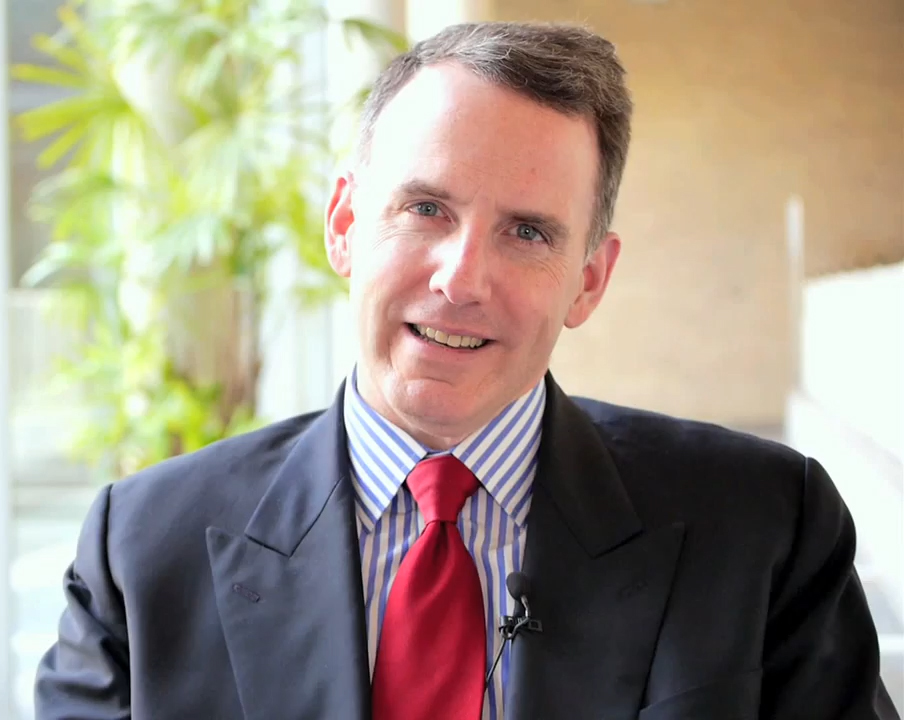
Edward Glaeser
American economist
11
APPEARANCES
9
PODCASTS
Oct 17, 2026


Steve LevittHOST
I asked you, "Why does anybody still live in Scranton or Detroit?" You said, "Because buildings last a long time, even when you don't invest in them."

Ed GlaeserGUEST
About 16 years ago, I published an article in the Journal of Political Economy with Joseph Gyourko called Urban Decline and Durable Housing that makes the point that the slow decline of cities is very much mediated by the stock of durable housing, that the homes don't disappear overnight.
Ed GlaeserGUEST
And so year by year, decade by decade, the population slowly diminishes as the homes decay and are g- gradually left to be vacant.
Ed GlaeserGUEST
One of the jobs of economists is to remind people that cities are not structures.
Ed GlaeserGUEST
That's the part of cities that matter, as opposed to architects who tend to think the important thing is the structures.
6 MINS LATER


Edward GlaeserGUEST
So I started working on housing supply, housing regulation, 25, 26 years ago.
Edward GlaeserGUEST
All, all of my work on this has been joint with my colleague Joe Gyourko at Wharton, and Gyourko is spelled G-Y-O-U-R-K-O, for those who are interested in Googling him.
Edward GlaeserGUEST
And we, when we started working on this, and we started working on, on the notion that land use regulation was really responsible for causing the construction industry to, to knit itself up in painful knots, there were, like, two libertarian economists who didn't think we were wasting our time on this.
Edward GlaeserGUEST
You know, I remember getting a nice letter from the, the legendary Thomas Sowell, who thought we might be onto something when we published one of our early pieces.
Edward GlaeserGUEST
25 years later, Barack Obama is talking about this on the floor of the Democratic National Convention, and there are a whole bunch of people in the Trump White House who are, uh, obsessed with trying to, trying to fight this issue.
11 MINS LATER


Ed GlaeserGUEST
Thank you for, thank you for having me on, and thank you all of us for, for joining me this, this morning.
Ed GlaeserGUEST
So cities have long done absolutely amazing things, but there are also demons that come with density.
25 MINS LATER
34:11
How would you handle this if you were in charge to, you know, es- erode essentially people's net worth in housing by making it-

Ed GlaeserGUEST
This combination of the availability of extra land due to the automobile with the manufacturing genius taking techniques that Henry Ford had put in his moving assembly lines and then bringing them to housing construction, this sort of method where the, the plumbers and the carpenters would just go up and down a street, adding their little bit to each house as they went.
Ed GlaeserGUEST
That was sort of an amazing period in terms of post-war America of just making ordinary housing available to mid-income Americans.
11 MINS LATER

Imani MoiseHOST
Glaeser says today's neighborhoods have essentially closed their doors to newcomers.
Ed GlaeserGUEST
Over time, housing morphs from being like a electric toaster, which you just spit out of the factory whenever you need it, to being like a Rembrandt, like a precious object that no one's making any more of it.
Ed GlaeserGUEST
We've got to become a country for outsiders again, not just a country in which insiders get to freeze the, the community at exactly the level that they want when they bought it.

Jason CannonMODERATOR
What is it that they're missing?
Edward GlaeserGUEST
You know, it was Plato who wrote in The Republic that every city of whatever size is in reality two cities, one a city of the rich, the other a city of the poor, and they're perpetually at war with one another.
12 MINS LATER
Jason CannonMODERATOR
What is it that different cultures get right about this that might, or worse, that may allow for them to have a, a sort of better resilience in this way?

Oliver HannawayHOST
Can you explain what those latter two would look like or mean in practical terms?
Edward GlaeserGUEST
Uh, let me also highlight just even before I delve well into the antidote, into the anecdote, that infrastructure, transportation infrastructure, perhaps above all, uh, is also an incredibly good way to waste an enormous amount of money.
Edward GlaeserGUEST
And so you really want to be assiduous in applying serious cost-benefit analysis to whatever you're doing.
Edward GlaeserGUEST
And I particularly worry about things like train systems that are sort of irreversible investments, often which are priced in ways that sort of, you know, appeal to middle class urbanites and are inaccessible for the very poor.
Edward GlaeserGUEST
So we wanna just embrace our, you know, inner cost-benefit, uh, analyst and sort of, sort of push hard on that.
9 MINS LATER
Curtis LockhartHOST
So just thinking historically, what do you see as the, both the constraints and the challenges facing these new African cities that are, I guess, most similar to those that emerging European cities, for example, faced during the medieval period when cities reemerged sort of during or after the, the Dark Ages? What-- like, what, if anything, can emerging new African cities learn from these earlier periods?

Oliver HoneyHOST
Can you explain what those latter two would look like or mean in practical terms?
Edward GlaeserGUEST
Uh, let me also highlight just even before I delve well into the antidote, into the anecdote, that infrastructure, transportation infrastructure, perhaps above all, uh, is also an incredibly good way to waste an enormous amount of money.
Edward GlaeserGUEST
And so you really want to be assiduous in applying serious cost-benefit analysis to whatever you're doing.
Edward GlaeserGUEST
And I particularly worry about things like train systems that are sort of irreversible investments often which are priced in ways that sort of, you know, appeal to middle class urbanites and are inaccessible for the very poor.
Edward GlaeserGUEST
So we wanna just embrace our, you know, inner cost-benefit, uh, analyst and sort of, sort of push hard on that.
9 MINS LATER
Kurtis LockhartHOST
So just thinking historically, what do you see as the, both the constraints and the challenges facing these new African cities that are, I guess, most similar to those that emerging European cities, for example, faced during the medieval period when cities reemerged sort of during or after the, the Dark Ages? What-- Like, what, if anything, can emerging new African cities learn from these earlier periods?

Stephen DubnerHOST
To an economist, do rats present an obvious economic angle or maybe even multiple ones?
Edward GlaeserGUEST
Rats are, you know, they're agents of usually negative externalities within cities, right? So they're part of what enables diseases to spread across people, and consequently they're somewhat risky.
Edward GlaeserGUEST
I don't know what positive things we get out of rats, but there probably are some in the same sense that, you know, the Four Pests program that Mao followed, he thought getting rid of the sparrows was great.
Edward GlaeserGUEST
It turns out the sparrows kept the locusts under control, and without the sparrows, the locusts went haywire and destroyed the crops, leading to a massive famine.
19 MINS LATER
Stephen DubnerHOST
Do you still like this angle?


David WestinHOST
Harvard economist Ed Glazer has made a study of American cities over the years, and he's found structural factors that bring such policies to the fore.
Edward GlaeserGUEST
I think about the sort of, you know, the great challenge of cities is that there's a bent in natural progressive element in cities, mostly because cities tend to attract a significant number of relatively poor people.
Edward GlaeserGUEST
It's actually because cities are typically good for poor people because you have better social services, because you have the ability to get around without a car for every adult.
Edward GlaeserGUEST
And yet, if cities veer too much towards this sort of progressive urge, they risk inducing the firms to leave.
Edward GlaeserGUEST
They risk inducing the businesses to go somewhere else, to relocate, to suburbanize, to leave to a lower-cost country.

Edward GlaeserGUEST
These things might be right, but without measurement, who knows? And I think, you know, in everything where there's a problem and you don't feel like you've seen a solution that's been tried 50 times and it always works, the first thing is to start with the humility to learn.
Edward GlaeserGUEST
You know, let's try the trash cans, and let's see if the rat density goes down sufficiently in this region.
Edward GlaeserGUEST
So Sullivan claims that cats can't take down a fully grown rat, in which case you need terriers.
Edward GlaeserGUEST
Having enough terriers to take on, if you thought, let's say we were at two million rats in New York, that's a lot of terriers, and it's not like dogs don't potentially carry diseases as well.
24:34
To an economist, do rats present an obvious economic angle or maybe even multiple ones?
Edward GlaeserGUEST
Rats are, you know, they're agents of usually negative externalities within cities, right? So they're part of what enables diseases to spread across people, and consequently, they're somewhat risky.
Edward GlaeserGUEST
I don't know what positive things we get out of rats, but there probably are some, in the same sense that, you know, the Four Pests program that Mao followed, he thought getting rid of the sparrows was great.
Edward GlaeserGUEST
It turns out the sparrows kept the locusts under control, and without the sparrows, the locusts went haywire and destroyed the crops, leading to a massive famine.
20 MINS LATER