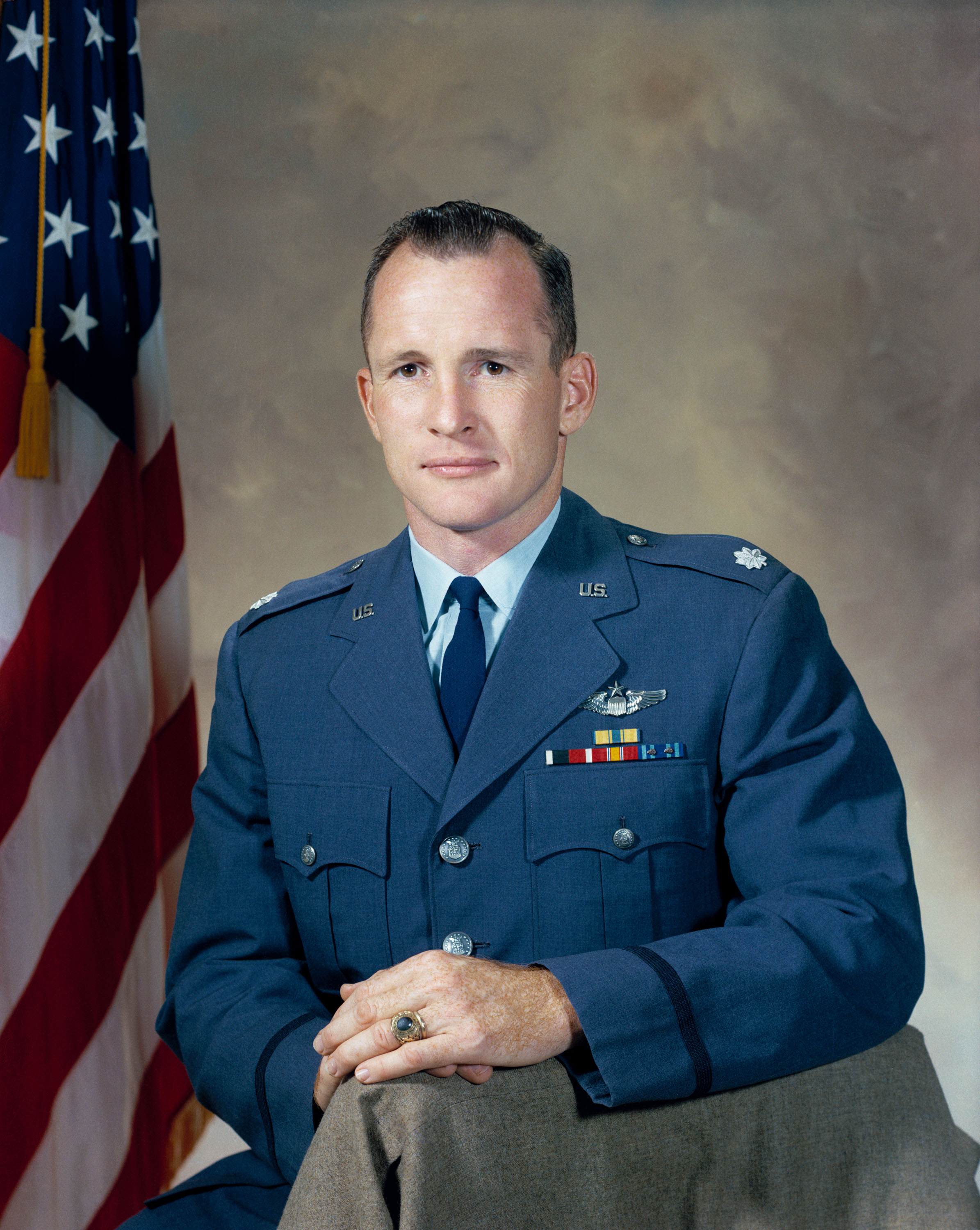
Ed White
American aeronautical engineer and United States Air Force officer
6
APPEARANCES
4
PODCASTS
Aug 18, 2026

Ed WhiteGUEST
So I think the big theme that we're seeing through conversations we've had over about the last eight months or so with a series of design leaders across a range of organizations that I think... sort of epitomize the edges of where knowledge and increasingly creative work will go.
5 MINS LATER

Mina SeetharamanHOST
And that I think is sort of some of those choices you make, right? You have to sort of be very intentional about those choices.


Scott ChampionHOST
Hey, listen, um, tell us a little bit about your farming operation in Central Hawke's Bay.
Ed WhiteGUEST
I'm the fifth, uh, generation farming, um, farming here at our home farm, um, in Ashley Clinton, Central Hawke's Bay, and, um, with my wife and four kids.
Ed WhiteGUEST
Um, we're sort of farming about 800 hectares, um, growing maize, s- oil cereals, peas, um, a few, few things, bit of red clover, sunflowers, that sort of thing.
9 MINS LATER
Scott ChampionHOST
Um, and Ed, just to finish up, uh, how are you feeling about, putting the diesel and fertilizer prices aside, just in terms of seasonal conditions, how are you feeling now that we're standing here in autumn, sort of heading into the, into the next season? How do things look in Central Hawke's Bay?


Neil C. HughesHOST
So how does that mix between commercial players and universities? How's that helping shape the direction and indeed speed of AI development? Because again, that's quite a fascinating point too.
Ed WhiteGUEST
Yeah, we've looked at this crossover between academia and corporations a lot over the last couple of years.
Ed WhiteGUEST
The reason behind that is that AI, it's a huge melting pot of technologies and disciplines.
Ed WhiteGUEST
It's probably one of the causes of that kind of omni-ambiguity that I was mentioning earlier, right? This is really, really difficult.
Neil C. HughesHOST
And just to throw something else into the mix here, from a geopolitical standpoint, which is a whole episode on its own at the moment, how should business leaders interpret the concentration of those AI patents? And does patent leadership translate directly into economic or strategic advantage, do you think?

Ed WhiteGUEST
I think the first thing for people to understand is that China does keep the size of all of its resource stockpiles as a closely guarded national secret.
Ed WhiteGUEST
So the experts that we speak to, they look at things like budget documents to know how much China's spending.
Ed WhiteGUEST
They look at trade data for export and import flows, and they also look at satellite imagery to see where the tanks and things like that are actually being built.
Ed WhiteGUEST
But most of the estimates that we know of put the total stockpile at the moment between about one point one and one point four billion barrels.
Ed WhiteGUEST
Just in terms of the context for that, about one point four billion barrels would provide somewhere in the range of about a hundred and ten to a hundred and twenty days of cover for all of China's oil imports, so around three months or so.
Marc FilippinoHOST
So Ed, what role does this Chinese company CMRG play in the global market for iron?
Ed WhiteGUEST
It was basically started by the government in Beijing as a way to combat what China sees as a unfair market.
Ed WhiteGUEST
It's a disparate group, and that has given groups like Australia's BHP, Fortescue, and Rio a lot of advantage in selling at a price that they feel is good and that the Chinese feel is too high.
Ed WhiteGUEST
So CMRG coming in and consolidating that buying position, acting as an aggregated buyer, basically gives China a huge amount more leverage than it ever has had previously in this trade of iron ore.
Ed WhiteGUEST
I think from, from the point of view of miners, um, it's a, it's a tight balance because they do ultimately have a commodity that is crucial to the Chinese economy.
7:12
So what does this electrification look like on the ground? I mean, what's driving this revolution?
Ed WhiteGUEST
We have seen, in the last four or five years, EV sales in China absolutely explode.
Ed WhiteGUEST
This year, we're now expecting more than half of all new car sales in China to be EVs.
Ed WhiteGUEST
So China is rapidly expanding and upgrading not just the hardware, so not just the wires that transfer electricity, but also the software and the market system that help move power from one side of the country to the other.