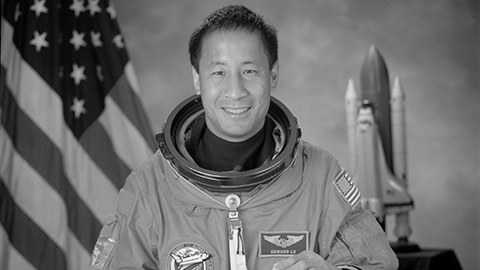
Ed Lu
Director of the B612 Foundation
4
APPEARANCES
2
PODCASTS
Oct 9, 2026


Ed LuGUEST
So the rate that there was in 2020, the number of satellites launched is double by 2022.
Ed LuGUEST
Um, in 2022, there were something s- a little under, uh, 2,000 satellites launched roughly in 2022.
Ed LuGUEST
Whatever is happening today, in two years will be twice as much, and in four years will be four times as much, and in six years will be eight times as much.
11:35
Do you think that we're making the same mistake when it comes to space, or do you think that we've kind of learned our lesson and we're trying to get ahead of this?

Ed LuGUEST
And then I was able to use the resources of Google to get meeting rooms because by then we got the Association of Space Explorers to begin to consider this problem of planetary defense.
14 MINS LATER


12:26
They can now spot a collision seven days in advance and alert companies in time to move their satellites out of the way.
Ed LuGUEST
We have tracked objects that have gone within a few meters of each other, a few, a few tens of meters for sure, at, you know, a relative velocity of, uh, fifteen or so kilometers per second.
13 MINS LATER
25:47
Do you think that we're making the same mistake when it comes to space, or do you think that we've kind of learned our lesson and we're trying to get ahead of this?
11:51
So they can give companies plenty of time to move their satellites out of the way.
Ed LuGUEST
We have tracked objects that have gone within a few meters of each other, a few tens of meters for sure, at a relative velocity of 15 or so kilometers per second.
11 MINS LATER