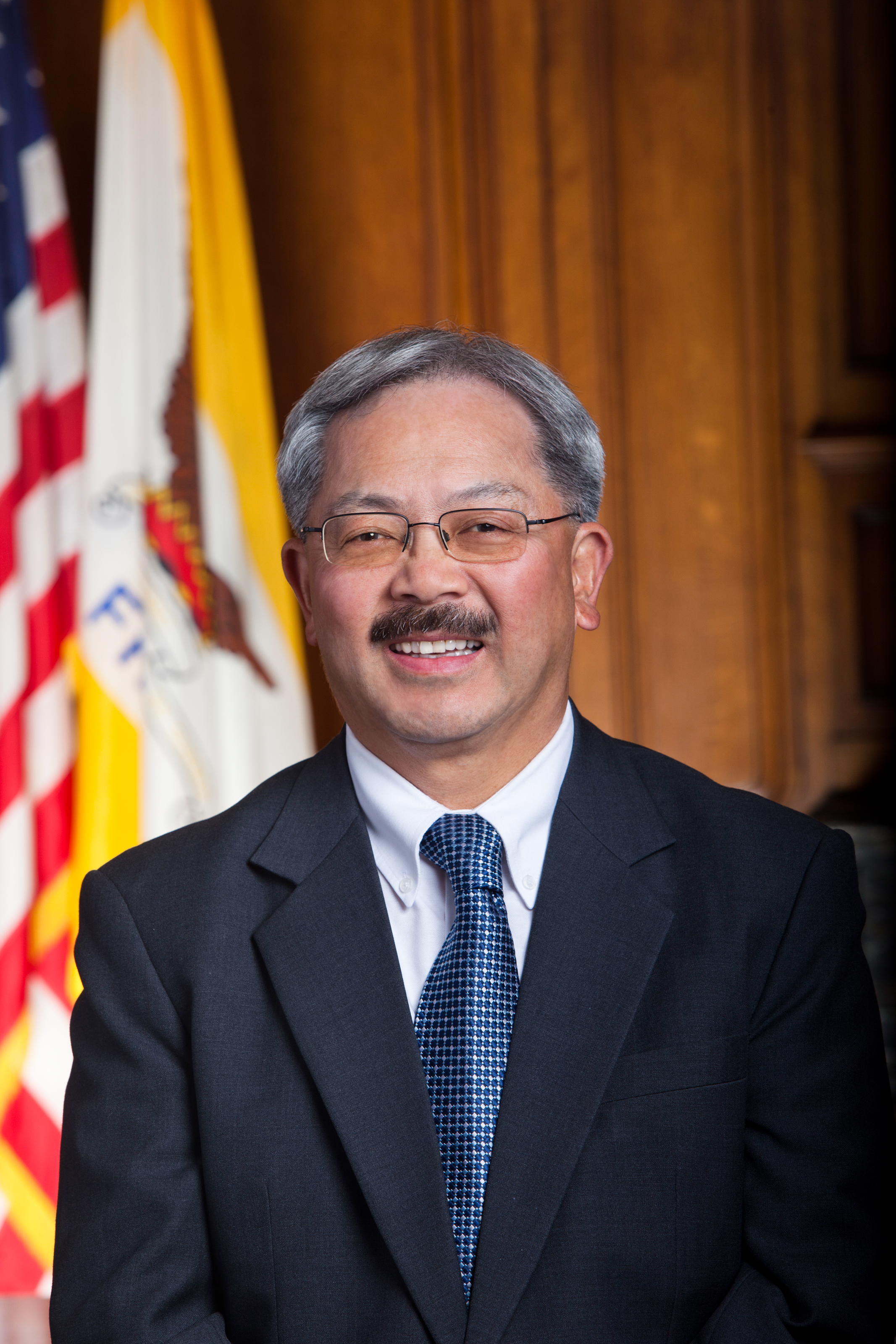
Ed Lee
American Politician
15
APPEARANCES
7
PODCASTS
Nov 20, 2026


Ed LeeGUEST
For families that have a special needs child, we always want to know that ahead of time so that we can put together a special needs or supplemental needs trust.
Ed LeeGUEST
We're going to protect their public benefits if they're receiving them now or in the future.
Sean O'ConnorHOST
And speaking of that or related to that, what do you recommend parents consider when they're selecting a trustee, right? Assuming the trustee is going to be involved for many years managing the assets.
Ed LeeGUEST
Make sure that your operating agreement, make sure that your operating practice is consistent with an owner-employee operator.
Ed LeeGUEST
We have lots of businesses that are not owner-operated, but that are driven by employees.
Ed LeeGUEST
You know, the absentee owner or the hands-off owner still helps direct some of the business, but they have employees and some of those are family and some of those are just garden variety employees.
Ed LeeGUEST
Being able to structure it from the business level and then carry that over into the family estate plan really is my recommendation.
Ed LeeGUEST
Once you've got the business side solid, then you begin to think about how am I going to manage this in a trust? You know, if you give equal shares to four kids, the likelihood that that business entity is going to survive is very low because those four kids probably have different ideas about what to do with that.
Ed LeeGUEST
The good news is where the circumstances warrant it, it's certainly the best option, and that's what courts want.
Ed LeeGUEST
One is on application for a guardianship, the court is going to appoint a court investigator.
Ed LeeGUEST
So not only is there going to be a physician certification, but there's also going to be a court investigator that actually goes out and visits with mom or dad.
Sean O'ConnorHOST
How do you balance protecting someone you love and making sure that they're safe? And you want to preserve their independence as much as possible, but you've got to balance that against potential catastrophic or other...
Ed LeeGUEST
Um, it's probably the worst thing that can happen to a family after the worst thing that can happen to a family, lo- losing a loved one.
Ed LeeGUEST
Uh, in Texas, if you don't have a will, then we get to do a fun genealogy project and figure out who are your heirs.
7 MINS LATER

Sean O'ConnorHOST
What about, uh, you know, complications, problems that, uh, that you've seen where, uh, you know, families get tangled up in because the person who passed away, uh, didn't foresee it? You know, like, what could possibly go wrong?
Sean O'ConnorHOST
The family that's left behind, like, what, what's a day in the life following that death based on having a trust?
Ed LeeGUEST
Um, most people think, "Oh, I don't need a lawyer because I have a trust." Well, you probably do need a lawyer because they're written for other lawyers to understand and help guide the family.
Ed LeeGUEST
So, you know, the day after, the first thing you do is you pick up the big green binder that's on the bookcase behind you, and you read the summary and figure out, okay, h-here, here's the summary of the plan.
Ed LeeGUEST
How does it all piece together? And then where do I need to go to, to look for the assets? So that's day one.
Sean O'ConnorHOST
And [chuckles] like, is a trust a trust if there's nothing in the trust? You know, like there's-- I've heard these scenarios where the trust is created, but you actually have to put, like formally put assets into the trust, right?

speaker_0HOST
How do those efforts fit into your long-term vision?
Ed LeeGUEST
The early generation of clinical AI was largely based on reducing administrative work.
Ed LeeGUEST
You know, but over the next three to five years, I think we'll move from AI that primarily documents what happened to AI that increasingly understands what's actually happening.
speaker_0HOST
As CIOs, CMIOs, and chief AI officers make strategic investments over the next several years, what capabilities or architectural decisions should they prioritize today to build a foundation for what's coming next?

Ed LeeGUEST
The early generation of clinical AI was largely based on reducing administrative work.
Ed LeeGUEST
But over the next three to five years, I think we'll move from AI that primarily documents what happened to AI that increasingly understands what's actually happening.
Laura DyrdaHOST
As CIOs, CMIOs, and chief AI officers make strategic investments over the next several years, what capabilities or architectural decisions should they prioritize today to build a foundation for what's coming next?
Sean O'ConnorHOST
Have you found that there's certain life events or triggering events that finally push people to get off the dime on this stuff and put it on paper?
Ed LeeGUEST
You know, something happens and there's a diagnosis and it might not be terminal, but it is a wake up call.
Ed LeeGUEST
So people have that that first fall at home when they're they're elderly or that first, you know, doctor visit where a mammogram comes back laterally.
Ed LeeGUEST
Those things, you know, obviously are typical in life and survivable, but they really do make people start thinking.
6 MINS LATER
Sean O'ConnorHOST
What about you were talking about life events that, you know, sort of trigger people's awareness or or become an impetus to get going on this stuff? What if, you know, a parent is diagnosed or has been having memory problems, you know, mental health issues like that? Can you still put a plan in? I'm assuming you can put a plan in place, but are there other considerations now that need to be factored in?
Sean O'ConnorHOST
So talk about, you know, for anyone who hasn't sort of heard the term before in this context, who is considered part of the sandwich generation?
Sean O'ConnorHOST
Well, what's what's your advice? You know, how do people balance sort of helping aging parents while, you know, still protecting their own financial future? Because, you know, oftentimes maybe your parents don't have a lot of resources of their own or in every situation is different, of course.

Jared KotlerHOST
What was kind of the biggest takeaway or two you were able to get from that matchup that you're looking to see play out as the season goes on?
Ed LeeGUEST
One of the talking points during the offseason for Maryland was trying to revive the running game.
Ed LeeGUEST
Last year, there was a lot of pressure on Malik Washington and the passing attack to carry the offense.
Jared KotlerHOST
What were your kind of just initial thoughts seeing him out there this past Saturday and kind of the expectations you have as, you know, competition obviously steps up this weekend against UConn?
Sean O'ConnorHOST
What happens or, you know, in your experience, what's going on when a family does call you, you know, about an aging parent and they need assistance there? What's what's the usual what what's the trigger, so to speak?
Sean O'ConnorHOST
brought to my my family back east and a couple of uh in-laws are uh really getting on in age and they're in that place now like they take the car keys you know like all that all that kind of stuff that's happening what you know how does how does planning ahead change the experience for the entire family what's your what have you seen there

Andy HarrisHOST
Uh, so just so our audience better understands the worthiness of what OKAPI K is, why, of all the charity events that are, you know, positioned and you're approached on every year, um, why is this one of the few that you just absolutely need to do?
Ed LeeGUEST
Well, you know, I was part of helping out at the beginning with Tereed and Dean Kim.
Ed LeeGUEST
So this one, Mary Ann Fu, it's one of those organizations that help the Asian community, but her, her doors are not just open for that.
Ed LeeGUEST
Her o- doors are open for anybody who walks in that needs assistance for insurance or Medicares or things like that.
Ed LeeGUEST
So she's not, even though, uh, OKAPI K stands for the Asian Pacific Islander, Mary Ann does a tremendous job through outreach for every community.
6 MINS LATER
Andy HarrisHOST
You know, some very high-end restaurants, but some just wonderful restaurants, and you're not gonna have a bad taste in the entire group.

Andy HarrisHOST
Uh, so just so our audience better understands the worthiness of what OKAPI K is, why, of all the charity events that are, you know, positioned and you're approached on every year, um, why is this one of the few that you just absolutely need to do?
Ed LeeGUEST
So this one, Mary Ann Fu, it's one of those organizations that help the Asian community, but her, her doors are not just open for that.
Ed LeeGUEST
Her o- doors are open for anybody who walks in that needs assistance for insurance or Medicares or things like that.
Ed LeeGUEST
So she's not, even though, uh, OKAPI K stands for the Asian Pacific Islander, Mary Ann, uh, does a tremendous job through outreach for every community, and that, to me, makes more sense.
6 MINS LATER
Andy HarrisHOST
You know, some very high-end restaurants, but some just wonderful restaurants, and you're not gonna have a bad taste in the entire group.

Ed LeeGUEST
But the first thing is that recognizing that sometimes the person you think is your customer today is not necessarily going to be your customer tomorrow.

Beate CheletteHOST
Can you share how your own personal value system, your family, your personal time with the things that you want to do and be able to do has to factor in to what you do, because you struggled with that for a little bit there.

3:16

Is this something that you're also seeing? Could you describe kind of what is happening in the market right now?
Ed LeeGUEST
Well, yeah, I mean, I think you described it well because, um, the EHR vendors, Epic being one, Oracle being other, and some other ones have gotten to the AI scribe market.
Ed LeeGUEST
At the same time, there are other EHR vendors who don't have necessarily the resources or bandwidth or the expertise to be able to do this themselves, and they've partnered with, uh, the existing AI startup companies that are out there, including us.
Ed LeeGUEST
And so we're integrated into several different EHR products that were basically white labeled and serving as the technology behind their ambient AI technology.
Ed LeeGUEST
So while some of the larger EHR vendors are building their own, some of the smaller ones are integrating some of the EHR vendors that are out there-- or, sorry, the AI scribe vendors out there now.
Ed LeeGUEST
But it is an interesting question though, like where do health systems go? Do they stick with the AI scribe vendors that they've been working with, or do they jump ship and then start working with the EHR vendor AI scribe technology? And the way I see it is that the AI scribe vendors are dedicated to doing this type of work.
6 MINS LATER