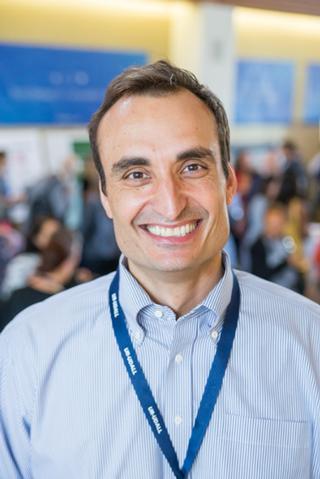
Ray Dorsey
Neurologist
15
APPEARANCES
14
PODCASTS
Nov 2, 2026


Mitra AfshariHOST
My first question to you, Ray, would be, could you provide one or two examples of each of these toxicants that fall into these three categories that have really shown that connection to Parkinson's disease?

Ray DorseyGUEST
First of all, why do we think that these diseases are preventable? And what are the causes, principal causes of Parkinson's disease? One central tenet of Western medicine is that diseases have causes.
Ray DorseyGUEST
You get cancer or Parkinson's disease because something caused you to have the disease.
Ray DorseyGUEST
You get pneumonia because you got exposed to a virus or a bacteria and that gave you infectious disease.
23 MINS LATER

Chris KresserHOST
What is the strongest evidence that the rise is not just aging, longer survival, or better diagnostic methods?
Ray DorseyGUEST
And there are about 100,000 people, 50 to 100,000 people over age 60 in 1800 London.
Ray DorseyGUEST
If that were true, when Dr. Parkinson described the disease, there'd be 1,000 people with Parkinson's disease.
23 MINS LATER
Chris KresserHOST
So I wanted to really like, set the stage here for the next part of the discussion which is okay dr dorsey we i think we've made a strong case that this is parkinson's is a man-made disease caused by environmental toxins now the two biggest questions are going to be on the listeners minds are going to be how do i know if i'm exposed and therefore how can i reduce my risk like what are the biggest drivers is there an 80 20 rule here like you know, before I excavate my entire life, what are the biggest drivers that are going to give me the biggest bang for my buck in terms of identifying exposure?


Ray DorseyGUEST
Parkinson's disease, the first major description of the disease was by Dr. James Parkinson in 1817 in London.
Ray DorseyGUEST
And he sees something new on the streets of London, something so new that at 61, he bothers to write a case series.
Ray DorseyGUEST
He basically writes his case series on six people, five, at least five of whom are men.

E. Ray DorseyGUEST
Those three countries have the highest rates of Parkinson's disease in the world.
E. Ray DorseyGUEST
The principal causes I think, uh, for Parkinson's disease in many countries are either pesticides, dry cleaning, and degreasing chemicals.
28 MINS LATER

Aimee EyvazzadehHOST
Are there some exposures, neurologically speaking, that anyone who's trying to conceive should be concerned about in regards to trying to conceive a healthy baby? I know things that are mentioned in the book, radon, pesticides, like you just said, herbicides, manganese, solvents like TC and air pollution in the book.
Ray DorseyGUEST
So if you want to avoid intellectual disabilities, avoiding exposure to pesticides is important.
Ray DorseyGUEST
It's also worth knowing that pesticides are sprayed on kids' schools and playgrounds.
Ray DorseyGUEST
I didn't know that until writing the book, Many schools and playgrounds are sprayed with it, fortunately in California, the Healthy Schools Act, which limits the use of the most toxic pesticides on kids' playgrounds and schools and requires that parents be notified in writing in advance of the use of such pesticides.
Ray DorseyGUEST
But for the rest of the country, pesticides are routinely sprayed on kids' schools and playgrounds, and we ask why 1 in 31 children have autism.
Ray DorseyGUEST
I think we need to start looking at these things much more carefully, as you may recall that many pesticides are nerve toxins.
13 MINS LATER
Aimee EyvazzadehHOST
Are there laws about golf courses and the use of pesticides that you know of? I haven't done research on it, but I'm wondering if you should be calling the golf course.

Ray DorseyGUEST
So I emailed him and I said, "Hey, how does this model fit in with toxic chemicals that we ingest or swallow?" So if you drink well water, which is often contaminated, often in rural areas, often near farms, contaminated by pesticides, not regulated by the Safe Drinking Water Act, you consume pesticides.
Ray DorseyGUEST
These pesticides could lead to misfolding of a protein, something called alpha-synuclein, that starts in the gut and then spreads up the vagus nerve.
Ray DorseyGUEST
So as you know, the vagus nerve goes from our gut all the way up to the lower part of our brain, and once it gets to the lower part of the brain, it then spreads...
Ray DorseyGUEST
So it goes from the lower part, something called the medulla, to the part of the brain that's responsible for sleep.
Ray DorseyGUEST
So you get early sleep disturbances, REM sleep behavior disorder, and it spreads from that part to the substantia nigra, where you get the motor features of the disease.
22 MINS LATER

Dean MitchellHOST
I do appreciate, if you read this book, to rate it on Amazon and provide your comments and a review.

Margaret PrestonHOST
What policy related changes? What needs to kind of move the needle to allow folks who are underserved in more rural neighborhoods to be able to have better access to care? What do you think that looks like?
Ray DorseyGUEST
I think Michael and I called for a 10-fold increase in the number of centers of excellence throughout the country so that more and more people can get access to care.
Ray DorseyGUEST
Michael was heard from as a person who said, I'd love to come to University of Florida, but the wait time is a year.
6 MINS LATER


Aly CohenHOST
And what parts of the brain... are distinct to Parkinson's disease in terms of the pathology as compared to some of the other, you know, areas that we hear about, like ALS and MS and some of these other brain-related conditions.
Ray DorseyGUEST
So classically, the area part of the brain that's most affected in Parkinson's disease is an area of the brain called the substantia nigra.
Ray DorseyGUEST
And loss of these dopamine-producing nerve cells produce the class A. movement features or motor features in the disease, the tremor, the slowness of movement, the stiffness and the difficulties walking.
Ray DorseyGUEST
He said he looked forward to the future anatomists who would identify where the disease was beginning.
36 MINS LATER
Aly CohenHOST
You mentioned a carbon block in the book, and I was just curious about what your thoughts are on even reverse osmosis and which technology has actually considered to be more aggressive so maybe tell us a little bit about that that golf course study and why that was so you know uh made the headlines and really traveled had legs on it

Jesse ChappusHOST
When these chemicals come into the body, take me through how that leads to Parkinson's.
Ray DorseyGUEST
So when Dr. Parkinson described the, uh, disease in 1817, he wasn't sure where the disease began.
Ray DorseyGUEST
He thought it might begin in, in, uh, part of the brain, and he said he looked forward to, uh, anatomists who would de- determine where the disease began.
Ray DorseyGUEST
In 2003, a really, really smart German pathologist named Heiko Braak, uh, came up, uh, said, "I've looked at..." Came up with a new idea.
Ray DorseyGUEST
He said that Parkinson's disease, which we think of a brain disease, does not begin in the brain.
15 MINS LATER


David PerlmutterHOST
Let's paint the broad strokes at first about Parkinson's being an environmentally related disease.
Ray DorseyGUEST
Uh, we didn't really get infectious diseases until people started living close to one another after the Agrarian Revolution, and we didn't start getting chronic diseases, really many chronic diseases, until the Industrial Revolution.
25 MINS LATER
Ray DorseyGUEST
But some are so small, less than one-thirtieth the width of our hair, they penetrate the nerve that hangs down, they're responsible for smell, that hangs down in our nasal passages.
Ray DorseyGUEST
And so people with Parkinson's and Alzheimer's both have high, high levels of metals in their brain.

Ray DorseyGUEST
So I think the reason we're u-uncomfortable with it, like why is Mark uncomfortable? Quite frankly, why was I uncomfortable with it? It's 'cause we were in medical school, and, uh, we were taught that Parkinson's disease, uh, was some combination of, uh, bad genes, natural consequence of aging, worried about bad luck, and maybe, uh, a, a sprinkling and quick mention of pesticides.
Ray DorseyGUEST
And that's what we were taught in medical school were the principal causes of Parkinson's disease.
Ray DorseyGUEST
Um, uh, as I mentioned, you put a mouse in the laboratory and you let it age, it will never spontaneously develop Parkinson's disease or Alzheimer's disease, only if you manipulate its genes or expose it to toxic chemicals.
Ray DorseyGUEST
Um, in 1826, John Adams, age ninety, is writing letters to Thomas Jefferson, age eighty-three.
20 MINS LATER


Ray DorseyGUEST
So, uh, what was sprayed on corn in, uh, Nebraska? So one of the most common weed killers used on corn is a pesticide called, uh, paraquat.
Ray DorseyGUEST
Uh, Dr. Tanner showed that pe- farmers who work with paraquat have 150% increased risk of developing the disease.
Ray DorseyGUEST
Beate Ritz at UCLA, Dr. Beate Ritz at UCLA, and her colleague Dr. Kimberly Paul showed that simply living or working, you're not the farmer, you simply live or work near where paraquat is sprayed, and your risk is doubled.
Ray DorseyGUEST
Um, the paraquat's been used to commit homicide and suicide, and because of its toxicity and link to Parkinson's, over 70 countries, including China, have banned it.
23 MINS LATER
Lisa VolenecHOST
You're looking at other brain illnesses as also being, you know, doing this can help eliminate other diseases as well for the brain is what your, your belief is, correct?


Ray DorseyGUEST
Uh, and so on page 237 of our book, we give you 25 actions individuals can take to reduce their risk of ever getting Parkinson's disease and 25 actions people like Lisa can do to likely slow the rate of progression.
Ray DorseyGUEST
If a farmer lives in, uh, a rural area and has well water, you know, he or she can, uh, get a, um, a carbon filter reverse osmosis system for them today.
Ray DorseyGUEST
Um, there have been studies that show that personal protective equipment, gloves and masks, long-sleeve clothing, can decrease your, uh, risk of developing, uh, Parkinson's and exposure to the toxic effects.
14 MINS LATER

Ray DorseyGUEST
It can't be genetics because our genes, you know, don't change, generally speaking, for just 200 years.
Ray DorseyGUEST
And if you look at a map of the world, areas of the world that are most industrialized, like the U.S. and Canada, have the highest rates of disease.
Ray DorseyGUEST
Areas of the world that are least industrialized, like Sahara and Africa, adjusted for age, have the lowest rates of the disease.
Ray DorseyGUEST
And areas of the world undergoing the most rapid industrialization and pollution, India and China, have the fastest increasing rates of the disease.
Ray DorseyGUEST
And so these chemicals, the ones that are implicated in Parkinson's disease, are all mitochondrial toxicants.
15 MINS LATER