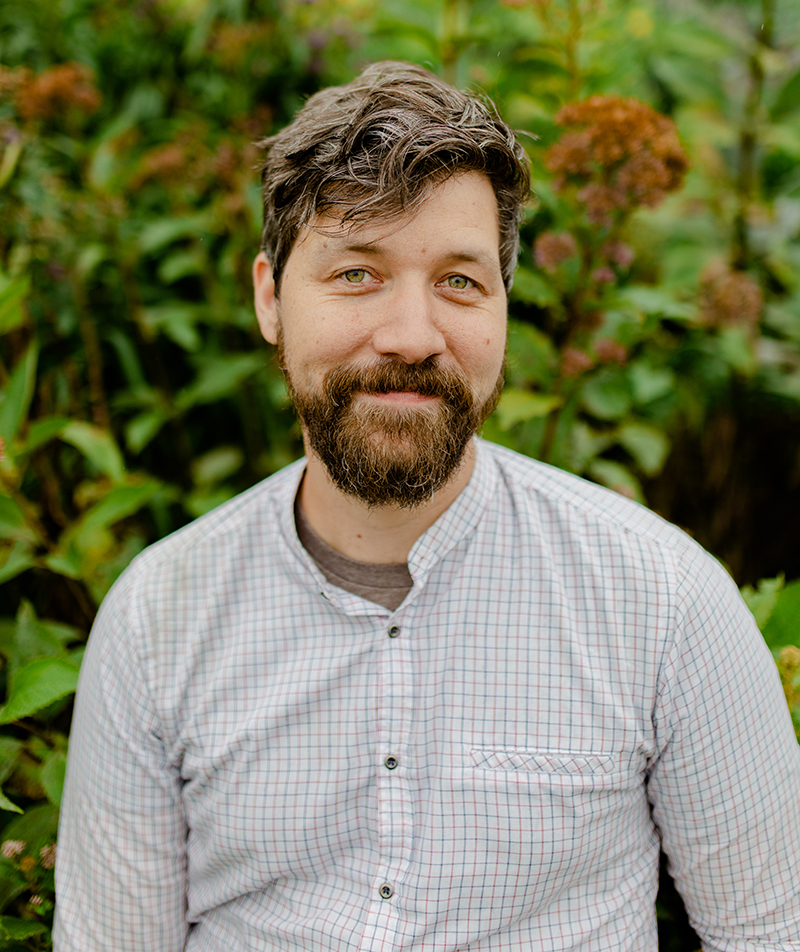
Dylan Thuras
Author
9
APPEARANCES
7
PODCASTS
Sep 11, 2026


Dylan ThurasGUEST
It's got all of these different fibers on different kind of layers and you kind of, you do the rack, you move the big stick and then you kind of put them together and you push them together.
Dylan ThurasGUEST
So in France, this guy Jacquard wanted to figure out a way to start to automate that process.
Dylan ThurasGUEST
And so he invented what was called the Jacquard loom, and he made a series of punch cards, paper cards with holes punched in them that you could use to program the loom.
Dylan ThurasGUEST
It was a computer program, effectively, and it automated what was a very highly skilled job.
Dylan ThurasGUEST
This caused people to be very upset because being a master weaver was very well paid, but all of the sort of titans of industry We're basically interested in doing this the cheapest way possible.
Dylan ThurasGUEST
It's actually really one of the first great examples of technological conflict in history.

Dylan ThurasGUEST
Well, I'll, I'll actually talk a little bit about the one that Ella just mentioned, called House on the Rock in Spring Green, Wisconsin, and I went there when I was 12 with my parents on a kind of classic American road trip.
Dylan ThurasGUEST
And so on this trip we went to a place called House on the Rock, and it is, to my mind, one of the most bizarre, amazing, wild creations in the entire United States.
Dylan ThurasGUEST
And to give a sort of quick description of what's in there, inside of this house, and house is really the wrong word, 'cause it takes about six hours to walk through the entire sprawling set of buildings kind of hidden in the forest, inside is, as Ella mentioned, the world's largest carousel with the world's most diverse set of carousel animals.
Dylan ThurasGUEST
There is a sculpture of a squid fighting a whale that is the size of the Statue of Liberty.
7 MINS LATER


Dylan ThurasGUEST
But it's like they're using this language, which is all sounds like do re sol, sol re, sol re do.
Dylan ThurasGUEST
But you could translate it into music and color, and so we did all of that stuff.
24 MINS LATER


SuChin PakHOST
This is make or break, but the right headphones and the right adapters, I'm so excited to hear about this 'cause I'm going to be adding to cart immediately.
Dylan ThurasGUEST
It's such a simple little thing, and they're, they, these, the, the ones we got are, like, really cheap.
Dylan ThurasGUEST
So on a lot of flights now, there's no seat back entertainment anymore, right? The, like, the screens are gone, and, and y- so you bring your own, uh, phone, or we bring a computer that's preloaded with a bunch of movies we've downloaded ahead.
18 MINS LATER

speaker_8SOUNDBITE_SPEAKER
For most of the 140 years since the invention of artificial cements presented the modern world with a new building material, Concrete has been used for structures above grade in the United States.
Dylan ThurasGUEST
I think creative people think a lot about the birth of new ideas, but less about how they change over time or even how they end.
Dylan ThurasGUEST
Creative people love to turn art into businesses, only to discover that running a business is very different from creating art.
Dylan ThurasGUEST
Of course, I couldn't tell Blake any of this, or it's a sort of dispiriting perspective, at least a complex one.
6 MINS LATER
speaker_0ADVERTISER
Oh, this is where the party happens.

speaker_6UNKNOWN
But lots of scientists were obsessed.
Dylan ThurasGUEST
So people are starting to play with this, and they're starting to realize that certain metals move electricity better than other metals.
Dylan ThurasGUEST
We can kind of send a little shock, a little signal along a wire and move something from here to there.
Dylan ThurasGUEST
And so people are starting to realize that this might actually come in handy, and there might be a way you could use this for practical purposes.
6 MINS LATER
AvaHOST
People figured out they could run wires from one place to another, then they could easily send little pulses of electricity between those places.
Dylan ThurasGUEST
By using this new-found lovely creation of huge amounts of long, cheaply made wire, you could send a little electric signal, just a boop, (bell dinging) and you could send a message using that wire.
Dylan ThurasGUEST
You could, you could have a way to just generate different lengths of electric signal, long or short, and use something called Morse code to basically send a message almost in real time, 'cause those electric signals are moving close to the speed of light.
Dylan ThurasGUEST
You don't start to get to really revolutionary change until you're able to melt pretty large quantities of metal and start casting it in different shapes.
Dylan ThurasGUEST
So that means basically being able to make a big bubbling pot of liquid metal (metal bubbling) and pouring it into clay or sand forms so that then basically you can kind of cast it into things like plowshares or cauldrons, like, you know, a big metal bucket to make soup in.
9 MINS LATER
Wilhelm AlbertVOICE_ACTOR
Hmm.
Dylan ThurasGUEST
It was for replacing the hemp ropes in mines, making it easier for people to get down deeper and also safer 'cause the, the wire was both stronger and actually took up way less space than say like a chain might.
Dylan ThurasGUEST
And then used to sort of hold up bridges, like the Brooklyn Bridge used some of these- this early wire rope technology to help hold itself up and still does.


Dylan ThurasGUEST
It's got the world's, uh, a sculpture the size of the Statue of Liberty of a squid fighting a whale inside the house.
speaker_11SOUNDBITE_SPEAKER
[laughs]
Dylan ThurasGUEST
Um, so, you know, I was gonna go on a big trip, and Josh and I started talking and said, "How come there's not a great travel resource for these kinds of interesting, unusual places? Like, these are the best places you go when you take a trip." And so we started putting it together, and 16 years later, here, here we still are.