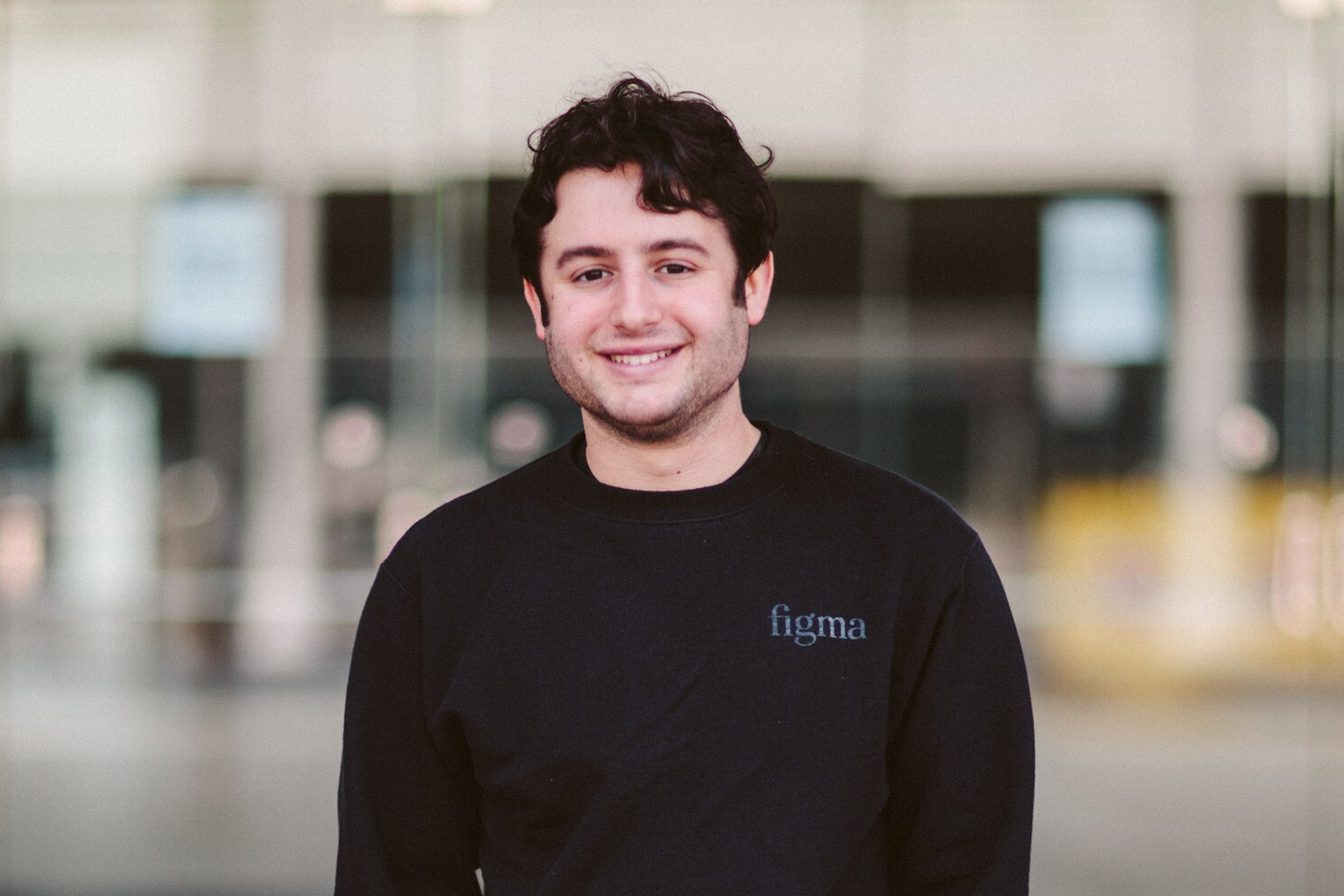
Dylan Field
CEO of Figma, Inc.
33
APPEARANCES
22
PODCASTS
Oct 19, 2026
Unknown podcast
Dylan Field: Is AI Replacing Designers?, Design is the New Code & Democratizing Creativity
Oct 19 · 40m

Dylan FieldGUEST
like, do you define the market looking back at the history, which is like the only logical way you do it as a regulator? Or do you do it as a technologist looking forward? And that could be very different in terms of how you think about markets, sizes.
Dylan FieldGUEST
We actually have way less traffic during the holidays because we're a work product.
10 MINS LATER

Jason CalacanisHOST
Can you just give me your view on the future of human creativity in this era, this future era that we're waltzing into, the singularity we're falling into? Where does human creativity play a role and where do the gaps still need to be filled for taking human creativity to the realization moment?

Dylan FieldGUEST
So we had told everybody, "Okay, uh, you know, enjoy the holidays." We actually have way less traffic during the holidays 'cause we're a work product.
Dylan FieldGUEST
And that was a Friday, and then, um, realized sort of over the weekend, okay, this is going to come to a conclusion.
Dylan FieldGUEST
And on Monday morning, uh, sent a message to everybody saying, "Hey, all hands at noon, and, uh, dial in if you like, and here's what's going on, and here's, like, the full sort of, uh, details." And so, first of all, so much of the company showed up.
9 MINS LATER
Jason CalacanisHOST
Can you just give me your view on the future of human creativity in this era, this future era that we're waltzing into, the singularity we're falling into? Where does human creativity play a role, and where do the gaps still need to be filled for taking human creativity to the realization moment?

SophiaHOST
What did you learn about this agent in beta and what's actually getting launched today?
Dylan FieldGUEST
Well, most importantly, and first of all, so we learned that this is already something we kind of knew, and then we viscerally learned it.
Dylan FieldGUEST
We viscerally learned how I think designers, product managers, they're willing to deal with the terminal, the IDE.
Dylan FieldGUEST
uh and they want home they want a better way and so i think that agent is uh a part of that code layers which we announced at config as well uh will also be a part of that and can't wait to be able to share more on that but the um we also i think learned how uh you really need to just go back to the basics when building non-deterministic software.
SophiaHOST
What do you expect to come in the next maybe few months around what are the specific areas that you're trying to improve?


Dylan FieldGUEST
You might have to do more work, and that requires more integration with the global system, uh, of Figma.
Dylan FieldGUEST
And so you kinda have to teach the models Figma first and, uh, make it so that they can understand how to go and work with Figma as well as do good design work.
Dylan FieldGUEST
Uh, but I think that right now, um, you'll probably see, you know, just as much on the slop side, uh, across all products than, you know, uh, in AI.
11 MINS LATER


Dylan FieldGUEST
Uh, well, we just finished our Q2 and reported on that, so those were strong results.
Dylan FieldGUEST
And overall, um, when we look at NDR, I mean, that came in at 136%, uh, which also I'm really proud of, and then free cash flow, uh, was strong as well.
Dylan FieldGUEST
And I think that, um, the opportunity ahead is so much in the code space and, uh, thinking about AI and inference and consumption on platform.
Dylan FieldGUEST
As we think about everything we can do to help our users be more efficient, have more power in their everyday workflows, there is so much opportunity, and we see people trying to bring AI onto the canvas and into this design environment.
7 MINS LATER

Dylan FieldGUEST
Uh, and it's not just enough to go and, uh, be able to have a lot of different aesthetics that a model can tap into.
Dylan FieldGUEST
And for what it's worth, the models, they can tap into these different aesthetics if you prompt them right, but, um...
Dylan FieldGUEST
But I think that overall, uh, it's also a requirement to be able to get to not just great, but, like, really awesome with these different aesthetics that you're trying for, and it's not just aesthetic.
Dylan FieldGUEST
Uh, you know, as you think about the UX and actually how different screens or interaction patterns connect, how you actually communicate data to a user, uh, the more emotional qualities of a brand or product.
Dylan FieldGUEST
Like, we're so far beyond, uh, or so far away from rather, what people need to get to great design, and there's tons of opportunity there.

Ed LudlowHOST
How are the customers behaving? Like, what's the, what's the story in, in the fields that you sell your, your software into, Dylan?
Dylan FieldGUEST
Uh, I would say that customers have been on definitely a journey as they look to figure out, how do we integrate AI into the workflow? Um, and some of those customers, that journey, they really understood where they're at and what they were doing, uh, even end of last year, and were doubling down on Figma then.
Dylan FieldGUEST
Others have been working through that process of figuring it out, uh, throughout, you know, the last, uh, six months, and they're also coming back to double down on Figma fully.
Dylan FieldGUEST
And I think that, uh, as workflows change, what we're trying to do is meet customers where they are.
Ed LudlowHOST
Uh, we just have 30 seconds, Dylan, but what are you most focused on building right now?


Dylan FieldGUEST
I, I, I think that the models are really decent at math, uh, for like pure math.
Dylan FieldGUEST
Um, and it's a bit of an antidote to the non-verifiable domains that I'm usually in.
18 MINS LATER
Dylan FieldGUEST
We've always taken a modular approach on what models we can use, and so we can swap models in, out whenever we like on behalf of the user or at the user's request.
Dylan FieldGUEST
And what we do is basically you can take your design and just move it over to a code layer, and it'll automatically convert it.
Dylan FieldGUEST
You can also in the future imagine a world where you're prototyping or even going to production with code in Figma.
Dylan FieldGUEST
And by being part of that token flow, we're very excited about what that can mean for our users and their abilities to really impact the platform.
Dylan FieldGUEST
Because as code is commoditizing, what we're seeing is that the value's moving up the stack to design.

speaker_7UNKNOWN
[laughs]
Dylan FieldGUEST
I mean, the cycle seems to be the model comes out, you think it can do everything, you discover the limits, and then you realize that, like, life goes on.
Dylan FieldGUEST
And, uh, it, you know, will at some point that be different and affect the world in a different way? Perhaps.
Dylan FieldGUEST
But so far it seems like everyone's adapting, and part of the adaptation is, uh, realizing the sort of new average that's being put out by the models.
Dylan FieldGUEST
You don't even have to defend taste and people having taste because then we'd argue about do they, um, to just recognize people can detect the average.

Kevin RooseHOST
Do we have an analog for that yet in the design world now that AI makes design easier to access?
Ed LudlowHOST
But how do you then fight this narrative that investors just wanna sell first, ask questions later, and, and has put your stock under pressure since the IPO?
Dylan FieldGUEST
Uh, I mean, I think we control the inputs and, uh, we need to deliver for our customers.
Dylan FieldGUEST
And so we're working very hard always on making sure that we're doing the right thing for the long term.
Ed LudlowHOST
Uh, regular of the show, Ben, "How do you see inference and token costs affecting your margins going forward?" You kind of alluded to it earlier.
Dylan FieldGUEST
And, um, yeah, you know, very quickly got to, okay, here is sort of, uh, with some cus- custom prompting, like a list of ways for them to go viral, given who they are.
Dylan FieldGUEST
But even for a fun project like that, uh, it's just like, you know, I'm gonna send it to them, they're gonna do whatever they do.
Dylan FieldGUEST
I don't know if they're gonna look at it more than a few times or even a few times, but I don't know.
Dylan FieldGUEST
... and tried a few different directions out, and, um, yeah, you know, very quickly got to: Okay, here is sort of, uh, with some cus- custom prompting, like, a list of ways for them to go viral, given who they are.
Dylan FieldGUEST
But even for a fun project like that, uh, it's just like, you know, I'm gonna send it to them.
Dylan FieldGUEST
I don't know if they're gonna look at it more than a few times or even a few times, but I don't know.
JordyHOST
Mm-hmm.


Dylan FieldGUEST
And so perhaps prompters have taste and can pull it out of this pattern matching machine.
31 MINS LATER

Dylan FieldGUEST
In the beginning of Figma, when we first started, I remember looking at the Bureau of Labor Statistics because I wanted to know the market size.
19 MINS LATER

Jack AltmanHOST
So like, um, how'd you, how did you navigate that? I guess starting with your own psychology.


Ed ElsonHOST
How did designers, how did people build stuff before? Like, w- what, what were people using before Figma?
Dylan FieldGUEST
Yeah, I mean, it was single player, and there's a culture that I think came out of agency culture, where there's a lot of, like, "I'm gonna show you three things, and, like, the first two are not gonna be like just what you want, but the third one, everyone's gonna go, 'Oh, it's so good,' and then I'll go back in my corner and I will do my work and we won't interact that much, 'cause I'm gonna have to try one too." And so that's completely different from the multiplayer experience of Figma, and I think that cultural shift was real.
Dylan FieldGUEST
Like, the first comments we got on the launch were, you know, uh, it was controversial.
Dylan FieldGUEST
People basically, uh, said in the launch comments stuff, stuff like, uh, you know, "A camel is a horse designed by a committee." They said, "If this is the future of design, I'm changing careers." But also, there was a small set of people that loved it and saw that vision of what it could mean to make multiplayer design in the browser, and with a tool that was high quality, and a tool that, um, could actually really meet their needs and be focused on their use case.
23 MINS LATER
Dylan FieldGUEST
For me, I think I'd always, you know, been a leader in terms of leading different initiatives that I'd been a part of, or trying to help whoever was the leader really, uh, do their best.
Dylan FieldGUEST
And from that, I kind of came into starting Figma, just thinking I was good to go.


Andrew BosworthHOST
What was it that you saw that maybe everyone else didn't see at the time that allowed you to get to where things are today? Yeah.
7 MINS LATER
Ed LudlowHOST
I sat down with CEO Dylan Field, who began by explaining the impact of growth from acquiring Weevy, a startup focused on generating imagery with AI within a web browser.
Dylan FieldGUEST
You can compose them in a node-based system, which basically means drag and drop visual programming.
Dylan FieldGUEST
And from there, you can really start to explore what's possible with various models.
Dylan FieldGUEST
So for us, it's a bet that the starting prompt is just a starting prompt, it's not the end.
Dylan FieldGUEST
What you need to do is shape these outputs almost like a medium, like clay, rather than try to go for the one shot.
Dylan FieldGUEST
And then the final destination should be what you get through throughout this process.
Ed LudlowHOST
But I guess it's, is this existing customers using more products or is it a customer count growing higher because you're offering a wider range of products?

Dylan FieldGUEST
I mean, in the beginning of Figma, when we first started, I remember looking at the Bureau of Labor Statistics because I wanted to know the market size.
Dylan FieldGUEST
I'm like, shit, like that's not the market that we can use to go get VC funding.
20 MINS LATER


Lenny RachitskyHOST
Is there a, a counterintuitive decision you made along the journey of Figma, something that was very unpopular and just un- and unconventional and controversial, let's say, that people were like, "Now why are we doing this?" And then proved out to be really, really s- important to the success of Figma?
Dylan FieldGUEST
Looking back, one thing that, um, was definitely unpopular and controversial at the time, and now we look back on it, and it's like, "Duh," uh, FigJam.
Dylan FieldGUEST
So FigJams are a whiteboarding, diagramming, brainstorming tool, uh, and it's basically a digital whiteboard.
Dylan FieldGUEST
And you can go in with your team, uh, or maybe if you're a researcher, you can invite folks in from outside the organization, and, uh, you can create diagrams, you can put stickies on the canvas.
Dylan FieldGUEST
Um, and, uh, kind of the entire process of getting FigJam out to market, going from run- one product to two products was hard.
Dylan FieldGUEST
Uh, first of all, I had been noticing the diagram and whiteboarding case in Figma for, Figma Design that is, for years and kind of kept pushing on, "Hey, we gotta make a simpler product surface here, and this is important." And then people, uh, would correctly ask me all the why questions for why now.
6 MINS LATER
Lenny RachitskyHOST
A lot of companies are thinking about, "When should we launch our first, uh, expansion? When do we go beyond that?" What are a couple lessons you learned from going through that, that might be helpful to other founders?
Ed LudlowHOST
What does that signal to you about when OpenAI communicates, there is that level of response from your investors and the technology industry at large?
Dylan FieldGUEST
Yeah, you surprised me with that earlier before we started talking on the interview and I'll check it later.
Dylan FieldGUEST
But I don't know is the honest answer because it's not really something that I'm as tuned into.
Dylan FieldGUEST
I told the team before we IPO'd, during the IPO, after the IPO, number goes up, number goes down.
Dylan FieldGUEST
Every day we got to be driving to make sure that we are making a better user experience, better products for all of our users on the platform.
Dylan FieldGUEST
And so I think if it means anything to me, it's people see possibility in how these systems can work together.
Ed LudlowHOST
Just as a moment in time like this Dev Day where there are thousands of people here in Fort Mason, San Francisco, in your technology career, could you try and summarize what you think is happening in particular with AI and what's happening in this city? I


Dylan FieldGUEST
I mean, I think if you go back far enough, you know, AI showed up in different forms for Figma.
Dylan FieldGUEST
So I had the chance to be on the data science team at LinkedIn as an intern prior to working at Flipboard and gaining more into design and then starting Figma.
Dylan FieldGUEST
And we were doing, you know, a lot of more classical machine learning approaches, and I was kind of absorbing that.
Dylan FieldGUEST
And there's plenty of discussion about agents back then with my mentor, Pete Skomrock, and thinking through, okay, what might it look like if some of the ideas from the nineties were to resurface? And, you know, those were just kind of like fun, geeky conversations that were pretty abstract because obviously the world wasn't there yet.
Dylan FieldGUEST
And then back at Brown with Evan, my co-founder and our original CTO, who's no longer at Figma, but an absolute legend, I mean, just check out his GitHub if you're not convinced of that.
13 MINS LATER


Bob SafianHOST
What do people not understand about design? What makes a designer CEO different? There's a million
Dylan FieldGUEST
definitions of design, but I. I always like to think of it kind of as core problem solving.
Dylan FieldGUEST
And I think that people kind of go on this design journey and maybe the first step is like, does design even matter? I made something cool.
Dylan FieldGUEST
Why do I need a designer? And then I think at some point people go, okay, well, I should at least make it pretty.
Dylan FieldGUEST
How do I make it pop? How do I make it cool, sexy? And then I think from there, people go, wait a second, it's Maybe that's not enough because I'm putting this in front of people, my product, my software, my app, and they don't know how to use it.
11 MINS LATER
Bob SafianHOST
Right? Like you still, I have to spend more time to fine tune it and maybe I have to end up fine tuning a lot of it myself, not using those tools.

Bob SafianHOST
Are you different? Are your products different? Like, there were strategic reasons you wanted to become part of Adobe initially.
Dylan FieldGUEST
You know, it's interesting, the company that's acquiring in this period between, uh, sign and close, they can't direct activities.
Dylan FieldGUEST
And so, we had our roadmap going into the deal, and that was our roadmap during the deal.
Dylan FieldGUEST
And the more that we started to, you know, have to ask ourselves with just regulatory being what it was, uh, whether or not that was, like, a correct assessment, not a correct assessment, you know, we'll leave it to history to tell.
Bob SafianHOST
What w- w- what do people not understand about design? What makes a designer CEO different?
Dylan FieldGUEST
And, uh, they got someone who was legendary design talent to be able to be at the forefront of their work on Oculus for- for quite some time.
Dylan FieldGUEST
And, um, I- I would not be surprised if similar things started happening, um, but I also think that, um, you know, back in the early days of Figma, it was this question even of, like, how many designers are there in the United States and the world? I mean, the Bureau of Labor Statistics said that there were 250,000 designers.
Dylan FieldGUEST
But, like, how many are there actually? I don't know, maybe it's like 500,000, not 250,000.
Dylan FieldGUEST
And, uh, but what we noticed was that values move up the stack, and it was going to be the case that everyone's going to build up, uh, their design team and the design would be so important as this overall system changed.
Scroll for more appearances