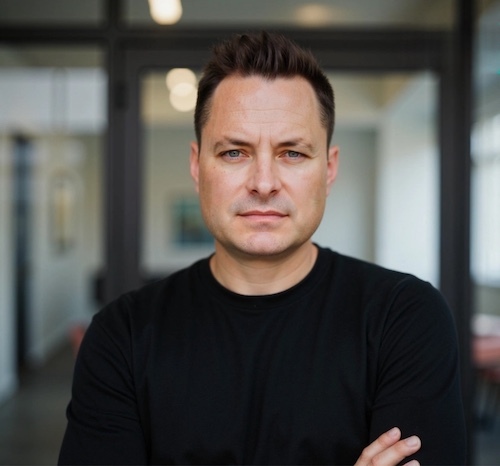
Drew Thurlow
5
APPEARANCES
4
PODCASTS
Oct 28, 2026


Drew ThurlowGUEST
yeah i mean the pop pop in the pop world people are using soon like crazy all of the sessions and So, I mean, I definitely, I think we should be sensitive to the livelihoods that are disrupted by this.

Jay GilbertHOST
But where do you see this, whether it's in the studio or on the stage or in the creative process, where do you see some of these tools becoming the new digital audio workstation or the new drum machine?

Drew ThurlowGUEST
Now, this is where gross definitions of AI and not AI are problematic because there's a massive distinction between fully AI generated and something that's AI assisted or part of the workflow of a recording process.
Drew ThurlowGUEST
Now, AI, strictly AI, talking about machine learning algorithms being involved in some process of recording and releasing music, has been around for a long time, and especially in the mastering process, the final process you do to a piece of music to get it ready for commercialization.
Drew ThurlowGUEST
There's a huge difference, I think, between, say, let's use a Canadian icon, Rush, recording a new song and then using the AI at the very end of the process versus someone text prompting a song into existence.

Paul HaavardsrudHOST
Does that scenario that I just painted, is that something that is, is a worry? Or is that possible?


Drew ThurlowGUEST
My axe to grind is with many of us in the music industry and the myopic way that we talk about AI.
Drew ThurlowGUEST
Just last week, we had an impressive consortium of music industry stakeholders asking for and advocating for an AI-assisted or AI-created label on DSPs.
Drew ThurlowGUEST
Here's a few reasons why this is, at best, pointless, and at worst, a waste of resources.
Jay GilbertHOST
And now at Berklee, before we dive into the book, can you walk us through that journey?
Drew ThurlowGUEST
I can't say I've had a plan, but I started my career as a musician, and I was a session bass player.
Drew ThurlowGUEST
I still have a publishing deal with Rough Trade, although it's quite dormant these days.
17 MINS LATER

Drew ThurlowGUEST
And part of it is not anyone's fault, it's just the way that labels and commercial music industry works these days.
Drew ThurlowGUEST
But when I decided I was leaving Sony, it kinda coincided with this AI explosion.
Drew ThurlowGUEST
And I think when ChatGPT launched, I think everyone was like, "Oh, yeah, this is, like, internet-level disruption," and I'd bought into it so I started writing about it and thinking about it, and there weren't many people who had worked in the music industry for as long as I had, as an artist and recording for labels and then working at labels and then at a DSP, who had the perspective on what this could mean.
Drew ThurlowGUEST
So I got a book deal pretty quickly, so my book about music and AI is coming out in March.
Drew ThurlowGUEST
I write for Billboard about it, and I have a bunch of clients I consult in the space.