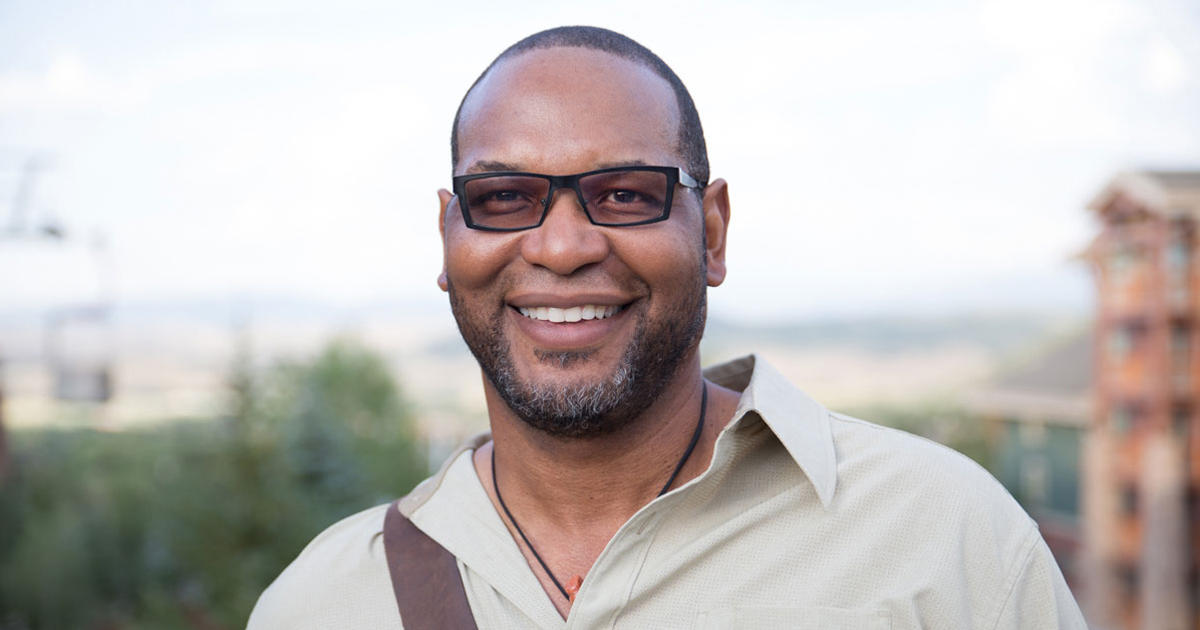
J. Drew Lanham
American author and poet
12
APPEARANCES
3
PODCASTS
Sep 11, 2026

J. Drew LanhamGUEST
I'm Jay Drew Lanham, an ornithologist, naturalist, and writer, and this is a note I've written to a bird I love.
J. Drew LanhamGUEST
[bird singing] Dear Olive-sided Flycatcher, might I call you Ollie Fly? Please forgive the familiarity, but, um, there's a dead tree, a nice tall pine snag on the edge of my home by the mountain lake that's just calling your name.
J. Drew LanhamGUEST
No, I'm not expecting a quick three beers call or anything so tell-tale as that.


Drew LanhamGUEST
Social justice means that a community gathers, flocks in a way, just as birds do.
Drew LanhamGUEST
Um, we swirl and we turn and we come together, um, in a way to demand rights that are due us that, um, aren't extraordinary by any means.
Drew LanhamGUEST
And, and in many ways, Michelle, it's, it's demanding your just due as a human being.
Drew LanhamGUEST
And, um, that we have to, to come together to do that means that there is force in those numbers.
Drew LanhamGUEST
It's just like we might see one black bird and think something of it, but then when we see those same birds murmurating, flocking together, there's, there's power there.
32 MINS LATER
J. Drew LanhamGUEST
I'm often asked, "What's your favorite bird?" My standard response is, "The one with feathers." Birds deserve more than the disappearing by billions and reducing them to just names on a list.
J. Drew LanhamGUEST
But here's the recent taxonomy of my obsessions, selected birds of the moment, annotated by why.

Mark BramhillHOST
And so watching these sparrows in habitat that many people would overlook inspired a poem celebrating these little brown birds.
J. Drew LanhamGUEST
[Sparrow singing] [gentle music] "Sparrow Envy." Were I the sparrow, brown-backed, skittish, and small, I would find haven in thorniest thickets, search far and wide for fields lain fallow, treasure the unkempt, worship the unmown, covet the weed-strewn row.
J. Drew LanhamGUEST
I would slink between sedges, chip unseen from brambles, skulk deep within hedges, and desire the ditches grown wild.
J. Drew LanhamGUEST
I would find great joy in the mist-sodden morning, sing humble pleas from the highest weeds, and plead for the gray days to stay.
J. Drew LanhamGUEST
I'm Jay Drew Lanham, an ornithologist, naturalist, and writer, and this is a note I've written to a bird I love.
J. Drew LanhamGUEST
[bird singing] Dear Kentucky Warbler, are you real? It's hard to believe the way that citrine melds into your mossy olive drab back and those black sideburns drip down your cheeks.
J. Drew LanhamGUEST
[bird singing] Remembering a close encounter with you one mid-May day for about half an hour, and I thought I'd crossed over some ethereal boundary into another world.
J. Drew LanhamGUEST
You singing that ringing redeep, redeep, redeep, redeep, telling me you're hidden deep in the gap tangle of some new greening spring woods.
J. Drew LanhamGUEST
I find my joy on daily walks around the farm or just sitting and watching some bird, and it doesn't have to be a rare bird.
J. Drew LanhamGUEST
It was like they were so happy that spring was here, they would just sit in little shafts of sunlight.
J. Drew LanhamGUEST
I could see its eye blink, and then it opened that yellow beak and, like, yawned.
Chazzie JohnsonHOST
It's easy to get so caught up in the hustle and bustle of modern life that we forget how to be present or even take for granted that we're free to choose joy.
J. Drew LanhamGUEST
One of the first books, pieces of literature anyway, that I read as a child was this book by, um, an author named Fred Bodsworth called The Last of the Curlews.
J. Drew LanhamGUEST
[music] And it was this beautiful story about the last of a bird that's now extinct, the Eskimo curlew.
J. Drew LanhamGUEST
And I remember reading that book, and then I saw an ABC After School Special that, like, set me on fire, right? 'Cause I was, [laugh] I was like, "Oh, wow, this bird is gone." And in my mind, though, I was like, "Maybe it's not gone.
J. Drew LanhamGUEST
Maybe it's there." But, you know, as the writer had written this story from the point of view of a bird, it's like he had become this bird in a way, and so I went on to read other writers that were writing about nature, sometimes writing specifically about birds.
J. Drew LanhamGUEST
And that was sort of the genesis for me, that maybe while I was still in the egg somewhat, that was singing to me in a way that said, "Okay, when you hatch, you get to write about birds yourself."
53 MINS LATER
Mark BramhillHOST
Drew Lanham, reading an excerpt from the title poem of his book, Joy Is the Justice We Give Ourselves.
J. Drew LanhamGUEST
[gentle music] Joy is the sunrise breaking through night's remains, bright shone new on a shell-wracked shore.
J. Drew LanhamGUEST
I'm Jay Drew Lanham, an ornithologist, naturalist, and writer, and this is a note I've written to a bird I love.
J. Drew LanhamGUEST
[woodpecker drumming] Dear pileated woodpecker, first off, do you prefer a long I or a short? Just want to make sure I start off right.
J. Drew LanhamGUEST
Potato, potato, right? Speaking of names, been wondering what you think of all the Lord God bird stuff, people mistaking you for the long lost ivory-bill woodpecker.
J. Drew LanhamGUEST
I mean, after all, that huge ivory bill used to give you guys a run for your biggest pecker money back in the day.

Drew LanhamGUEST
Well, you know, we can talk about grassroots, um, (laughs) as, as, as conservation sort of impetus.
Drew LanhamGUEST
And, and here I think we can talk about flight feathers, right, and, and how we get started, how we fledge to some state beyond watching and appreciating, which is absolutely critical, um, to being activated.
Drew LanhamGUEST
And that frequently occurs in the backyard, which is our first place, right? It's grassroots.
Drew LanhamGUEST
And so to first think of your backyard as that first place of activism, and that's a word that I really want to push forward into conservation, is in that it's not a conservative act, but it's an activist thing to not just see birds and watch them and list them, but to, to actually feel for them, to love them, to know that their plights are tied to ours.
11 MINS LATER

Jen WhiteHOST
What are your biggest concerns when it comes to environmental losses and what it means for bird populations?
J. Drew LanhamGUEST
Drew Lanham, an ornithologist, naturalist, and writer, and this is a note I've written to a bird I love.
J. Drew LanhamGUEST
Yes, you are a junco to most, but persistently in my memory, you're a snowbird.
Drew LanhamGUEST
Well, you know, we can talk about grassroots, um, (laughs) as, as, as conservation sort of impetus, and, and here I think we can talk about flight feathers, right, and, and how we get started, how we fledge to some state beyond watching and appreciating, which is absolutely critical, um, to being activated.
Drew LanhamGUEST
And that frequently occurs in the backyard, which is our first place, right? It's grassroots.
Drew LanhamGUEST
And so to first think of your backyard as that first place of activism, and that's a word that I really want to push forward into conservation, is in that it's not a conservative act, but it's an activist thing to not just see birds and watch them and list them, but to, to actually feel for them, to love them, to know that their plights are tied to ours.
Drew LanhamGUEST
And so that happening in your backyard, the birds that you see that are homebodies, that are there all year round that you come to know, but then in the spring as migrants begin to stream north from the Neotropics, and they tie us to the rest of the world, but that begins in our own backyards, in our own communities.
10 MINS LATER
Jen WhiteHOST
What are your biggest concerns when it comes to environmental losses and what it means for bird populations?