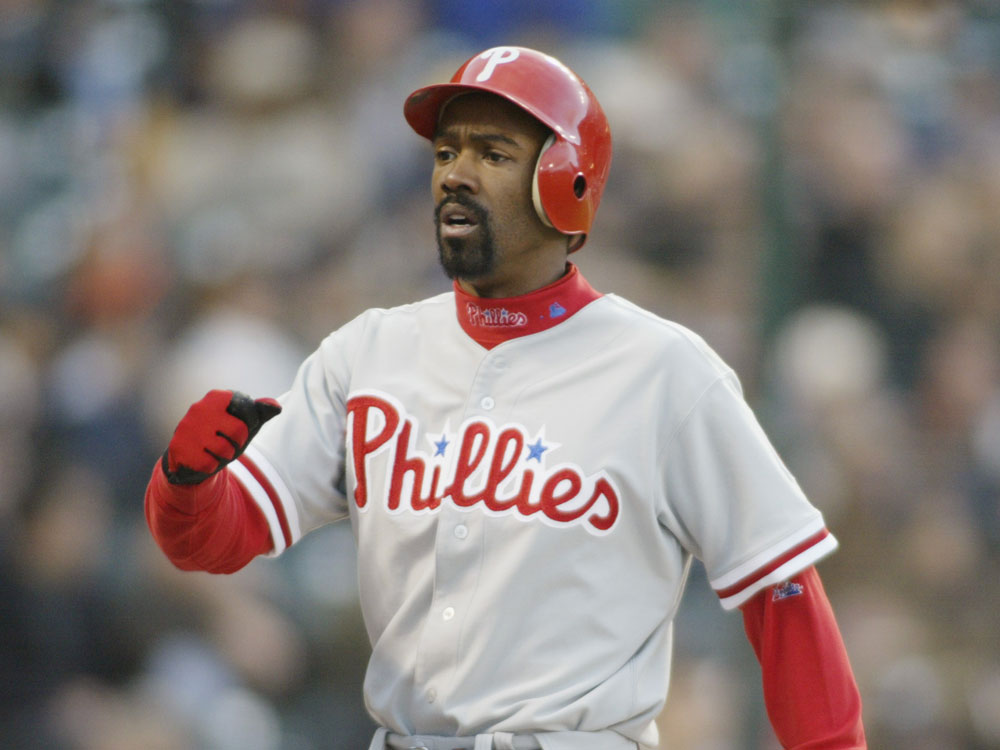
Doug Glanville
American baseball athlete
20
APPEARANCES
13
PODCASTS
Oct 30, 2026


Laurence HolmesHOST
When you look at teams like that, and we can be as specific as you want on Milwaukee or What do you think are the important lessons to learn about how they built not just their team, but their franchise?

Doug GlanvilleGUEST
First of all, about the resources, right? It's like there's an element of like, OK, you could buy your way to a championship.
Doug GlanvilleGUEST
You can also afford to make mistakes, right? You can make a trade that didn't quite work and kind of recover or be competitive.
Doug GlanvilleGUEST
These teams like the Brewers, the Guardians, the Rays, they don't really have the luxury to be able to miss on a $200 million free agent year in after year out.

Matt SpiegelHOST
And some of it is players under the thumb of the manager, perhaps more than multiple $200 million players on a roster, right? That's a factor a little bit.
Laurence HolmesHOST
When you look at teams like that, and we can be as specific as you want on Milwaukee, what do you think are the important lessons to learn about how they built not just their team but their franchise?
Doug GlanvilleGUEST
First of all, about the resources, right? It's like, there's an element of like, okay, you could buy your way to a championship.
Doug GlanvilleGUEST
You can make a trade that didn't quite work and kind of recover or be competitive.
Doug GlanvilleGUEST
These teams like the Brewers, the Guardians, the Rays, they don't really have the luxury to be able to miss on a $200 million free agent year in after year out.
Matt SpiegelHOST
Doug, there's some magic that these teams like the Brewers and the Rays and Cleveland have with their forced efficiency, and some of it is players under the thumb of the manager, perhaps more than multiple $200 million players on a roster, right? That's a factor a little bit.
Mary Claire HaverADVERTISER
Listen and follow Unpaused with me, Dr. Mary Claire Haver, wherever you get your podcasts.
Doug GlanvilleGUEST
First of all, about the resources, right? It's like there's an element of like, okay, you can buy your way to a championship.
Doug GlanvilleGUEST
You can make a trade that didn't quite work and kind of recover or be competitive.
Doug GlanvilleGUEST
These teams like the Brewers, the Guardians, the Rays, they don't really have the luxury to be able to miss on a $200 million free agent year in after year out.
Matt SpiegelHOST
Doug, there's some magic that these teams like the Brewers and the Rays and Cleveland have with their forced efficiency, and some of it is players under the thumb of the manager, perhaps more than multiple $200 million players on a roster, right? That's a factor a little bit.


Doug GlanvilleGUEST
So it's like, so, oh, yeah, you take, everything's contingent on the cap, and then fine, yeah, we'll, you know, we'll do all these quality of life kind of things.
Doug GlanvilleGUEST
And I think that was, I think when Tony Clark first was involved, uh, as, as the union chief, so to speak, he, um, that was sort of the first deal was cut.
Doug GlanvilleGUEST
There was a lot of discussion on, well, uh, you- you're not really focusing as much on the economics as you are these sort of quality of life situations, right? Like, it's, it's like travel and hotels and, you know, which is, you know, certainly important, but it's, it can be a distraction.
Doug GlanvilleGUEST
And there's no question that, you know, the owners are recognizing that, all right, well, we can get all these things, and they're just making it contingent.
8 MINS LATER
Doug GlanvilleGUEST
And just because he o- [laughs] And just because he has a small team in a small city, wh- uh, uh, it doesn't...


Doug GlanvilleGUEST
And, and it's not because you, you can't be successful in leadership roles when you, you know, you're not always with direct experience.
Doug GlanvilleGUEST
I think that's up in so many different fields that it's like, okay, well, you know, I guess you can, you know, train experience.
Doug GlanvilleGUEST
When, when George Lombard Jr. came up, he said, "Well, you know, I think you can kind of, like, teach experience now.
Doug GlanvilleGUEST
Like, I feel like you can accelerate the process." I thought that was really interesting, especially from a guy who's, like, legacy baseball.


Doug GlanvilleGUEST
Now, if your team is 30 games up, it makes it more challenging in certain ways.
Doug GlanvilleGUEST
Most of the time, you just give it to him in spring training because he's going to have the offensive numbers that is going to compete or excel or exceed everyone else.


Mia O'BrienHOST
With Aaron Judge back in the fold, what are realistic expectations for the Yankees come October?
Doug GlanvilleGUEST
Look, even without Judge, yes, there's always conversations about them offensively sliding without Judge.
Doug GlanvilleGUEST
But you also try to isolate and say, well, Bellinger, these guys at their best are better than they're showing.
Keith ErzariHOST
So as we are winding down with a couple of weeks left in the season, who are the two or three teams not named the Dodgers that you truly believe are built for the postseason?
Chris TownsendHOST
Put your arms around how magical and how special this ride has been for PCA and the Cubs this year.
Doug GlanvilleGUEST
I mean, he's the Pied Piper, you know, and I think that it's, you know, and he's getting everybody, you know, out of the streets, the superstars and other sports.
Doug GlanvilleGUEST
He is that infectious of a player, and he's that talented, and he's just that exciting.
Doug GlanvilleGUEST
And Craig Council is a man of very modest words, and he's just expressing just how transformational Pete Crow Armstrong is.
Doug GlanvilleGUEST
And that takes a lot because Council has that perspective of 15 years in the big leagues.
Doug GlanvilleGUEST
He's like, I've seen better years, but there's something about Pete Crow Armstrong with the elite defense, the swagger, the fact that he went from, okay, it's a medium, it's a good, to just like, wait a minute, this is the best player in the National League.

Doug GlanvilleGUEST
But then part of my preparation is data-driven, right? I look and I, okay, his swing rate, his tempo, all these things.
Doug GlanvilleGUEST
But then I spend as much time talking to the managers, right? sitting at the batting cage and talking to the players, asking them all these things about how they feel about this.
Doug GlanvilleGUEST
And then I kind of understand that I need to synthesize those to really create an effective broadcast.
Doug GlanvilleGUEST
But if I just sat on my phone and just researched, I'd have very much one-sided opinion if I had no conversations with anybody.
8 MINS LATER

Jeff WarrenHOST
Again, when players realizing that baseball was really changing physically here, can you kind of get into that? And again, were there any misconceptions about that era of baseball that perhaps maybe get lost every now and again?


Rocco DiSangroHOST
What is what is kind of the craziest story you have from their fan interaction, whether it was Philly and opposing fan, because we know they could get rowdy out there for sure.
Doug GlanvilleGUEST
I mean, there was a period of time where every series, I don't know how long it went, someone ran on the field.

Ryan RipkenHOST
Can you talk to people about your other work going on with Substack so people can find out more of what you're doing?

Doug GlanvilleGUEST
[laughs] I mean, that is dead on a-and, well, it's also dead on because just think about earlier in the season in April, the, the teams that were hot, I think the Braves were one of them, that just smoked the Phillies.
Doug GlanvilleGUEST
You kind of forgot because it was like, "Oh, yeah, the Phillies are struggling." They, they got beat up on teams that were on fire, and that's very different right now.


Buster OlneyHOST
When this sort of news begins to drip out within a clubhouse, within a team, how is that for the players? And how do you think the Giants players are processing this in what has been a disappointing year?
Doug GlanvilleGUEST
It's gutting on one level because, you know, you spend a lot of time building the team and you know it's a long season.
Doug GlanvilleGUEST
You know, we know the talents in the room and sort of the belief that comes from someone like Buster Posey who's made aggressive moves and thought outside the box and Tony Vitella.
Doug GlanvilleGUEST
So you don't want to cash your chips in because you are doing something unorthodox and you know it takes time to come together.
Buster OlneyHOST
Of those three guys, which one jumped out to you? Again, if you're a GM of another team, you're going, that's a guy I want to talk about.

Doug GlanvilleGUEST
And we have to remember that when Jackie Robinson broke in 10 years later, when he was sort of moved on to his life in Brooklyn, slowly the Negro Leagues ended up kind of collapsing.
13:38
Do you think that his career is going to be able to have a second act? Will I ever get to see my dream come true and see Mike Trout compete for and potentially win a World Series?
Doug GlanvilleGUEST
So I always try to reconcile my get off my lawn days of like how I played or at least became a fan with now as an analyst trying to objectively look at how the game has shifted.
Doug GlanvilleGUEST
I understand that you have the information now, right? You have the data and you're able to kind of synthesize that and recognize patterns, but you also have to create that equilibrium about, okay, there's a balance to this, right? I mean, for example, one year I had an OO count, I might've hit 400.
Doug GlanvilleGUEST
But I hit 400 because I also was wise to pick the counts that I didn't swing at the first pitch.

Doug GlanvilleGUEST
Because the other team is [laughs] adjusting to you, right? So you could, you could lean into data to an extent, but then you have to like play the game, right? And, and I think the thing that sometimes troubles me is that the connection between driving data only creates this like risk-averse culture, right? It's sort of like the, you know, you think of the consulting world, right? It's risk-averse.
Doug GlanvilleGUEST
That, the guy like jumping off the wall, the guy like pitching into the eighth with his arm like half broken.
Doug GlanvilleGUEST
That, that's what like you love about it, right? You, you, you don't wanna-- you're not driving-- you're not like celebrating the numbers in the moment.


Doug GlanvilleGUEST
You know? I felt like I had a lot, a longer runway, even though, like, I was older, so I w- I was itching to be that guy, you know, right away.
Doug GlanvilleGUEST
But I also learned how to value that I had a little bit of room to kinda make my mistakes and, and then, like, fight my way.
32 MINS LATER

Jayson StarkGUEST
And it'll be interesting to see what Major League Baseball is willing to tweak, 'cause they've said they're open to tweaks if they will make the game better.

Doug GlanvilleGUEST
I actually wrote it down because I had to write down incident reports of all the stuff that happened with him.
Doug GlanvilleGUEST
Sometimes you come up in the system and there might be this guy that just doesn't like you, whatever reason.
24 MINS LATER

Brendan TobinHOST
Is this a Philly thing? Where does this come from? Why a giant Hall & Oates fan?


Rob ParkerHOST
me ask you about shohei otani and his struggles i mean this is not just okay hitting some hard luck i mean he struck out 15 out of 34 at bats in the postseason that that's unusual and and he's looked swinging at bad balls really missing what what's happening here what do you see
Doug GlanvilleGUEST
And now he's also rippling in a postseason where you're facing guys like Sanchez and Philly and, you know, some really great pitchers.
Rob ParkerHOST
People think, oh, you got a team put together, you're going to run off these wins.


Matt Money SmithHOST
he has walked they kind of got away from it Doug during the season and we heard Freddie Freeman probably about a month ago say that you know they kind of had to get back to working counts to grinding at bats out what is as someone who's who's done it and did it as long as you did um what is it how does that happen like how do you kind of lose the identity of your team and start striking out a lot and you're only scoring one or two runs for like a month-long stretch
Doug GlanvilleGUEST
Well, part of it is just recognizing that this sport, this game is kind of streaky, right? It has a lot of highs and lows, but there are elements that you have some control over, and that is your work ethic, your consistency.
Doug GlanvilleGUEST
You can have these things that you can lean on, And then we have a good clubhouse environment.
Doug GlanvilleGUEST
I mean, they have a lot of stars that I've seen teams where they step on each other.
Matt Money SmithHOST
Can dominant starting pitching, like it looks they have going into the postseason here, overcome issues in the bullpen, or is that going to have to be figured out if they're going to win again?

Doug GlanvilleGUEST
You know, it was just it was incredible to watch because you kind of knew the story.
Doug GlanvilleGUEST
It's certainly my experience where my brother and I grew up playing and my brother is older.