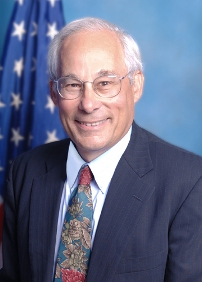
Donald Berwick
Physician
6
APPEARANCES
3
PODCASTS
Jul 10, 2026


Don BerwickGUEST
Well, can I go back to history a little bit? Because in order to understand the answer, we have to understand where Medicare Advantage came from.
Don BerwickGUEST
And by the way, what its potential was, and I would say what its potential even could be.
Don BerwickGUEST
of the 1960s and even 50s, where we had organizations formed that combined the insurance and delivery aspects, Kaiser Permanente, the most famous of them.
Don BerwickGUEST
I mean, they were more like the integrated care systems that I mentioned before.
10 MINS LATER
Chris ComeauxHOST
And he used that as a good example of like, that's kind of what's wrong with health care.

Don BerwickGUEST
Well, can I go back to history a little bit? Because in order to understand the answer, we have to understand where Medicare Advantage came from.
Don BerwickGUEST
And by the way, what its potential was, and I would say what its potential even could be.
Don BerwickGUEST
of the 1960s and even 50s, where we had organizations formed that combined the insurance and delivery aspects, Kaiser Permanente, the most famous of them.
Don BerwickGUEST
I mean, they were more like the integrated care systems that I mentioned before.
10 MINS LATER
Chris ComeauxHOST
And he used that as a good example of like, that's kind of what's wrong with health care.
Chris ComeauxHOST
What was the original insight that led to the triple aim and explain how you view its evolution now into the quadruple and then the quintuple aim?
Don BerwickGUEST
Yeah, well, your words are extremely generous, Chris, and thank you for what you do.
Don BerwickGUEST
I'm actually not the author, though, of the AAA, and that came from two colleagues of mine named John Whittington.
Don BerwickGUEST
And probably my closest mentor, Tom Nolan, who sadly passed away a few years ago.
19 MINS LATER
Chris ComeauxHOST
If you had the authority, and my God, it would be so cool if it was, if you can make three structural changes tomorrow to fix health care, where would you start?
Chris ComeauxHOST
What was the original insight that led to the triple aim and explain how you view its evolution now into the quadruple and then the quintuple aim?
Don BerwickGUEST
Yeah, well, your words are extremely generous, Chris, and thank you for what you do.
Don BerwickGUEST
I'm actually not the author, though, of the AAA, and that came from two colleagues of mine named John Whittington.
Don BerwickGUEST
And probably my closest mentor, Tom Nolan, who sadly passed away a few years ago.
19 MINS LATER
Chris ComeauxHOST
If you had the authority, and my God, it would be so cool if it was, if you can make three structural changes tomorrow to fix health care, where would you start?

Don BerwickGUEST
We have problems with... proper protection of the well-being of kids in our country.
Don BerwickGUEST
If the healthcare system could come together and say, wait a minute, we've got an agenda.
Don BerwickGUEST
We could do a lot, but we don't have a way to come together with a consolidated payment system We could.
11 MINS LATER

Chetan SathyaHOST
There's of course an overwhelming additional perception that will that lead to actual clinical care being yes, more equal, but actually worse for swaths of the population that might consider their care opportunities right now, yes, frustrating, but because they're commercially insured, they feel, hey, listen, we at least have a very high quality of care when we're able to get to a prestigious hospital, let's say, right? And not saying that's the right thing, but that is a big perception, is are we gonna go backwards with respect to clinical care, innovation, cutting edge therapies? What would you say to that? And how do you think about that in a budgeting process?
ChetanHOST
It
Don BerwickGUEST
The big myth is the myth that markets are essential to freedom and and thriving.
Don BerwickGUEST
It goes back to the 1930s and 1920s and eventually the Chicago School of Economics.
13 MINS LATER
ChetanHOST
So what, Don, right now, what keeps you, or if you are, I mean, are there things that make you optimistic right now?