Dom Tomato
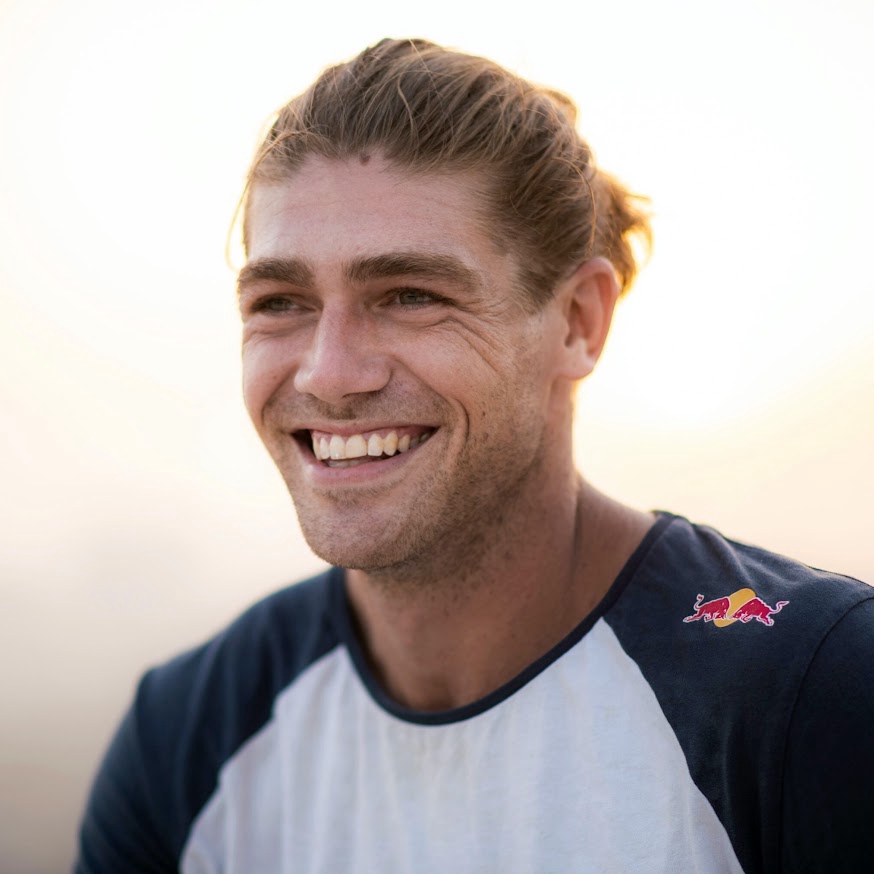
Australian freerunner and Red Bull athlete Dom "Tomato" Di Tommaso, a Sydney parkour star with millions of followers; competed on Physical: Asia and The Amazing Race Australia.
4
APPEARANCES
3
PODCASTS
Jul 30, 2026


Jacqui FelgateHOST
And how do you sort of do a recce and know that actually I'm going to be able to make this jump and I'm going to walk away and it's all going to be fine?

Dom TomatoGUEST
The original part is training at ground level, learning intuitively how far you can jump, how much you can control impact and land in a very safe environment with a lot more structure laid into it.
Dom TomatoGUEST
And as you get further and further into that progression chain then you start to implement small measuring tools such as your feet or your eye line or a rough estimate before attempting things and then that builds into when you're doing larger scary challenges like you'll see me do on the internet there's probably 20 minutes or half an hour of lead up to that 1.5 seconds of challenge where it's warming up physically, warming up mentally, going and checking the landing surface, going and checking the takeoff surface, all the ins and outs, everything you could think of, something they would do with like safety mandatory regulation in a movie or a film, very similar to that.
8 MINS LATER
Jacqui FelgateHOST
So you can still find it even though, I mean, you're not old by any means, but in the sport, is it a young person's sport?
Dom TomatoGUEST
And from my training in performing arts and ice skating, I kind of understood the potential or how hard you would have to work to achieve something in those sports or in those fields.
Dom TomatoGUEST
And, uh, Yeah, it really took me probably a couple of years of doing small performance work, building my skill set up to realize that at that stage in parkour, the industry probably wasn't at a stage you could sustain an athlete full time.
Dom TomatoGUEST
So I traveled to Thailand, tried to join a team, but I was too young, ran out of money.

Jacqui FelgateHOST
And how do you sort of do a recce and know that actually I'm going to be able to make this jump and I'm going to walk away and it's all going to be fine?
Dom TomatoGUEST
The original part is training at ground level, learning intuitively how far you can jump, how much you can control impact and land in a very safe environment with a lot more structure laid into it.
Dom TomatoGUEST
And as you get further and further into that progression chain then you start to implement small measuring tools such as your feet or your eye line or a rough estimate before attempting things and then that builds into when you're doing larger scary challenges like you'll see me do on the internet there's probably 20 minutes or half an hour of lead up to that 1.5 seconds of challenge where it's warming up physically, warming up mentally, going and checking the landing surface, going and checking the takeoff surface, all the ins and outs, everything you could think of, something they would do with like safety mandatory regulation in a movie or a film, very similar to that.
8 MINS LATER
Jacqui FelgateHOST
So you can still find it even though, I mean, you're not old by any means, but in the sport, is it a young person's sport?


Liam StapletonHOST
But for you, honestly, do you have fear at all? Like, were you kind of like, oh, I've still got to be careful? Or are you just so comfortable with it that you don't even really think about these things?
Dom TomatoGUEST
Fear is a very, very good... uh response mechanism to have when you're putting yourself in danger but it's about like training yourself to be comfortable and rationalize that fear and be able to approach things you know not with that overwhelming adrenaline or overwhelming fear just getting it calm and knowing that you can do it
Liam StapletonHOST
And you did, you obviously would, I think you, do you coach people as well? Because I could sort of tell that you were quite experienced in where you were telling me to put my feet and telling me
Dom TomatoGUEST
It's something I still do regularly, but like I'll do workshops and intro to parkour sessions for people and stuff like that all the time.