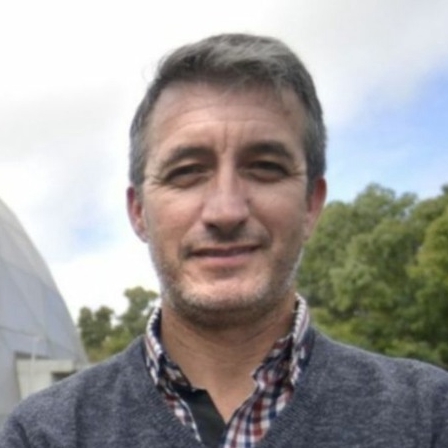
Diego Bagú
Argentine astronomer, director of the University of La Plata planetarium, and science communicator specializing in space and astronomy education.
1
APPEARANCES
1
PODCASTS
Jul 2, 2026

speaker_2HOST
To answer this question, we decided to contact the Argentine astronomer and scientist-divulgador Diego

Diego BagúGUEST
In reality, an object of that size would be impossible to impact our planet because the solar system is already being studied in terms of large objects.
Diego BagúGUEST
Now, probabilistically, it is for sure that we can say that at some point the Earth will receive a considerable impact.
Diego BagúGUEST
There are hundreds of thousands of objects that exist rotating in the solar system and that is why it is very important to have in mind the programs that track these objects in the sky, as well as develop programs to mitigate a possible impact in the future.
Diego BagúGUEST
In any case, we should not worry about a medium-term future because the considerable objects in terms of size that could threaten the existence of life on Earth through an impact, none of them poses a danger in terms of their routes through the solar system.
speaker_2HOST
So we asked Professor Bagou about this peculiar space rock.