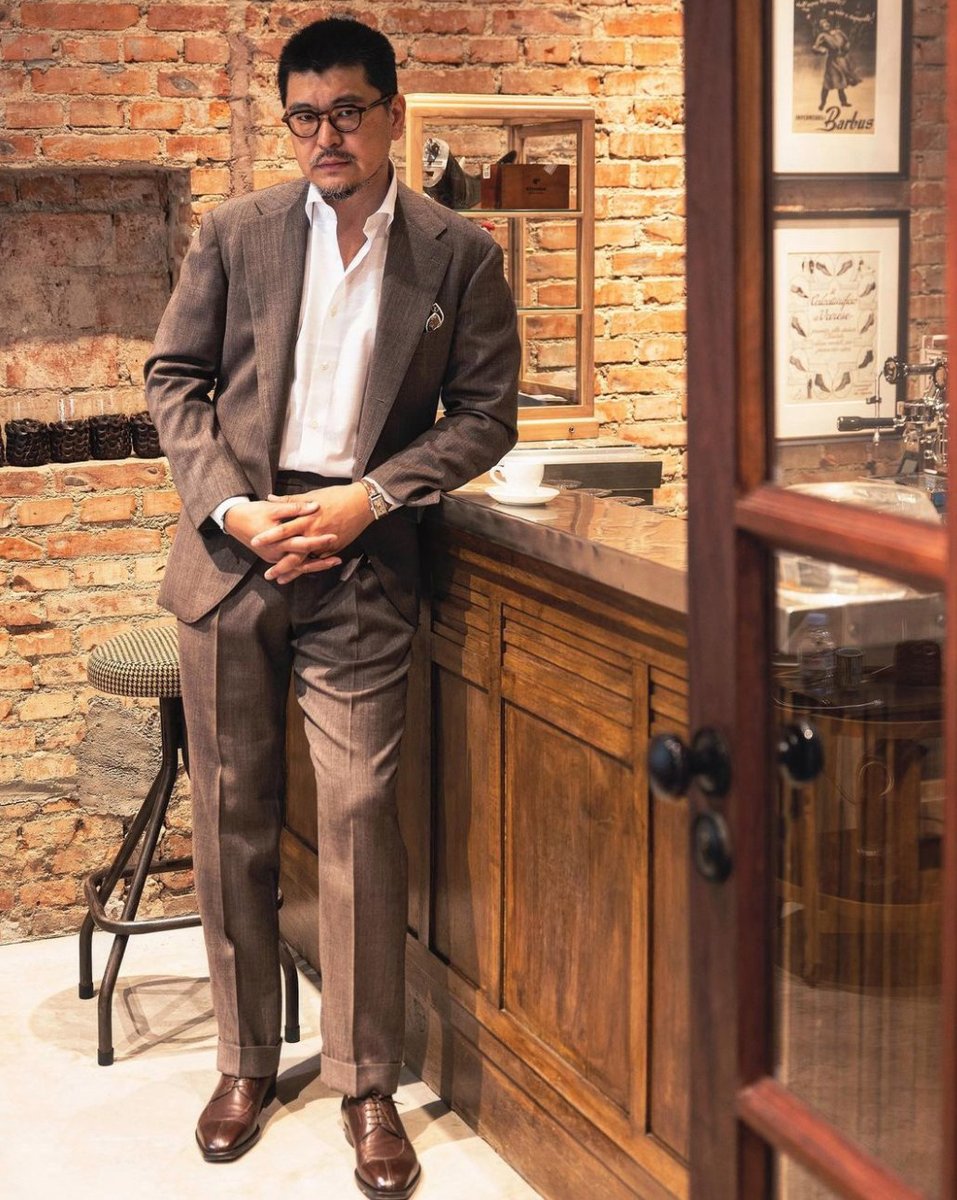
Derek Guy
Internet personality
9
APPEARANCES
5
PODCASTS
Oct 30, 2026


Avery TrufelmanHOST
You know, this is a good example of how it corrupts our morality and it actually physically hurts us.

Derek GuyGUEST
So he thinks of the natural man as going through the wild alone, picking food off of the ground, and then every once in a while he would bump into another human being.
Derek GuyGUEST
And they would figure out, oh, well, sometimes if we cooperate, we can solve problems.
Derek GuyGUEST
We can... reach fruit that's a little bit higher up on the branch or we could, I don't know, fend off an animal or something.
Derek GuyGUEST
And as more and more people start to gather, then society starts to form and people start comparing themselves to other people.
16 MINS LATER
Derek GuyGUEST
He had an incredibly illustrious career marked by politics, theater, cavorting with aristocrats, which all kind of eventually led up to the French Revolution in which he was kind of canonized.
Derek GuyGUEST
As I was reading him, many of the ideas that he put forward were not necessarily his invention, but I think Voltaire's skill was he found a way to phrase certain ideas very well so that they could easily catch on.
Derek GuyGUEST
"It's almost a definition of a gentleman to say he is one who never inflicts pain.
Derek GuyGUEST
He is mainly occupied in merely removing the obstacles which hinder the free and unembarrassed actions of those about him.
Derek GuyGUEST
Like an easy chair or a good fire, which do their part in dispelling cold and fatigue, the true gentleman in like manner carefully avoids whatever may cause a jar or a jolt in the minds of those with whom he is cast.
5 MINS LATER

KevinUNKNOWN
Any tips or should I just stop overthinking?
Derek GuyGUEST
Yeah, I think when it comes to matching watch with outfit, I do think that I will say I also think that watches are very personal objects.
Derek GuyGUEST
And to me, especially if you wear long sleeves or jackets, they mostly remain hidden under a cuff.
Derek GuyGUEST
But I do think that if you're wearing a suit, there is something very nice about a time-only dress watch on a leather strap.
Derek GuyGUEST
So to me, it's more about the design of the watch working with the outfit, assuming that you want to make it coherent.

Derek GuyGUEST
So to the example that you were talking earlier, to bring it back to clothing, we are adorning ourselves to seem like we're better than we are.
Derek GuyGUEST
To give an ex- a contemporary example, why are we moving away from slim pants to fuller pants, is because in the early 2000s, wearing slim pants signaled that you were fashionable and in the know.
Derek GuyGUEST
But when everybody's wearing slim pants, then the way to distinguish yourself is by wearing full, fuller pants, and therefore the game repeats itself.
Derek GuyGUEST
And so Mandeville's idea that fashion essentially runs on vanity and pursuit of status, that kind of drives his whole argument.

Derek GuyGUEST
And then, you know, when I went home that day, I thought $3,000 is, is a lot of money.
Derek GuyGUEST
And so I wanted to do an episode where we got into a w- a really budget wardrobe of $1,000 dollars.
Derek GuyGUEST
So let's say I, I've always believed that you should allocate, uh, in my opinion, seven years to build a wardrobe.


Brian LehrerHOST
So what should people be looking for visually when they try something on that, that may- maybe not every guy thinks to look for?
Derek GuyGUEST
Well, you know, the, the short and long of it is, is that I think of fashion as a kind of social language.
Derek GuyGUEST
So I don't think there is, you know, one way to dress, and I don't think, you know, there's only one way for pants to fit or, you know, whatnot.
Derek GuyGUEST
I think if you, if you start with the premise that dress is a, a type of social language, and there are many different types of languages today, each shaped by history, just as we're conversing right now in English, uh, in a structured manner so that we can communicate with each other, every aesthetic is gonna have its own rules, um, that govern its kind of aesthetic.
Derek GuyGUEST
So I think when you're out shopping, it helps first to figure out what kind of aesthetic are you going for in terms of cultural aesthetic.
Derek GuyGUEST
Are you inspired by, you know, the way artists have dressed in the past, musicians, um, academics? Y- you know, these kind of archetypes.
Brian LehrerHOST
If someone's bui-building a wardrobe on a limited budget, where might you say spending a little more money actually matters as opposed to where it's okay to save?

Jeremy KirklandHOST
I think a lot of guys struggle with that, and I, I, I think it's okay to appreciate a style on someone else, even if your own tastes run a little bit more conservative.
Derek GuyGUEST
Yeah, I, you know, in the past few years, I've been, as, as my social media account has grown, and this has come up in the past before, but more so in the last few years as my social media account grow- has grown, some guys have reached out to me and said, um, you know...
Derek GuyGUEST
I'm always happy to answer, like, style questions, like, really simple ones, I don't mind.
Derek GuyGUEST
Um, and then if it's slightly more complex, I usually ask someone to donate to, uh, an animal, uh, welfare organization of my choice, like a rescue organization.
speaker_2PANELIST
Yeah.


Max ChafkinHOST
Talk to us about kind of your theory that you lay out in this essay of how the U.S. could try to take some of that market share or maybe carve out a related space for itself.
Derek GuyGUEST
Well, I think, you know, at the moment, Trump's reshoring program or strategy has mostly revolved around tariffs and mass deportations.
Derek GuyGUEST
And my proposal is that we should look at countries that have transitioned to post-industrial economies and yet have still held on to a meaningful portion of their garment manufacturing sectors.
Derek GuyGUEST
In Japan, they do denim and artisanal goods, and then in France, they do high-end leather goods.
Derek GuyGUEST
And when you look at those countries, along with the government support, like Japan has tremendous support for their industries, They've basically held on to the sectors that do high-end craft production.
Max ChafkinHOST
And so I'm kind of curious, like, do these European countries, France and Italy, have they been able to deploy kind of protectionist policies to protect their high-end, you know, whether it's high-end suiting in Italy or handbags in France, or is this more just a sort of just chance? It's just certain products have managed to stay in these high-wage countries.