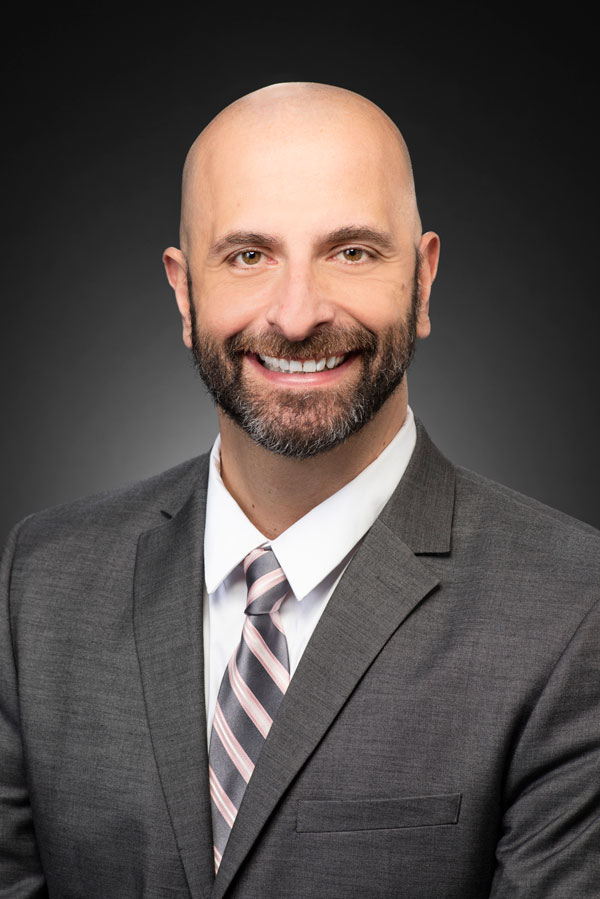
Demetre Daskalakis
Infectious disease specialist
24
APPEARANCES
19
PODCASTS
Oct 22, 2026


Connie FlemingHOST
It's like, is this an episode of The Pod People? Like, I understand and I see.

Demetre DaskalakisGUEST
Because I just came out of that and I was like, there's doublespeak, there's like, you know, all the same stuff that they talk about, like they're doing.
Demetre DaskalakisGUEST
Like, I'm sorry, I cannot, like, I... during COVID like didn't have a day off from January until June or July.

Lina BradfordHOST
But also look at their leader, you know what I mean? Science is a way we can do this.

Joseph HarrisHOST
Can you tell us, as someone who's deeply involved in that work, what changed, how did it change, and were there specific political or administrative decisions that made the response work better?
Demetre DaskalakisGUEST
So I think that, you know, I'm not going to I'm not going to this is not like a hubristic toot my own horn.
Demetre DaskalakisGUEST
But, you know, one of the things that I got to bring, I had the privilege of being able to be the deputy coordinator of this is that I brought sort of this, you know, richness of experience with the advocates and organizations involved.
Demetre DaskalakisGUEST
that focused on the communities that were being impacted by this infection and so you know because i had that track record with them i was able to sort of bring them to the table i didn't just bring them to the table and sweet talk like what we did is we like identified what the issue was and came up with some solutions.
Demetre DaskalakisGUEST
So the first was make the messaging clear so people understand what they can do to prevent infection.
13 MINS LATER
Joseph HarrisHOST
Looking back at your time in CDC, was there an earlier point at which you now think you should have drawn that line? Or do you think remaining inside as long as you did allowed you to accomplish things that otherwise wouldn't have happened?


Demetre DaskalakisGUEST
Right? So it's like, are you taking your medicine as prescribed? Have you missed doses? If you're using PrEP on demand, are you taking it right? Are you doing the two doses before sex? Are you doing the two days after? If you're getting injectable PrEP, are you going for your appointments to make sure that you stay on time? So really, like, in general, like, you think of PrEP as being very effective, you know, usually skimming around 100%.
Demetre DaskalakisGUEST
Not quite there, although some, some studies show, like, 100% for some of the drugs.
6 MINS LATER
Demetre DaskalakisGUEST
I also think it is important to talk about the technology keeps moving forward.
Demetre DaskalakisGUEST
That just means more options, and thankfully one of the big priorities with the folks that are making these medicines are to make them easy and tolerable.
Demetre DaskalakisGUEST
Not only that they work, but they work and don't have as many side effects and are tolerable and easy on people's lives.
Demetre DaskalakisGUEST
... where, like, people are hearing on a platform that they, you know, trust and that they use in a community that, that they feel comfortable on.
Demetre DaskalakisGUEST
The other part is, like, educating providers with good information ends up being a really important piece in, in moving the needle for PrEP.


Demetre DaskalakisGUEST
So I think that there's two interrelated factors, um, which I, I think consistently a- are the answer to that question, which is access and stigma.
Demetre DaskalakisGUEST
So those are the two things generally that tend to be, um, the aversive stimulus for people to not get tested for HIV.
Demetre DaskalakisGUEST
Um, I, I think that part of that stigma is also fear, and we'll talk about that in a second.
Demetre DaskalakisGUEST
So I think, you know, in a universe where we don't have what feels like universal access for things, for healthcare, people automatically get concerned about what it would cost to get tested, what it costs to come into a, a venue and request lab testing.
Demetre DaskalakisGUEST
And so, you know, in the absence of, of strategies that, that make it very low threshold for people to get tested, access is one of the first barriers.
5 MINS LATER

Chelsea ClintonHOST
I wonder if we could take a step back just here for the United States, and you could tell us, you know, how many people are estimated to be HIV positive right now, how that number compares to when you were, you know, first treating pa- patients decades ago, and what do the demographics look like?
Demetre DaskalakisGUEST
The next thing that happens is that the HIV is picked up by some immune cells and it's taken to your lymph nodes, your glands.
Demetre DaskalakisGUEST
So the main reason that you're swabbing a throat is because you're looking for gonorrhea, and you also get a chlamydia test.
Demetre DaskalakisGUEST
You're testing for those two things, and so if you find either, you treat.
Demetre DaskalakisGUEST
But throat is complicated for gonorrhea because, I'm gonna just say it, it's a hard place to penetrate, but from the drug perspective, right? So it's like-
Demetre DaskalakisGUEST
I mean, in general, if you're inserting a toy into any of the orifices, there's a really, n- not zero possibility of there being contamination, like, if there's, like, a, if there's a bacterium in there.


Kristen WelkerHOST
Are you concerned these cases are gonna continue to spike? And, and what's the overall impact of that?
Demetre DaskalakisGUEST
And not, it's no longer about there's an outbreak here, there's a, there's an outbreak there.
Demetre DaskalakisGUEST
You know, I think at the end of the day, the damage that's been done and made way worse by this, uh, current health leadership in the United States means that people will be confused about what to do with vaccines.
Demetre DaskalakisGUEST
I mean, the fact that the president, uh, himself was talking about autism and vaccines when it, in fact, there is no evidence that vaccines is, are related to autism, will just create confusion and fear, and that manifests itself as unvaccinated children, and that means that there are more children susceptible to measles.

Demetre DaskalakisGUEST
So there's like two- right now, and I'm sure, you know- I'm literally ignorant about all of this- Yeah ...
33 MINS LATER

Demetre DaskalakisGUEST
Yeah, I mean, for me, it started when I was really young as well, actually.
Demetre DaskalakisGUEST
So I was an undergraduate at Columbia University and I moved to New York when I was 17.
Demetre DaskalakisGUEST
And really early on in that time, being out as a sort of gay man in New York City and a young gay man in New York City, Like I started to meet people and then all of a sudden I would not see them again because they were getting sick.
Demetre DaskalakisGUEST
And so, you know, even early on while I was an undergrad, I started doing things to sort of work to teach high school students about safer sex in that era.
Demetre DaskalakisGUEST
And then ultimately... like my, my, my sort of aha moment, like where I generated that North star that I've been following ever since was in my senior year in college when I was working on a large display of the AIDS Memorial quilt, which if you don't know what that is, is a quilt that people submit panels for people that they've lost to HIV AIDS.
6 MINS LATER

James Duke MasonHOST
But what, why did you decide that that was an area that you really wanted to focus on? And what was that experience like? Like how successful did you feel your efforts were? And, uh, you know, what was that, what was that whole experience like? And you were in a place like New York city too, right?

Demetre DaskalakisGUEST
... sort of working with some of the ACIP members, the Advisory Committee on Immunization Practices members, who historically have said that the mRNA vaccines are responsible for all sorts of adverse events, and that they don't actually, um, impact anything, um, like the, uh, the sort of rates of COVID hospitalization, et cetera.
Demetre DaskalakisGUEST
I mean, without mentioning names, there's one member of the ACIP who claims that he invented mRNA vaccines, and that is a, in, an, an untruth.
Demetre DaskalakisGUEST
Um, and I think at the end of the day, um, you know, you can't speak something into existence.
Demetre DaskalakisGUEST
So just because Secretary Kennedy says mRNA vaccines doesn't work, don't work, that doesn't actually mean that they don't, especially when they're suppressing data that demonstrate that in fact they do.

Chris HayesHOST
But it doesn't seem, in your experience or, or there's any much trust that they're, we're not gonna see more political manipulation.

Demetre DaskalakisGUEST
In my center, I have measles experts, but being the leader of the center means that you're able to contextualize the work that they're doing.
Demetre DaskalakisGUEST
So, you know, when the West Wing calls and says, "We want to know what's going on with measles," they generally call the CDC director, who needs to have connectivity down deeper into the organization to be able to answer those questions with authority.
Demetre DaskalakisGUEST
So you need to have that leadership, that scientific leadership, to make sure that you're delivering on what the mission is of your center and ultimately of the agency.
Demetre DaskalakisGUEST
If you cared about an agency so important to the health of America, you would prioritize identifying a leader and installing them.

Michel MartinGUEST
So while the CDC is director-less, can the public trust the data and the research coming out of the CDC right now?


Demetre DaskalakisGUEST
so let's, you know, I would love to blame everything on like the last 12 months.
Demetre DaskalakisGUEST
So when you look historically, measles outbreaks generally happen in like what we call close-knit communities.
Demetre DaskalakisGUEST
And so like, I'll give you three examples, like 2018, 2019, the Haredi or Hasidic community in New York City experienced an outbreak.
Demetre DaskalakisGUEST
In 2025, we saw the outbreak in West Texas, mainly because driven by like measles in a Mennonite community.

Demetre DaskalakisGUEST
And, you know, when you take care of someone like a child, they're bloody sometimes, they're snotty, they're messy, they've got secretions.
Demetre DaskalakisGUEST
You- you cut your finger, that- that virus can live on- on sort of the material for a while, and so it could happen that a child is infected just in the routine course of taking care.
Demetre DaskalakisGUEST
So first there was testing, then it was first targeted to sort of folks who were at higher risk, then it became more universal testing, and that still didn't get the rate down.

Jane CoastonHOST
But what was the argument at these ACIP meetings for ending the universal recommendation?

Demetre DaskalakisGUEST
I mean, I think day one is going to kind of be a conspiracy theory fest because, um, it is a list of, of items that are all over the place like vaccine safety, adj- adjuvants which are the things, the components of a vaccine that makes your immune system respond better to the vaccine.
Demetre DaskalakisGUEST
So on the first day, they have a bunch of things that it's really hard to understand like what they're going to be talking about because they're so general.
Demetre DaskalakisGUEST
Notably, in the past, all of the presentations would already be up around the time public comment was open so people could review them and so that they could actually give meaningful public comment.
Demetre DaskalakisGUEST
But yet again, round three, the d- nothing is up, um, other than the agenda that's very vague.

Jonathan CohnHOST
So when, when hepatitis B and, and if a child gets it, I mean, what, what, what are we looking at down the road or immediately in terms of what can happen?


William BranghamCORRESPONDENT
How much of this do you attribute to- to the administration now stepping away from its long-term funding for some of these projects, like PEPFAR?
Demetre DaskalakisGUEST
I mean, I think that there's already folks who are modeling how many lives have been endangered or lost based on the pullback from global funding.
Demetre DaskalakisGUEST
What we're gonna see is, you know, more babies being born with HIV globally and potentially even domestically, um, more people dying of HIV.
Demetre DaskalakisGUEST
Um, I haven't seen an AIDS ward like I did in the, uh, late '90s and 2000s for decades and I fear that that's going to come back when we don't have the right infrastructure to support the work necessary.
William BranghamCORRESPONDENT
What do you make of that and the- the other moves that the administration is making with regards to vaccine policy?

Demetre DaskalakisGUEST
The most important message to start with is vaccines don't cause autism, so that's the one message that parents should hear.
Demetre DaskalakisGUEST
I think what it, where it leaves pa- uh, parents is really where the secretary left them, actually telling them during a Congressional hearing not to take medical advice from him.
Demetre DaskalakisGUEST
The American Academy of Pediatrics, um, completely disagrees with this update.

Anderson CooperHOST
Y- do you think some of this just comes down to bad data and methodology, or do you think this is a coordinated effort to spread disinformation coming from Secretary Kennedy?


Michael SteeleHOST
What should they be concerned about right now? What is their recourse? What avenue do they have to protect their children if the federal government, under the leadership of Donald Trump and RFK Jr., really have demonstrated they don't care about the data, they don't care about the response, they don't care about the infection rates? What are parents to do here?
Demetre DaskalakisGUEST
I think when there's a vacuum in the federal government, which is what I think we're experiencing, I think parents need to rely on the most trusted person in their relationship with their children, which is their pediatrician.
Demetre DaskalakisGUEST
And so I think that they need to make sure that they're connecting to their pediatrician, talking to their pediatrician, and making sure that their kids are up to date with the measles, mumps, rubella vaccine.

Alicia MenendezHOST
You have these cuts to the federal workforce colliding with the misinformation about health and vaccines.

Demetre DaskalakisGUEST
So not only did we only hear about it on Twitter, but we also requested what's the background science that sort of went behind the decision and the Health and Human Services Department declined sending that to CDC.
Demetre DaskalakisGUEST
So to this day, no one at CDC who's a CDC scientist who knows anything about COVID has ever seen the justification for this change.
Demetre DaskalakisGUEST
The second thing that happened was what occurred with the Advisory Committee for Immunization Practices, or ACIP.
Demetre DaskalakisGUEST
The very first thing that happened was he fired, Secretary Kennedy fired the 17 scientists who had been on this advisory committee Before he landed and he cited political reasons that he didn't he didn't think that they that that the administration could put their stamp on the on the committee and therefore he wanted to remove the 17 disimpassioned actually not politically appointed scientists from there.
5 MINS LATER

Abdul El-SayedHOST
What do you make of what we all saw yesterday? When you were watching this as somebody who used to work within the most lauded public health agency in the world, What did you make of it? What was your first reaction?

Garrett HaakeHOST
Minares talking about all these negative things that Secretary Kennedy was saying about the CDC, an agency under his direction.
Demetre DaskalakisGUEST
I mean, I, I think it's fair to say that the, uh, that the mood there is dark.
Demetre DaskalakisGUEST
Um, you know, I think having a leader who is really targeting your organization, um, to discredit it, to make the science that underpins all of the work that you do, uh, be suspect, um, it's not what public health should be dealt with.
Demetre DaskalakisGUEST
And these, these folks who work at CDC are, are really amazing scientists, and most importantly, public servants.
Demetre DaskalakisGUEST
24 hours a day, seven days a week, what they care about is maintaining the health of people in the E- in the US and the globe.
Demetre DaskalakisGUEST
So hearing someone saying that they're killing children, hearing someone saying, um, that they're horrible people, um, take a mirror and look at that and say, "Listen, like, someone who's telling you that you can't trust your doctor and you can't trust the people that are working for you to make sure that you're healthy, you have to question if you should be listening to that person at all."
Garrett HaakeHOST
Talk to us a little bit about how those recommendations for the schedule actually are reached.


11 MINS LATER
Kristen WelkerHOST
But my question for you, why not stay and fight if you think this void with Susan Linares could be so devastating to the public's health? Why not stay and fight for public health?
Demetre DaskalakisGUEST
If I thought that there was a fight that I could fight in there, I would have stayed, and the reality is that there is now an irresistible force that is going to make it impossible for CDC to maintain, um, the validity of its science against ideology, especially in the vaccine space, given what I'm seeing, um, from, um, HHS leadership.
Demetre DaskalakisGUEST
Um, i- uh, I, you know, I stayed there during some really complicated times under the current secretary.
Demetre DaskalakisGUEST
Um, I managed to sort of toe the line and make sure that we were able to end a measles outbreak in the US, the largest in the history since elimination, by really towing the line and making sure vaccines were first, but that we really created, uh, communication and strategies, um, that also aligned to his vision.
Demetre DaskalakisGUEST
Um, uh, the list, you know, w- we received, um, a directive about changing COVID-19 vaccine for children and for pregnant women, um, and we were able to do that in a way that maintained access.
Kristen WelkerHOST
Is that the crux of your concern? And is that the crux of the argument with Susan Monarez, that there's going to be an attempt to push that type of policy forward and ideology forward?


Demetre DaskalakisGUEST
I felt that this was highly atypical that we weren't able to sort of share our expertise up the chain to be able to, you know, provide information that could be meaningful in thought process.
Demetre DaskalakisGUEST
And so what I kept thinking was, "We're not doing this, but there sure is a point of view up there.
Demetre DaskalakisGUEST
I wonder who's doing it." Like, my job is to make sure that we're giving good science so people can make good decisions, and if I can't make sure that that science is untouched by non-scientific influence, I cannot say that I'm doing my job.
Demetre DaskalakisGUEST
[gentle music] I believe that CDC science is going to be compromised by HHS, and if that science becomes biased, if it gets unduly influenced, then I can't have my name on that science as something that I think should be used to make important decisions for people's lives.
11 MINS LATER

Demetre DaskalakisGUEST
Um, I know that we were going to walk out and have some folks clapping and I expected to see 20 and, 20 or 30 people and instead there were hundreds and hundreds of people and also there were folks in the Public Health Service and the Commissioned Corps who were saluting us from a distance.
Demetre DaskalakisGUEST
I mean, you know, I think, um, you know, I was, um, crying, um, walking down that path, um, both with joy as well as with sadness because, um, they're the people that make CDC great.
Demetre DaskalakisGUEST
And, you know, sort of living where we live now and sort of seeing how public health professionals have been dehumanized, people really need to see that human moment, that the people that they're seeing in those images that you're playing right now are the people who do everything with such enthusiasm and so much love.
Demetre DaskalakisGUEST
It's the people that make sure that the US stays healthy and that it stays safe.
6 MINS LATER

Jen PsakiHOST
I think anybody who's been paying attention would agree with you, but from, from your perspective, tell us more about what you mean by that.