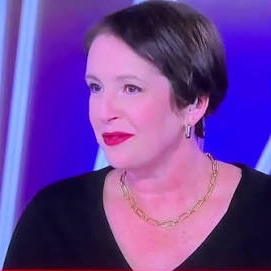
Deborah Flyshaker
Deborah Fleischaker is Senior Advisor for Immigration Policy and Strategy at UnidosUS and a former senior U.S. Department of Homeland Security official (Acting ICE Chief of Staff, Acting DHS Chief Privacy Officer, DHS Executive Secretary).
5
APPEARANCES
3
PODCASTS
Sep 1, 2026


Garrett GraffHOST
But some people tasked with implementing these changes, like the officers or agents within CBP, bristled at the changes.

Deborah FlyshakerGUEST
I think that Border Patrol agents want to be out on the line, you know, finding people crossing illegally.
Deborah FlyshakerGUEST
I don't mean this pejoratively, but like the cowboy law enforcement stuff.
Deborah FlyshakerGUEST
And care and custody work, right? Like the delivering food, the making sure people had their showers and like they could get to the phone to talk to a lawyer, but not doing the type of like down and dirty work that I think is what drew a lot of people to those jobs in the first place.
7 MINS LATER
Garrett GraffHOST
Flyshaker describes it all not just as a policy failure for the United States, but a moral failure as well.
Deborah FlyshakerGUEST
It's just an overwhelming sense of sadness that this isn't what I think we are as a country.


Michael SteeleHOST
According to The New York Times, ICE made 10,000 arrests between June 26th and July 1st via check ins with immigration authorities, traffic stops and on the street identifications.
Deborah FlyshakerGUEST
So I would say that the question about whether they should be doing a vehicle stop isn't the real question.
Deborah FlyshakerGUEST
The question is whether they should be doing a vehicle chase, right? Whether they should be going after somebody who is fleeing and whether they should use deadly force on somebody who's fleeing.
Deborah FlyshakerGUEST
When they engage in reckless behavior like chasing people who are fleeing, shooting into the cars of people who are trying to get away, who do not pose a danger to other people, we're in uncharted, dangerous territory, and ICE is actually dropping public safety.


Jackie AlimanyHOST
But there was also an economic bullet that was dodged yesterday and the amount of upheaval that would have ensued with regards to the economy if this had gone into effect.
Deborah FlyshakerGUEST
Well, I mean, look, the estimates are that it would have had it gone into effect.
Deborah FlyshakerGUEST
It would have it would have been about 250,000 children a year who wouldn't have been getting citizenship.
Deborah FlyshakerGUEST
And yes, there are huge economic and just general disruption impacts to that kind of upheaval.
Deborah FlyshakerGUEST
It would be 250,000 people a year who we wouldn't have in the workforce moving forward.
Jackie AlimanyHOST
You know, when you're taking a step back, what do you make overall of what this administration has done when it comes

Alicia MenendezHOST
Like, how do you explain they don't have the capacity to do this, they're not trained to do this? And if you are, in fact, as Tom Homan says, focused on the worst of the worst, then this is not where I would deploy our resources to.
Michael SteeleHOST
What does that say to you, when you hear someone who's in this space, who is a Border Patrol official, responding this way?
Deborah FlyshakerGUEST
I think that the law enforcement agents in DHS, many of them, not all of them, many of them are frustrated.
Deborah FlyshakerGUEST
I don't think that this is the way that many ICE agents in particular want to conduct their jobs.
Deborah FlyshakerGUEST
They would like to go back to the way that it was, where they conducted careful.
Deborah FlyshakerGUEST
cautious, targeted enforcement, as opposed to this sort of roving sweeps.
Deborah FlyshakerGUEST
We've seen this administration go from L.A. to D.C. to Chicago to Minneapolis, escalating in each city, right? And so now I think that we've passed maybe a possible inflection point where they've seen the harm that this is doing to the public.