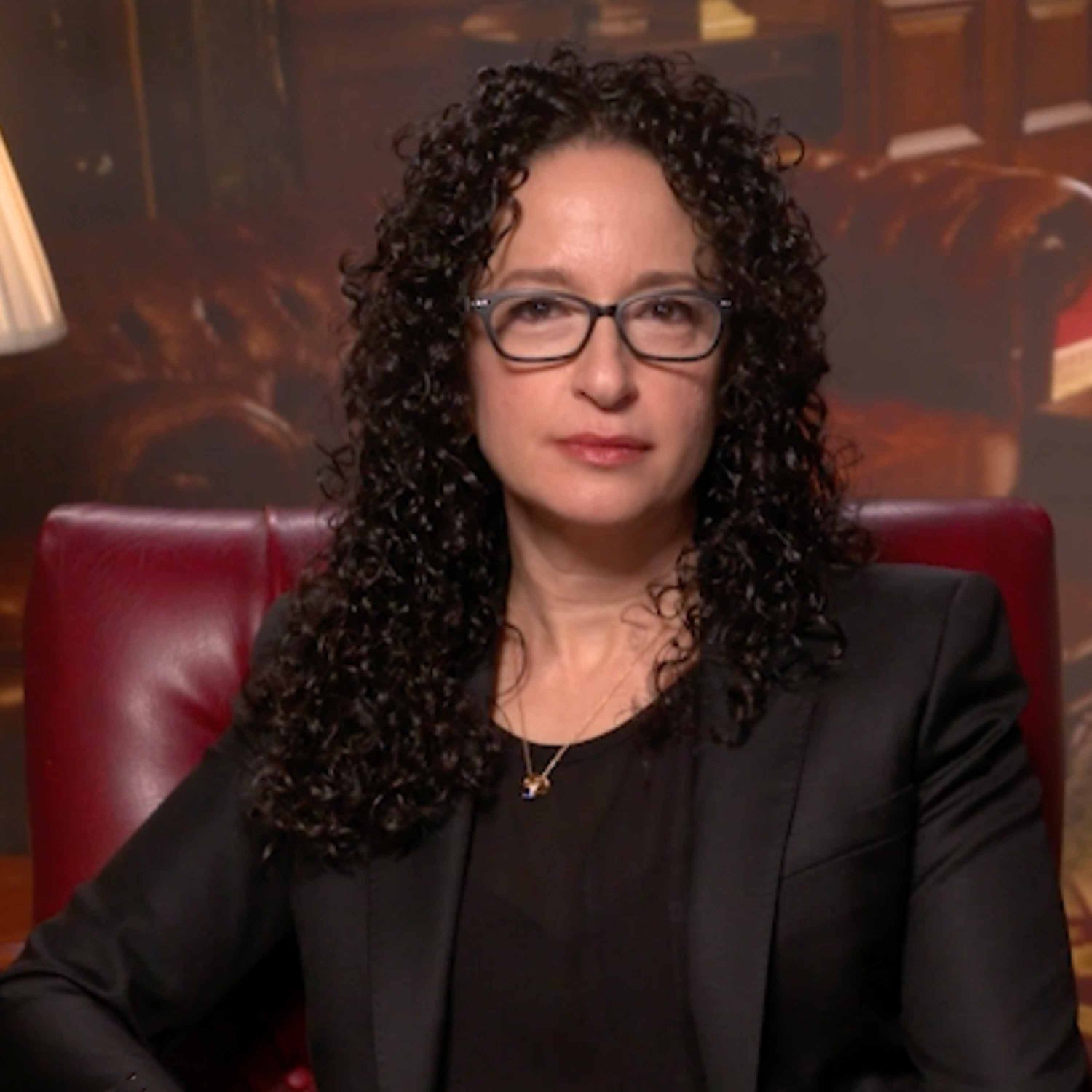
Debora Cahn
American television writer
10
APPEARANCES
9
PODCASTS
Nov 12, 2026


Debora T. CahnGUEST
It was one of many shows that were trying to get into that slot between Friends and Will and Grace where nothing popped in that slot.
Debora T. CahnGUEST
I was called computer number two because there was another guy who did it half the time and he was computer number one.
26 MINS LATER


Joe ForteGUEST
Can you take that point and sort of translate it to process? Like what kind of process do you put around that, you know, trying to lift narratively, you know, something that you learned from Shonda? Can you kind of tell us through the process you go through to get to those answers?
Debora CahnGUEST
So at the end of season two, we had blown some people up at the end of season one.
Debora CahnGUEST
We had a car bomb and it was, you know, it is sadly realistic to the world of the show, but also it was inherently dramatic blowing a bunch of people up with a car on the streets of London.
Debora CahnGUEST
And I was like, well, we're not going to just shoot somebody else or blow up a bill.
Debora CahnGUEST
Like, how do we get out of this season with the same kind of adrenaline? Basically that got us a second season.
23 MINS LATER


Brad GilmoreHOST
Obviously, we love the drama and, and the politics of it and the world events, but it really is about, I guess that's every show, it's about relationships, right?
Debora CahnGUEST
And I guess what I started to discover when I interviewed a lot of people and who, who do this for a living, is that it's less different than you would ever think.
Debora CahnGUEST
And the first couple times that happened, I'm, like, interviewing somebody and they're telling me how, you know, two world leaders are treating each other like brothers who are arguing over, like, the remote for the TV, uh, the first time you hear that, you think, "Oh, that's an unusual story from this person's career." And then you find that it's not, that that behavior, the, the modes of behavior are so similar most of the time that it's actually an aberration when it isn't.
Brad GilmoreHOST
And [laughs] how does that make you feel? Is it, like, a surprise to you? Or is it, like, a reaffirming and, "Well, okay, maybe these political leaders aren't who we think they are sometimes." [laughs]
Debora CahnGUEST
Uh, it's a little appalling knowing that people, like, the people who wield the most power in the world are really just like us.
Debora CahnGUEST
Like, the, the understanding of that on a level of, you know, like, I'm not as young as I used to be.


H. Alan ScottHOST
So how much of the real world that we're living in right now impacts the diplomat?
Debora CahnGUEST
We're gathering stories, building stories, deciding what we're going to be talking about and what stories we want to tell like a year or two in advance of when it's going to go on the air.
Debora CahnGUEST
So, you know, you can't predict what kind of world we're going to live in on Thursday, never mind two years from now.
Debora CahnGUEST
So it's sort of a question of like, can you step back and say, OK, so these are the major kinds of questions that that people in this field are asking themselves every day whether or not they're dealing with Ukraine or dealing with Iran or dealing with the Arctic.
H. Alan ScottHOST
So what do you think it is that has sort of struck a nerve with people in a moment where we feel pretty exhausted by the news.
8 MINS LATER

Joshua MalinaHOST
When you learned about the diplomatic world, is there a macro, like greater general thing that you learned about how it operates that surprised you?


Debora CahnGUEST
The basic principles that we practiced in the room when it was West Wing, when it was the comedy that we were talking about, when it was Inside Schwartz, which I was a writer's assistant on, and when it was Grey's Anatomy, whatever it was, the basic process of you come up with a story, the story sucks, it gets destroyed because somebody had low blood sugar, and then you have to come up with another story.
Debora CahnGUEST
And I feel like given the thing that we had that writers now don't have, like the young people coming up on my show, it's taken them four years to see 24 episode arcs and to learn that like, oh, that disaster that we predicted on six was a disaster, but we all seem

Debora CahnGUEST
The basic principles that we practiced in the room when it was West Wing, when it was the comedy that we were talking about, when it was Inside Schwartz, which I was a writer's assistant on, and when it was Grey's Anatomy, whatever it was, the basic process of you come up with a story, the story sucks, it gets destroyed because somebody had low blood sugar, and then you have to come up with another story.
Debora CahnGUEST
And I feel like given the thing that we had that writers now don't have, like the young people coming up on my show, it's taken them four years to see 24 episode arcs and to learn that like, oh, that disaster that we predicted on six was a disaster, but we all seem


Deborah CahnGUEST
And women come up to me and say, why is he so impossible? Why does she stay? Yes.

Keri RussellGUEST
And it's interesting because although our show is about government and we have yet to procure a female president, that is a very blind fact at the same time you know I've had wonderful experiences in my career with men and I have never felt thwarted like I feel like I've got to have some really great experiences I mean
Deborah CahnGUEST
some of it we hopefully get right because we understand it but I think both of us have had fairly charmed experiences.
Deborah CahnGUEST
And I think I had the luxury through much of my life to say, I don't really need to worry about women's issues.

Jun 8 · 39m
James FishkinGUEST
I'm meeting a cross-section that is not necessarily selected for any individual quality and
Debora CahnGUEST
So if that's the case, like, how do we get where we are? How is it that we have violence, conflicts playing out in 15 different places in the world right now? It isn't because there's a better value system and a worse value system.
10 MINS LATER
James FishkinGUEST
And there were movements, in other words, on some of the economic issues by the Democrats in favor of things that were initially supported strongly by the Republicans.
Debora CahnGUEST
The question of who's good and who's bad is always front of mind for me because my basic goal is to get to the place where no one is good or bad.


Martine PowersHOST
Why do these kinds of female characters appeal to you, of people who are so good at the work that they do, even if they are struggling in other ways?

Debora CahnGUEST
Some people watch the show and have told me that she's such a unique character and that it's really great to see this individual on TV.
Debora CahnGUEST
I think she's me and everybody that I know who gets out of bed and tries to pull it together to go out into the world and is 100% sure.
Debora CahnGUEST
that they are obviously a disaster walking through space and everybody can see it.
23 MINS LATER
Martine PowersHOST
I'm wondering if you think the diplomat will have a similar dynamic going into this next presidency of people wanting to see like an alternative version of reality that's different than what I think a lot of people imagine the Trump administration will look like when it comes to diplomacy and interacting with the rest of the world and the ways that you try to prevent wars.