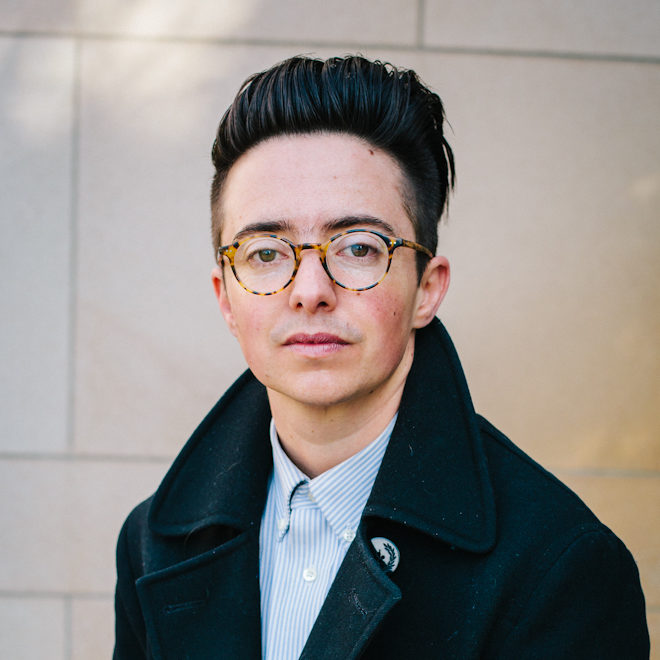
Dean Spade
American lawyer
10
APPEARANCES
9
PODCASTS
Oct 13, 2026


Dean SpadeGUEST
one thing I'll say is that I have really struggled with whether addiction is the right framework for the issues I'm talking about.
Dean SpadeGUEST
that we might be talking about right now through the lens of work addiction or sex and love addiction or codependency.
Dean SpadeGUEST
And I also noticed that the like hot stuff in our society, the stuff that people turn to because they have a feeling that it'll make them permanently happy and it doesn't.
Dean SpadeGUEST
drugs, sex, food, work, et cetera, technology is kind of disordered for most people.
47 MINS LATER
Early BrunnerHOST
So I'm just curious how like what you found to be insufficient in the literature that you were studying and why you decided to write Love in a Fucked Up World.

Dean SpadeGUEST
All these things, because everyone's talking behind my back, and now I heard about it, you know.
Dean SpadeGUEST
And the other thing is, like, you know, a lot of times we need to process something with someone, with a friend, like, "Okay, this thing's happening with my friend, sit with Jessica.
Dean SpadeGUEST
Can I talk to you about it? I'm trying to figure out should I say something to Jessica about this or not?" Like, I might need a friend to talk to me about that to help me sort out what do I wanna share with Jessica about the thing I'm struggling with, you know? And, like, can someone hold that confidentially, and so that I have a safe place to, like, process that.
Dean SpadeGUEST
When I've brought this up, a lot of people give me pushback of, like, you know, we need to tell each other things to keep each other safe.
20 MINS LATER

27:30
And so I want to ask, like, what does that realization open up in terms of possibilities for collective survival, autonomy, and even thriving collectively?
Dean SpadeGUEST
Yeah, I mean, that common kind of movement slogan is, we're all we've got, we're all we need, is this really intense invitation to shift our faith from faith in institutions to faith in ourselves and each other and our goodness.
Dean SpadeGUEST
And it's so hard to do that because, of course, we see people act terribly in our communities all the time, including ourselves, right? But we just don't have another choice because there is not a, like...
Dean SpadeGUEST
I thought you were going to bring up the Obama era because there's so much nostalgia for that.
22 MINS LATER
Nora KenworthyHOST
How do you keep yourself hopeful? And also, what kinds of advice are you giving to other people involved in this work to help sustain them in the fight for the long haul?


Dean SpadeGUEST
The cool thing about now is that so many more people have come out as trans and non-binary.
Dean SpadeGUEST
So many more people have been able to learn about us from each other because we have the internet now in a way that we didn't then.
Dean SpadeGUEST
There's lots we can be happy about, about our communities resourcing each other and learning about each other, and just, like, so many more people, you know? So beautiful.
Dean SpadeGUEST
And there's been a lot of really bad things about this kind of mainstreaming, right? Like, so whenever, whenever...
Dean SpadeGUEST
What I mean when I say mainstreaming is I mean a process by which a hated group becomes more visible and a set of narratives happen.
Dean SpadeGUEST
One set of narratives where a bunch of people say, "We don't hate them anymore," but actually nothing changes for them, and they, like, you know, pretend we're included, but actually a lot of things stay terrible for us.
23 MINS LATER


Laura FlandersHOST
How would you describe the fight that you feel is ahead of you and the people that you work with right now?
Dean SpadeGUEST
Well, you know, to, to be honest, obviously conditions are already really dire in terms of the ecological crisis.
Dean SpadeGUEST
The, you know, the storms and fires and floods are, are not going to stop coming.
Dean SpadeGUEST
They're going to continue coming and faster, and we've seen how, um, little support people get in the face of that.
Dean SpadeGUEST
And we're already living with a, you know, giant criminal punishment system that harms our communities, a horrible border enforcement system, you know, US imperialism all over the world and supporting genocide in Palestine and, you know, so many other, um, awful-Uh, militarized fronts around the world.
Dean SpadeGUEST
So all that's been going on, and now we're getting the second Trump administration, which is far more geared up even than it was last time, and we're in worse conditions than we were last time he came into office, right? Like, m- rents are higher, more people are unhoused, like, more people are in crisis.
Dean SpadeGUEST
More people are about to lose their healthcare because, uh, you know, on, on many fronts, both specific healthcare that's under attack, like reproductive and trans healthcare, but also the possibility of the loss [clears throat] of the f- um, of, you know, sort of any kind of affordable c- uh, healthcare for lower income people.
16 MINS LATER
Laura FlandersHOST
Um, how do we sit with that? How do we process that, having been unable, with all of these efforts and all of this risk-taking, to stop a genocide that we're funding?

Dr. NicoleHOST
[laughs]
Dean SpadeGUEST
My life is about the question of, like, what makes transformative change happen, and I've been in social movement spaces for almost 30 years doing work around, like, abolition and queer and trans liberation and poverty and borders and wars.
Dean SpadeGUEST
And, um, my work has been a combination of, like, recognizing the limits of trying to work within legal systems or trying to get legal recognition.
Dean SpadeGUEST
A lot of, a lot of stuff around that and a lot of stuff kind of redirecting and saying that, like, the real work we need to do is, like, community-based work to fight back locally and support and care for people in crisis.
Dean SpadeGUEST
And more and more my work has turned towards, like, supporting people toActually build groups that can, where people can do that together and build, like, interpersonal skills around working together with each other in groups, which inevitably involves conflict.
56 MINS LATER
Dr. NicoleHOST
Yeah.
Laura FlandersHOST
Can you elaborate on the point that you just made about there's a relationship between our kind of carceral approaches to things and our relationship to dealing with conflict? Because that's fascinating.
Dean SpadeGUEST
Yeah, I would say that one of the most common patterns I see in groups and in relationships of all kinds is people just don't give each other feedback.
Dean SpadeGUEST
I don't tell you that I'm frustrated about you not doing the dishes for two months and then I blow up and say you have to move out.
Dean SpadeGUEST
All of the things that we do that involve being so afraid to give each other feedback that by the time we give it, it's a very elaborate.
8 MINS LATER
Laura FlandersHOST
How do we sit with that? How do we process that? Having been unable with all of these efforts and all of this risk-taking to stop a genocide that we're funding.

Jun 8 · 39m

George PelecanosGUEST
And all these, all these snakes have slithered out of the ground now, once again, that we have to, that we have to deal with.
Dean SpadeGUEST
And, and we're living through a pretty extreme backlash that, of course, is not just because of the mainstream, it's also because of the rise of the right wing and fascism in the United States, and in particular, one of the things it's got its hold on is, which is not surprising, is gender and sexual politics.
Dean SpadeGUEST
That's something fascism likes to, you know, care about, and it's using queer and trans people's lives, and particularly trans people's lives, and also reproductive, um, health issues as a way to recruit people into a politics that's actually, like, really terrible for them, unfortunately.


Lisa DetmerHOST
He suggests the way the gay community came to prioritize gay marriage reflects a broader shift in politics by all types of formerly radical political movements.
Dean SpadeGUEST
In the Stonewall period and in the general 60s and 70s social movements, there were a lot of questions being asked about what oppression is and how to solve it.
Dean SpadeGUEST
People were thinking about ways that policing in general impacts black communities in the U.S. and ways that militarism is part of a project of U.S. imperialism abroad and how that reflected in the domestic arena.
Dean SpadeGUEST
And then you can see what happens, especially in the LGBT context, as movements professionalize and as upper class people sort of take the reins and set the agenda and the shift that happens towards an individual rights framework.
Dean SpadeGUEST
And instead we get this thin, narrow individual rights framework that doesn't deal with people being able to access what they need broadly and what kinds of major structural changes would have to happen to make it so that people have what they need.
31 MINS LATER

Priya KandaswamyGUEST
So if people of color disproportionately don't get health care through their employer, then people of color are disproportionately not going to benefit from the right to health care through a spouse's employer.
Dean SpadeGUEST
And, you know, this is part of this theory that what the law says is what matters rather than whether or not people have what they need to survive.
Dean SpadeGUEST
If we were really concerned about the survival and basic needs of queer and trans people in California, our top priority would have been dealing with the immigration issues.


Mia FunkHOST
So we have to keep ourselves in check to make sure we're doing it in a way that doesn't avoid the other things we have to face in our lives and to process
Dean SpadeGUEST
One piece is that there is so much we can't control that's terrifying and heartbreaking right now.
Dean SpadeGUEST
So we all are seeing every day the headlines out of Gaza, the headlines about the ecological crisis, the fear of what the next Trump presidency will bring.
Dean SpadeGUEST
And we've been living this way for a long, long time, far before the recent election.
5 MINS LATER