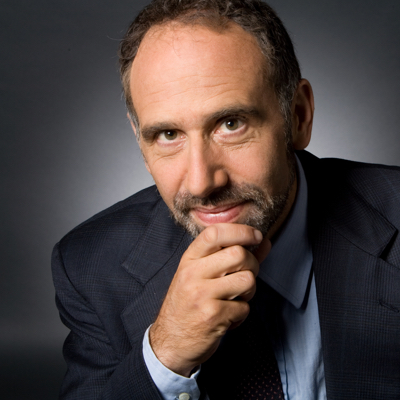
Dean Baker
American researcher
14
APPEARANCES
11
PODCASTS
Sep 17, 2026


Ariel BooneHOST
Does it give you any more confidence in the Fed's independence from the president that they did the opposite of what Trump wanted yesterday?

Dean BakerGUEST
Everyone was looking when he appointed Kevin Walsh because Trump was making a big point of saying, well, whoever I appoint, they're going to lower rates.
Dean BakerGUEST
And Walsh historically had been an inflation hawk, meaning he'd want high rates.
Dean BakerGUEST
So the question was, OK, so Trump says, I'm going to appoint someone who wants low rates.
Dean BakerGUEST
And the question I think everyone had was, well, is he going to do what Trump tells him to do? Or is he going to go with whatever his actual sense is about the economy? And this indicated that, well, for now, at least it looks like he's going to go with his sense about the economy.
Ariel BooneHOST
Can you respond to his messaging? Is this optimism true? Is it just strategic framing?

Dean BakerGUEST
They're just about the same as what we were at the peak of the tech bubble in the '90s, so around 40 to one.
Dean BakerGUEST
And it's very hard to see a story where future profits will rise enough to make those stock prices make sense.
Dean BakerGUEST
So it looks to me very much like we have a bubble very similar to tech bubbles 'cause you have a lot of companies with enormous market capitalizations, uh, things like SpaceX, and SpaceX loses money hand over fist, as does OpenAI, as does Anthropic, and it looks to me like everything's set up for a really big crash.

Dean BakerGUEST
I mean, well, but that's kind of what we're doing in the Social Security debate that we're going, oh, you know, people want to have big cuts of Social Security.
27 MINS LATER

Richard RJ EskowHOST
Are you worried that this AI bubble, if and when it blows or when it blows, could present yet another risk to the overall financial system?

Ian MastersHOST
So am I correct in identifying the fact that the richest man in the world has prevented this government from collecting taxes from the richest Americans, and that is why the debt will continue to climb?
Dean BakerGUEST
So, I mean, the whole point of the money that Biden had allocated to the IRS was to make it so we can collect taxes.
Dean BakerGUEST
The Congressional Budget Office estimates that $600 billion a year goes uncollected.
Dean BakerGUEST
That wouldn't quite balance the budget, but a good chunk of the way towards reducing the deficit is.
14 MINS LATER
Ian MastersHOST
So elaborate on why you think that the issue of corruption is at the heart of what threatens our economy and also may be Trump's undoing.

16 MINS LATER
51:55
If, if it just has to provide [laughs] enough competition that it puts downward pressure on prices, and then the big US AI concerns can't live up to the valuations, um, that, that are driving their stock prices.

Teresa WiersbianskaCORRESPONDENT
Could you walk us through how you reach that number and what that means?
Dean BakerGUEST
Yeah, so I'm comparing this to the last budget that we had under president Biden.
Teresa WiersbianskaCORRESPONDENT
Who who bears the financial burden of what they are trying to opt for?


David RothkopfHOST
Um, uh, so the question in my mind is, um, why that? What, what, what, were you just getting anxiety here? Or you, you know?
Dean BakerGUEST
So I was looking at the internet bubble and seeing it grow in '97, '98, '99, going, "This looks like a bubble, and looks like it'll be bad news." And, you know, of course, the bubble did burst.
Dean BakerGUEST
And, um, there, there's a conventional view, which I'll just say I think is very badly wrong.
10 MINS LATER
David RothkopfHOST
And, and it doesn't look like either of those things are on the horizon, but again, why don't you explain your, your thinking about it.

David RothkopfHOST
Um, uh, so the question in my mind is, um, why that? What, what, what, were you just getting anxiety here, or you, you know?
Dean BakerGUEST
So I was looking at the internet bubble and seeing it grow in '97, '98, '99, going, "This looks like a bubble, and it looks like it'll be bad news." And, you know, of course, the bubble did burst.
Dean BakerGUEST
And, um, there, there's a conventional view, which I'll just say I think is very badly wrong.
10 MINS LATER


Stephanie RuhleGUEST
It's exactly what he just did to our NATO allies who he's been dumping on every possible day, saying that they weren't here to support him on a war that he never justified.
Dean BakerGUEST
We had a deal with Iran that was preventing them from developing nuclear weapons.
21 MINS LATER


Dean BakerGUEST
And for more than half of beneficiaries, it's more than half their income in retirement.
8 MINS LATER

Ian MastersHOST
So at what point do you think people will stop believing, or the press, the credulous press, stop printing these ridiculous articles about how Social Security is going to go broke.
Dean BakerGUEST
Obviously, there's a big lobby that would like to see the programs at least cut, if not actually privatized.
11 MINS LATER


Janine JacksonHOST
You know, even if we aren't economists, we're not wrong to be concerned about this forced inevitability vibe, are we? It, it just doesn't sound like building a better mousetrap.
Dean BakerGUEST
Well, I think for the most part, it's probably fair to say a lot of the people involved in AI don't know what they're doing.
Dean BakerGUEST
So we get all these stories about AI models that you've probably heard the term, they hallucinate, they make things up.
Dean BakerGUEST
I've been focused on medical services because that's been a main driver of inflation for decades, really.
Dean BakerGUEST
And that did somewhat come under control with the pandemic and the immediate recovery.
26:41
Wages, however, are not keeping up with inflation, which does not fit my understanding of how a tight labor market is supposed to work.


Amy GoodmanHOST
So, as you watch this speech, uh, from your vantage point in Oregon, Dean, um, can, what stood out for you most?
Dean BakerGUEST
I mean, uh, you know, if I were one of his staffers, in all seriousness, I'd be wondering about the man's sanity.
Amy GoodmanHOST
So, Dean Baker, what exactly is he talking about? What is President Trump proposing? How is it with the Republicans in control, they have not passed one, um, uh, replacement for the Affordable Care Act in years?