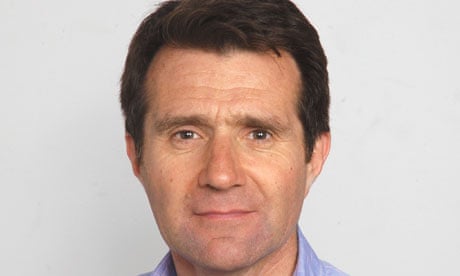
David Shukman
British journalist
10
APPEARANCES
10
PODCASTS
Sep 16, 2026


Nik GowingHOST
What is your feeling about what has to be done, that this has to be a massive change of mindset and coordination within government systems at every level?
David ShukmanGUEST
A British minister the other day said, we need to be more honest with the public about the dangers we face.
David ShukmanGUEST
And I think that's absolutely right because at the moment there's been a kind of coyness, a kind of unwillingness to scare people, quotes, unnecessarily.
David ShukmanGUEST
The dangers are much, much greater and more severe right now, never mind the future, than many people recognize.


David ShukmanGUEST
I never like should, because I don't like being preached at and told what to do.
David ShukmanGUEST
And I certainly find, you know, I kind of bristle when someone says, oh, you shouldn't do that.
12 MINS LATER

Hannah MurrayHOST
And the other thing that the book looks at, which must be a really difficult thing to try and research and predict, whether any of these things could have been prevented, any of the floods, any of the fires and anything that we could be doing in the future in order to prevent them.

David ShukmanGUEST
Well, I was just appalled to realize that four years ago when England hit 40 degrees, which was a record and exposed how the country just wasn't ready.
David ShukmanGUEST
I mean, not only did major rail lines pack up because the steel overheated and buckled, and not only did at least one major hospital lose all its IT system because the air con overheated so that the computer server rooms got too hot.
David ShukmanGUEST
But also, and this was completely unexpected for most people, a load of wildfires kicked off in the London area.
David ShukmanGUEST
I mean, who knew that sort of drizzly London would get wildfires? We think of wildfires in California or Canada or Southern Europe.
9 MINS LATER

Alicia EastmanHOST
Is there any other sort of like bad actors that you've seen in this space or more stories about oil and gas and their attempts to change the narrative?


Jo PaisleyHOST
So let's start with you, a bit about your background and what led you to write the book.
David ShukmanGUEST
My BBC career began in Northern Ireland in the 80s at the height of the Troubles.
David ShukmanGUEST
And I had a very steep learning curve, learning how to report on riots and explosions and shootings, which were happening almost every day.
David ShukmanGUEST
Luckily, I was in very good hands with very experienced camera crews who knew what to do.
David ShukmanGUEST
But the very first riot I went to, we had our car hijacked and a truck exploded.
David ShukmanGUEST
And it was really quite a baptism of fire literally for me to step into that world.
Jo PaisleyHOST
But I'm kind of curious, who did you write the book for? And how did you decide which stories to include?

Niki RoachHOST
I suppose, what do you take away personally, David, from some of those conversations?
David ShukmanGUEST
That the country, Britain, is not remotely ready for extremes of weather that we're getting now, let alone those to come.
David ShukmanGUEST
I mean, you mention Lynn Saberton living in Wennington on the, the edge of London.
David ShukmanGUEST
July the 19th 2022, we hit 40 degrees, and dozens of large wildfires erupted in a great ring around London.
David ShukmanGUEST
Nearly 40 houses were burnt to the ground in the London area because of wildfires that day.
7 MINS LATER
Niki RoachHOST
And it, it strikes me that we are on the edges, aren't we, of what we're used to, and therefore perhaps the gaps that you're finding exist because they are genuine gaps at the moment because we've just-- we've not had to test those systems at this level before.


Paul AdamsonHOST
Tell me, what was your approach and how did you come across this approach to writing about the issue in this particular way?
David ShukmanGUEST
And actually, I've bought millions and read many of them and often felt a kind of anesthetizing effect.
David ShukmanGUEST
And so I wanted to start from a completely different perspective rather than the global problem and talk about greenhouse gases and carbon dioxide concentrations and the Paris Agreement and all of that.
David ShukmanGUEST
What's it like to be a firefighter in 40 degree heat dealing with wildfires erupting even in the suburbs of London, which actually happened four years ago, 40 houses were burnt down.
David ShukmanGUEST
What it's like to be living in a basement flat, and there are many of them in many of our cities, including London, and suddenly finding that a rainstorm has led to sewage and floodwater just pouring in up to your chin.
Paul AdamsonHOST
Was it difficult for them to open up? And was it difficult for you also, equal measure, to listen to their experiences?


Laurie LaybournHOST
Could you briefly explain a few more of those beyond the fires we've talked about?
David ShukmanGUEST
So, for example, at least two major national railway lines had to be shut because when you get an air temperature of 40, the steel in the rails can easily get to 50% more than that, in other words, 60%.
David ShukmanGUEST
And when you get buckling, you can't be sure of running a train down a track without it derailing.
David ShukmanGUEST
The overhead power lines in that kind of temperature buckle and melt and droop and no longer become serviceable, leading to a really nightmare scenario, which has happened.
Laurie LaybournHOST
So how would you respond to that? And maybe in doing so, it would be nice, could you speak a little bit to this idea of the myth of protection, which you introduce in the book as well? Okay.


David ShukmanGUEST
It, it, it's stunning listening to that description of how the silver ants cope in the Sahara.
David ShukmanGUEST
It, it's absolutely the opposite, for example, of what firefighters went through in England, especially in the London area, on Britain's hottest day, which was the 19th of July, 2022, when we hit 40 degrees.
David ShukmanGUEST
And the city, indeed the country, was taken by surprise by the eruption of a whole load of wildfires.
David ShukmanGUEST
For the first time in London's history, the city was ringed by enormous wildfires.
David ShukmanGUEST
They weren't caused by 40 degrees, but 40 degrees, combined with a drought, made them much more likely.
David ShukmanGUEST
And, and one of the firefighters working that day in the heavy flame-proof suits that they have to wear said it was like being a boil-in-the-bag meal, because the linings of the suits were so sodden with perspiration.


David ShukmanGUEST
It was covered, it was focused on, but I hadn't quite realized at the time in the reporting the strain it put on the London Fire Brigade.
David ShukmanGUEST
And it turns out if you go through, as I've done, all the logs, all the detail of actually what happened that day-Things could very easily have been much worse.
David ShukmanGUEST
I commissioned a scientist to look at what would've happened if the wind had been in a slightly different direction in one of the fires in Dagenham.


David ShukmanGUEST
... resonated with audience 'cause they could see it, touch it, they use the objects, they're recognizable, unlike this invisible carbon dioxide.
David ShukmanGUEST
So I think that's-- that there's a lesson in that actually, which I think is bringing things down to the nitty-gritty, to the everyday, and the, and the pragmatic as much as possible.
David ShukmanGUEST
I mean, to be-To be really as clear as possible and to kind of road test everything that's said in public to try to make sure that it's intelligible to people.
David ShukmanGUEST
And I think if the best thing we can do is to continue whatever can happen to, to get off fossil fuels as quickly as possible, then anything that as individuals we can do to achieve that is valuable.
David ShukmanGUEST
So I, I think there is agency in that because, you know, suddenly, unlike ten years ago, the non-fossil fuel alternatives are way more plausible.