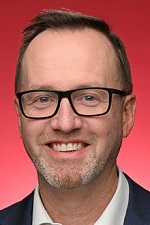
David Shoebridge
Former Member of the New South Wales Legislative Council
22
APPEARANCES
11
PODCASTS
Sep 18, 2026


David ShoebridgeGUEST
Well, we agree that the immigration system is in a mess under Labor and it was in a mess under the coalition.
David ShoebridgeGUEST
And we agree that the number of bridging visas, the more than 400,000 bridging visas in the system, needs to be radically reduced.
David ShoebridgeGUEST
One of the key issues we have with what was announced yesterday was Labor said they wanted to look back to before 2015 and, you know, they wanted to lean into the sort of Tony Abbott era.
David ShoebridgeGUEST
And the lesson they took from before 2015 is to build more detention centres, to contract with a US multinational prison operator that is actually the corporation of choice for Donald Trump for his ICE detention centres.
David ShoebridgeGUEST
and to expand the number of private prisons here and put people in those private prisons.

Sally SaraHOST
Uh, do the Greens agree that net overseas migration numbers need to fall or are you happy where they are?
David ShoebridgeGUEST
Well, what we agree that the immigration system is in a mess under Labor, and it was in a mess under the Coalition, and we agree that the number of bridging visas, the more than four hundred thousand bridging visas in the system, needs to be radically reduced.
David ShoebridgeGUEST
And what we, what we disagree with is this package that has come from Labor.
David ShoebridgeGUEST
I mean, one of the key, one of the key issues we have with what was announced yesterday was Labor said they wanted to look back to before twenty fifteen and, you know, they wanted to lean into the sort of Tony Abbott era.
David ShoebridgeGUEST
And the lesson they took from before twenty fifteen is to build more detention centers, to contract with a US multinational pri- prison operator that is, is actually the, the, the corporation of choice for Donald Trump for his ICE detention centers, and to expand the number of private prisons here and put people in those private prisons.
David ShoebridgeGUEST
Now, that is not how you deal with overstayers, 'cause the evidence from before twenty fifteen, um, says that there's a far more effective way of reducing overstayers, and it's not putting people in prison.

KennyHOST
And given what we just saw from the UK, France and Canada, do you think Australia is going to, they're going to be dragged along here and we'll actually see some movement or where do you think things are sitting there?
David ShoebridgeGUEST
Well, I mean, if you'd listen to the rhetoric from Labour for the last, what, three years, they've always said, oh, we're not going to move on Israel and Palestine without, you know, the comfort of like-minded countries and we're going to work in concert with like-minded countries and, you know, like-minded countries, like-minded countries, like-minded countries.
David ShoebridgeGUEST
And that's always been code for Canada, the UK and bits of Europe, right? And now all those like-minded countries and actually a whole bunch of other countries have signed on to that commitment to say...
David ShoebridgeGUEST
they will put a ban on products coming from those illegal Israeli settlements in West Bank.
5 MINS LATER
KennyHOST
What is going on there? In spite of the best efforts of you or Pocock or any of the others, is this just a done deal and we've just got to live with it now?

Chris SpyrouHOST
What's being done to make sure that technology like this is stopping at crime prevention or isn't being rolled out and expanded further?
David ShoebridgeGUEST
Well, Chris, I have to tell you, there's nothing stopping it becoming just sort of a creeping into the rest of our lives.
David ShoebridgeGUEST
And even when we have, you know, state and federal governments or corporations like Bunnings saying, oh, we're going to use it only for eggs.
David ShoebridgeGUEST
Because when Bunnings are running facial recognition to stop potential thieves, right, they're not just scanning the face of a potential, you know, someone who's going to nick their stuff.
Chris SpyrouHOST
Why is there such low resistance? I know that you mentioned your party is pushing back on it, but why aren't you seeming to find support elsewhere?
David ShoebridgeGUEST
Well, yesterday, families, uh, supporters of those people seeking asylum were in absolute tumult, desperately concerned about what was happening, getting within less than 24 hours two totally different messages out of the government.
David ShoebridgeGUEST
Now, Minister Burke wouldn't have presented those savage cuts unless he'd been through a process, and then it's, um, turned on its head by the prime minister in less than 24 hours.
David ShoebridgeGUEST
This is the problem when a political party is, is not acting on any core principle.
David ShoebridgeGUEST
There's no principle behind what Labor's doing here about helping people, uh, fleeing conflict, about meeting our international commitments.
David ShoebridgeGUEST
It's the, the 24-hour news cycle, watching how people are reacting, a handful of MPs are reacting, the community response.
David ShoebridgeGUEST
That's what produces this flip within 24 hours, an utter lack of principle.

David ShoebridgeGUEST
Well, I just literally earlier this morning, I finished signing off the form that I have to give to the ACT Corrections Department to allow me to bring my phone in when I go and meet with David McBride, who's in jail at the moment, in a jail in Canberra, you know, like 5Ks, 7Ks from Parliament House.
David ShoebridgeGUEST
And David McBride is in jail because he bravely told the truth about war crimes, right? And he's been saying repeatedly that, that the senior brass inside Defence have got off scot-free with war crimes, and that's not right.
David ShoebridgeGUEST
And, you know, and I go as often as I can and visit David in prison because I'm incredibly grateful for the work he's done to blow the whistle on Defence, to put his career, it turns out his liberty, at stake in order to tell the truth.
32 MINS LATER
speaker_8ADVERTISER
Rated PG-13.


Aggie TupouHOST
Again, what are you hoping the IPWP will or can do, you know, to really push the West Papua's cause further?
David ShoebridgeGUEST
Well, I think one of the most important things we can do is actually talk about West Papua.
David ShoebridgeGUEST
I, I travel a bigger distance from my home in Sydney to when I drive to come, um, to Parliament in Canberra, um, than is the distance between Australia and West Papua.
David ShoebridgeGUEST
One of our closest neighbors, uh, and it is never mentioned or almost never mentioned, uh, in the Australian Parliament, um, even though there, there are such significant human rights, um, issues occurring in West Papua.
David ShoebridgeGUEST
And I think one of the most important things we did, um, in, in, in hosting the delegation, speaking with Benny Wenda, speaking with the West Papuans from, from across Australia, was, was speak truth about this in the Australian Federal Parliament because, uh, in largely d- due to the, the impact that people perceive it having on our relationship with Indonesia, um, there is a, a, a collective silence on the human rights issues happening in West Papua.
Aggie TupouHOST
I mean, are you worried that these incidences may deter public support for that independence movement?


David ShoebridgeGUEST
Yeah, only on a, like, what are these for, right? Now, there is a limited use case for people, people with visual impairment, who I think this could be, you know, really beneficial for people.
David ShoebridgeGUEST
Maybe in some workplace situations, you know, if you're, say, a quantity surveyor going onto a building site and you've got some software in them and it lets you sort of work out in real time, you know, how much materials are here, et cetera.
David ShoebridgeGUEST
But they should be in very controlled environment and the people around you should have to give their consent to it.
6 MINS LATER
speaker_2UNKNOWN
I
David ShoebridgeGUEST
And, you know, when you fly home to Australia and, you know, the captain or the first officer calls in and says, you know, if you're coming home to Australia, welcome home.
David ShoebridgeGUEST
Like, you still get that catch, that emotional catch, and you link it You know, you love the country, you love where you grew up, you link it to Qantas.
11 MINS LATER

Dave MilnerHOST
I guess, the ramifications for what that means for Australia and our sovereignty.
David ShoebridgeGUEST
Donald Trump has just come out and basically indicated that he's not particularly keen on democracy in the united states um seems to be kind of maybe making an indication that that whole midterm election thing may not be something he respects um uh from what i can tell is engaged in an ongoing vicious reckless war of choice against iran um is arming and supporting um the violence of the Israeli state against people in Gaza and in Lebanon is inviting continue to invite us to be part of all of those wars.
David ShoebridgeGUEST
And the United States is still apparently our indispensable, absolute number one ally slash master.
David ShoebridgeGUEST
And so when we're here talking about Pine Gap and the role that it has notionally as a joint Australian-US facility, it's in that context, right? And it's in a far rarer context, a more real context than I think Australians have seen for decades and decades and decades.
David ShoebridgeGUEST
Probably the last time I think we had a kind of national focus on the dangers and the violence of the US military deployment was in the Vietnam War, you know, and... following the Vietnam War and in light of that, mass national mobilisations for a peace movement, for an anti-nuclear movement.
speaker_1HOST
But what would you like to see the government do in this regard?
David ShoebridgeGUEST
But could I just add a federal level, you know, as a federal senator? The federal labor government, and in this they're mirrored by both One Nation and the coalition, they all say, well, look, we don't need any new laws for AI.
David ShoebridgeGUEST
Our environmental laws, our competition laws, our privacy laws are all fit for purpose.
6 MINS LATER
speaker_1HOST
But are you ever faced with quite murky attempts to shut you down or silence you? What goes on?
Sally SaraHOST
Do you think it was appropriate for Anthony Albanese to attend this stadium event in Melbourne?
David ShoebridgeGUEST
Well, I mean, I think our government should have as friendly a relationship with India as possible, but it should also be based upon truth and honesty, and the human rights record of the Modi government is quite appalling.
David ShoebridgeGUEST
You know, the, the Muslim minority in India feel deeply oppressed by his government.
David ShoebridgeGUEST
We have very significant concerns about the, the collapse in press freedom in India and, you know, a, a classic example of that was the film that we saw, which was critical of the Modi government, had actually been banned by the Modi government in India.
David ShoebridgeGUEST
So I, I think, yes, we should have friendly and respectful relationships, but we shouldn't be pumping the tires of a regime that has such an appalling, uh, record when it comes to both human rights and also press freedoms.
David ShoebridgeGUEST
Well, our concerns remain as they've always been about the trade in uranium, and our concerns actually reflect what Anthony Albanese's concerns were in 2011 when he opposed this deal when it was being pushed through Labor, um, under the Gillard government.
Sally SaraHOST
Do you think it was appropriate for Anthony Albanese to attend this stadium event in Melbourne?
David ShoebridgeGUEST
Well, I mean, I think our government should have as friendly a relationship with India as possible, but it should also be based upon truth and honesty, and the human rights record of the Modi government is quite appalling.
David ShoebridgeGUEST
You know, the, the Muslim minority in India feel deeply oppressed by his government.
David ShoebridgeGUEST
We have very significant concerns about the, the collapse in press freedom, um, in India, and you know, a, a classic example of that was the film that we saw, which was critical of the Modi government, had actually been banned by the Modi government in India.
David ShoebridgeGUEST
So, uh, I think, yes, we should have friendly and respectful relationships, but we shouldn't be pumping the tires of a regime that has such an appalling, uh, record when it comes to both human rights and also press freedoms.
David ShoebridgeGUEST
Well, our concerns remain, as they've always been, about the trade in uranium, and our concerns actually reflect what Anthony Albanese's concerns were in 2011 when he opposed this deal when it was being pushed through Labor, um, under the Gillard government.

David ShoebridgeGUEST
... um, and stocking shelves, the speed at which they stock shelves, the nature of which they stock shelves, the speed at which, um, uh, stock is taken from the shelves, um, and then tracking which customers buy which particular types of stock, and then crunching that data.
David ShoebridgeGUEST
You could just imagine the number of, uh, lines of data that come out of Coles in an annual year.
David ShoebridgeGUEST
And of course, Coles have got a contract with Palantir and, and, you know, credit to GetUp for doing that work in doing it.
David ShoebridgeGUEST
But, um, think about, um, the Australian Criminal Intelligence, um, Commission, which is kind of the big national sort of mul, uh, crime body, which is kind of meant to be looking at organized crime and the like, works with the AFP and state and territory police forces.
David ShoebridgeGUEST
I mean, they're looking at, um, phone intercepts, they're looking at, um, people's, um, online presence, uh, their emails, the government databases every time they interact, and that's what this program called Gotham is being used by Palantir in the Australian Criminal Intelligence Corporation.
David ShoebridgeGUEST
And then, you know, AUSTRAC, um, our, our principal, um, uh, financial, um, sort of investigation agency tracking all of the financial flows in Australia, and they've, they've just increased the amount of data they get through real estate movements because of anti-money re- mon- money laundering, um, reforms.
David ShoebridgeGUEST
Yes... cohesion because we are challenging the authorities, we're questioning, um, the, the, the responses of the AFP and others.
David ShoebridgeGUEST
What if someone takes that view? Well, uh, you know, that should concern you because, and there's another reason why [laughs] that should concern you, is the, the Labor Party have got, in the federal parliament at the moment, laws to expand ASIO's secret questioning powers.
David ShoebridgeGUEST
They were given it in about 2003, and it was at the height of the, you know, fear about terrorism following, you know, in the years that followed 9/11.


Tim LesterHOST
Do you see a future where the right mix for defence has submarines? Or do you think we need to go give it away?
David ShoebridgeGUEST
The only reason we get a nuclear submarine is to go thousands and thousands of kilometers from our shore and project force as part of a U.S. deployment off China.
13 MINS LATER
David ShoebridgeGUEST
And Pauline Hanson had been out saying it's outrageous and un-Australian to have more than one language spoken, that we should have a monoculture and shouldn't have different languages spoken.
David ShoebridgeGUEST
I was around the dinner table with my family and there was smatterings of Cantonese intermixed with, you know, this big family chats about this, that and the other.
David ShoebridgeGUEST
And the fact that we have a politician hating on that, hating on what my experience was last night with my family, I personally just find it.
David ShoebridgeGUEST
I find that that divisive, nasty and something that I will absolutely fight against.

David ShoebridgeGUEST
Well, I mean, I think one of the key problems with this debate is, um, yes, all of those other options are difficult, but if you wanted to get submarines, any of those op- op- options is possible.
David ShoebridgeGUEST
And, and in the AUKUS debate, right, the Virginia class submarines, there is no possible pathway that they will be producing a surplus.
David ShoebridgeGUEST
And that even puts to one side the, the, the, the plain insanity of relying upon the UK industrial base, which is in a complete meltdown when it comes to nuclear submarines, these Snorkus submarines.
David ShoebridgeGUEST
The UK Audit Office has said four years in a row now that the UK have no capacity to build the nuclear reactor for Snorkus.

David SpeersHOST
So if there's already been that inquiry, do you just need to vote for the capital gains tax and negative gearing changes?
David ShoebridgeGUEST
Well, I think the sense of frustration that the Australian public has that Commissioner Burton still, after three years, has been able to accept responsibility for his conduct, accept responsibility for the fact that, you know, he's led to this, a series of complaints against him, some of which have been upheld by the inspector.
Sally SaraHOST
So what do you see as the issue here? Is it the affiliation itself or the nature of the affiliation?
David ShoebridgeGUEST
Well, I think the sense of frustration that the Australian public has that Commissioner Burton still, after three years, has been able to accept responsibility for his conduct, accept responsibility for the fact that, you know, he's led to this, a series of complaints against him, some of which have been upheld by the inspector.
Sally SaraHOST
So what do you see as the issue here? Is it the affiliation itself or the nature of the affiliation?
David ShoebridgeGUEST
Well, I mean, it, it's evolved like some kind of antibiotic-resistant amoeba in the [laughs] last two decades since.
David ShoebridgeGUEST
It's now found itself literally throughout large chunks of the US military, the US Immigration Enforcement Service, or ICE.
David ShoebridgeGUEST
It's being used by the Israeli military, um, and Israeli security agencies.
David ShoebridgeGUEST
Its data and data analysis has been used to target and kill people in the genocide in Gaza, in the conflict in Lebanon.
David ShoebridgeGUEST
We know that it's being used by the US military for target acquisition in...
David ShoebridgeGUEST
Target acquisition is such a, you know, sanitized name for finding people, and people to kill, and things to blow up in Iran.
Chris SpyrouHOST
I think the counterargument, though, that comes up in these discussions, David, is that, "If I've got nothing to hide, I shouldn't be worried." What's your take on that?

Nicole JohnstonHOST
David, could you start off by reminding us who these families are that are trying to leave this detention camp in Syria, and how did they end up there in the first place?
David ShoebridgeGUEST
The bulk of the Australians, um, in this detention camp, and it's in a desert in the northeast part of Syria, the bulk of them are children.
David ShoebridgeGUEST
They were either brought over to Syria at an incredibly young age, we're talking, you know, tiny infants, or they've been born in Syria, or they've been born in, in the detention camp.
David ShoebridgeGUEST
So the bulk of them are children aged from as young as five through to 12 or 13, and then there are some of their mums as well.
Nicole JohnstonHOST
David, the PM said about these women, "You made your bed, and now lie in it." Now many of these women, as we just heard, they chose to follow their partners over to Syria and to join ISIS, and there are Australians who agree with the PM, and they're worried about them being radicalized, especially after what's happened at Bondi.So can you understand why the government isn't that keen to welcome them back?