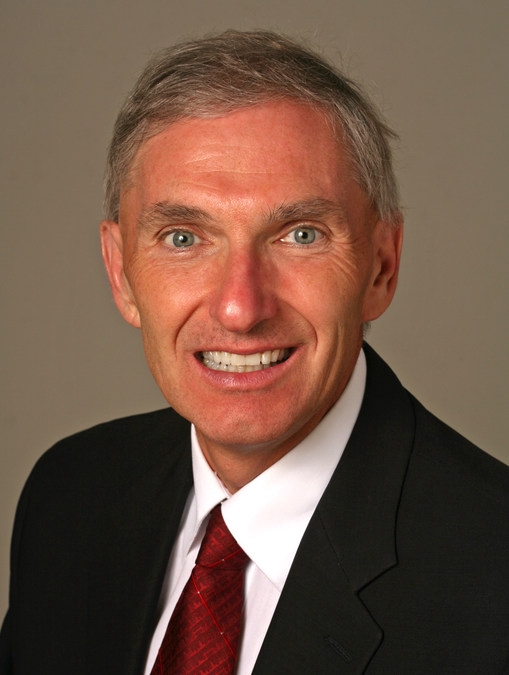
David Schultz
Distinguished University Professor of political science and legal studies at Hamline University and editor-in-chief of the Minneapolis Times, a national expert on election law and frequent media commentator.
7
APPEARANCES
5
PODCASTS
Oct 19, 2026


David SchultzGUEST
And you make one more important point, or Obama makes one more important point here, is that to commit a crime, you actually have to commit an act.
David SchultzGUEST
And if she became a U.S. citizen automatically as a result of her parents, she didn't really do anything to commit a fraud or anything like that.
6 MINS LATER

Ian MastersHOST
But you also, when I ask you whether or not they had anything on her that you said the best if they could prove that she was 17 instead of 18 when she automatically naturalized when her father was naturalized that makes her the victim doesn't it of if there was a crime involved it wasn't her right

David SchultzGUEST
Although hers is a little bit more complicated in the sense that, again, we don't have enough facts to know all the details there.
David SchultzGUEST
But clearly, if she were to say, I want one hundred thousand dollars to pay off my bill My American Express bill in order for you to be able to get some government service.
8 MINS LATER

Mary LaHammerHOST
So- Um, how many, what is your, so you're getting impressions, are people subscribing and you're building a subscription? You know, for folks, I think people are so exhausted because everything with Substack and different media outlets, you know, you're having to have all these subscriptions, but how are you, I guess, even just funding the infrastructure to do the Minneapolis Times?

Deb HuttonHOST
So given everything you've said, Professor, in your political estimation, what was this about?
David SchultzGUEST
Well, what this is about is these claims about fraudulent voting, stolen elections, stolen election rate, I want to say, plays well with his base.
David SchultzGUEST
The Republicans are in danger of losing at least the House, if not maybe the Senate, if it goes right.
David SchultzGUEST
And so I think primarily this was about rallying his base, getting them hot and bothered and excited, so they're going to show up and vote.
David SchultzGUEST
But at the same time, what I think has been interesting with this election— You know, where he's still making allegations, even though, again, you know, go back to 2020.
Deb HuttonHOST
Tell us a little bit about that and whether it would ever be in place in time for the midterms.

David SchultzGUEST
One is that there was a lot of rumor and innuendo, but not a lot of hard evidence.
David SchultzGUEST
Is it likely or possible that maybe the Chinese, the Russians, or several other adversaries are trying to hack into or try to interfere with our elections? Probably so.
David SchultzGUEST
Should we, as any country in the world, be worried about the integrity and to protect against that? Of course we should.
Deb HuttonHOST
So given everything you've said, Professor, in your political estimation, what was this about?
Deb HuttonHOST
But do you think Congress, whether he would agree with it or not, as I said, would Congress actually take that position, that if you were going to exit in the six-month withdrawal notice from Kuzma, that Congress would believe it had to have a say?
David SchultzGUEST
Given the partisan polarization of, I suspect, the Republicans in Congress, at least right now— would wind up reluctantly backing the president of the United States, or another way of phrasing it, would probably take no action whatsoever.
David SchultzGUEST
Now, if we were having this conversation, let us say, after our US midterm elections in November, depending on what happened, we might get a very different answer.
David SchultzGUEST
So if, for example, the Democrats were to take control of one or both houses of Congress, Donald Trump is also a lame duck at that point, then we might get a different answer.
David SchultzGUEST
But right now, the Republican Congress seems highly reluctant to ever take on the president, even when stories emerge that they're not thrilled by what the president's doing, i.e., for example, the war against Iran is that They don't really like what he's doing, but they seem unwilling to really find the backbone to oppose him.
Deb HuttonHOST
I mean, if there was a window, if he did want to use the six-month clause, that window would be now.
David SchultzGUEST
When I put mainstream media, it ranges anywhere from the Washington Post, New York Times, Wall Street journals and so forth are not covering this whatsoever.
David SchultzGUEST
But what all these tactics remind me of is is the tactics that used to be used against the Communist Party and people who were a member of CPUSA in the United States a long time ago, people who were student protesters and so forth, is that what would happen is that they would go out there, they would infiltrate, they would target, and they would... come up with the most egregious charges for actions that are not crimes.
David SchultzGUEST
And the reason why I mention this, these 15 individuals, if you read the indictment, you read it and it's like, again, they're talking about saying they want to protest.
David SchultzGUEST
They want to act in a way to basically, again, protest to challenge what the government has been doing.
Ian MastersHOST
So why doesn't it extend to the rest of us? How can we let these people get away with criminalizing political speech?

Scott HarrisHOST
And U.S. inequality has returned to levels not seen since the early 1900s, something they called the Gilded Age.
David SchultzGUEST
So you gave a great introduction to it in that what really inspired me to write this is what I think is how the American left, or whatever it calls itself, the American left... way.
David SchultzGUEST
The first is to reconnect what I think is what's supposed to be left politics back to, and let's just call it here, back to the criticism that Marx, Edward Bernstein, and others wrote about, is that their basic argument several different scores here is one of them it's all about class at the end of the day it's about not the politics of the rich and poor per se but about class and because class is about power and it's about who controls the means of production who sells their labor power but it's Fundamentally, the criticism of Marx and the left tradition was all about the relationship between economic and political power, first.
David SchultzGUEST
And two, the argument of the left, and I also connect this to people like Michael Harrington, Dorothy Day, and others, is that at the end of the day, what left politics was about is about the democratization of the economy.
David SchultzGUEST
that if we think about sort of the first stage of what democracy was, political democracy, voting, elections, picking our elected representatives, What the socialist, what the left was about was saying, let's take the promise of democracy in terms of now expanding it over to control of the economy.
8 MINS LATER
Scott HarrisHOST
And I'm wondering if you see any signs of hope that the emphasis on class is moving in the direction you're talking about from people like zaran mamdani who won the new york city election the the popularity especially among young people of democratic socialists of america who call themselves democratic socialists and uh have run a lot of candidates that have won uh in recent years any signs of hope there It is, yes, in