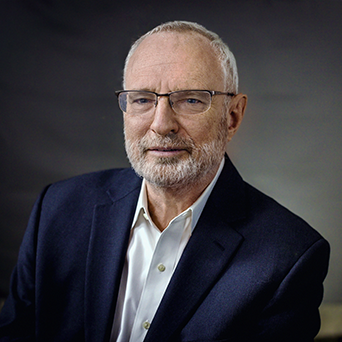
David Saperstein
Rabbi and former United States Ambassador-at-Large for International Religious Freedom
2
APPEARANCES
2
PODCASTS
Oct 1, 2026


Jeffrey RosenHOST
All faiths are equal." At a time, uh, perhaps, uh, one of the more distinctive times in the twentieth and the twenty-first century where we're hearing claims of the preeminence of, of one faith, um, is it-- are, are religions becoming as negatively polarized as the political system? And if that's the case, how, in the long term, is productive dialogue really possible?

David SapersteinGUEST
So first, I also join in thanking your cathedral for this extraordinary program that it has offered and the opportunity for us to talk together and for me to be with three friends who with-- for whom I have unbounded admiration and appreciation.
David SapersteinGUEST
Um, uh, reflecting on the two hundred and fiftieth anniversary, Jeff, the two extraordinary things about religion in this, first, if you look at the three religion clauses, no religious test for office, free exercise of religion, no establishment of religion, those together created, for the first time in all of human history, a nation in which your rights as a citizen would not depend upon your religious identity, your religious practice, peaceful practices, or your religious beliefs.
David SapersteinGUEST
There's no establishment of, of religion that Jefferson describes as separating the two.
David SapersteinGUEST
There are f-- have always been forces, um, of more fundamentalist religion who believes their religion is right, other religions are wrong.
13 MINS LATER
Jeffrey RosenHOST
Tell us about your legal analysis, uh, and political analysis, why things, uh, worked out as you thought, and- and- and whether or not you believe as a result that the Utah Compromise really is scalable.

David SapersteinGUEST
So March 29th, the Pope said, brothers and sisters, this is our God, Jesus, King of Peace, who rejects war, whom no one can use to justify war.
David SapersteinGUEST
And the same homily said, God does not listen to the prayers of those who wage war.
David SapersteinGUEST
And on April 10th, he said, the Pope wrote, actually writing on X, which is an interesting way for the Pope to be communicating and also a sign of the changing times.
David SapersteinGUEST
Anyone who is a disciple of Christ, the Prince of Peace, is never on the side of those who once wielded a sword and today drop bombs.
David SapersteinGUEST
On May 5th, under some pressure of pushback on the strong declarative nature of this, he said self-defense has traditionally always been allowed by the church.
David SapersteinGUEST
Of course, many said this sounds like you're saying you can't even use force for self-defense or Jesus wouldn't approve using force for self-defense.
8 MINS LATER

Niala BoodhooHOST
in the 90s or the early aughts, like a very robust debate in Congress? Has that happened in Israel over the past few years?