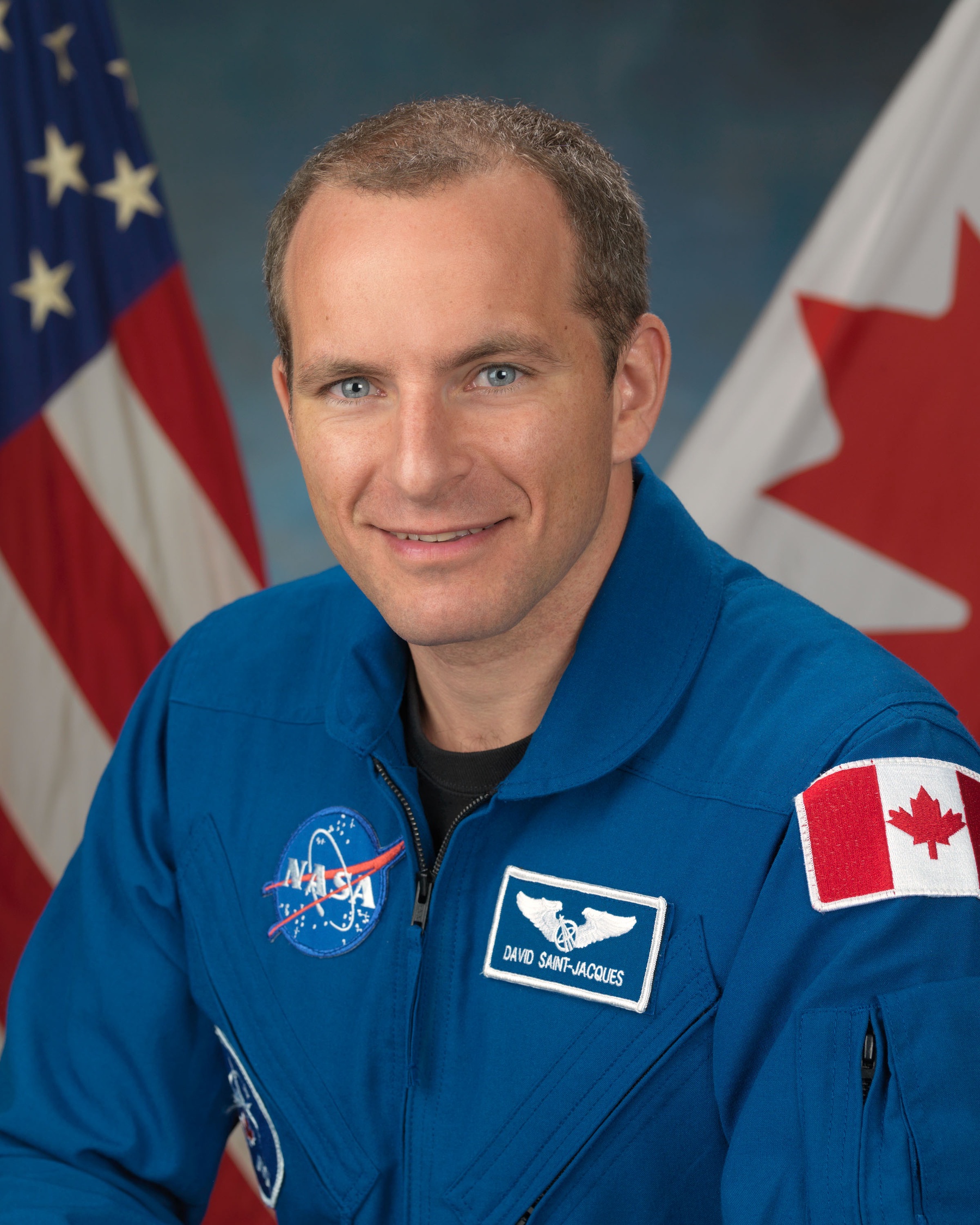
David Saint-Jacques
Canadian astronaut
2
APPEARANCES
2
PODCASTS
Sep 17, 2026

Yvon BialaveitiaHOST
When you're living on the International Space Station, what happens to something as basic as the water you drink? How much of it gets reused?

David Saint-JacquesGUEST
Water is life, as we all know, and water is heavy, about a kilo, a liter.
David Saint-JacquesGUEST
So it is a resource that we cannot afford to send to space for daily life.
8 MINS LATER
Yvon BialaveitiaHOST
Are there any things you learned to do differently on the space station that stayed with you when you come back to Earth?


David Saint-JacquesGUEST
Now the Moon is continuing its merry way, and they, they're falling back to Earth.
David Saint-JacquesGUEST
They've been falling for four days, accelerating the whole way, and they'll peak maximum speed, as we said, as they hit the atmosphere, about 10 kilometers a second, and then they'll turn into a fireball as the, you know, the w- the, the atmosphere slows them down and kinda chips away at their protective heat shield.
David Saint-JacquesGUEST
We'll lose comm with them for about six minutes or so, and eventually at about, uh, at about, uh, maybe something like six kilometers altitude, they'll open their parachutes.