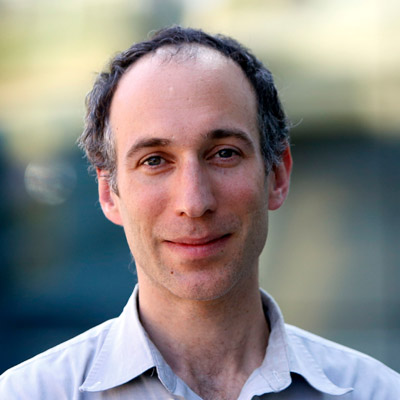
David Reich
American geneticist
3
APPEARANCES
3
PODCASTS
Aug 12, 2026


David ReichGUEST
I was really good in computers and I went and got a couple of degrees in computer science and went working in computers.
David ReichGUEST
All the while, I was growing myself as a performer and going from doing a bucket of tricks to really thinking about people, the psychology.
David ReichGUEST
And it dawned on me a number of years later that so much of my success in technology, technical leadership, executive leadership was because of my communication skills that I built as a magician.
10 MINS LATER


David ReichGUEST
So seven years ago, uh, Ali Akbari, uh, who is a, uh, at the time was a postdoctoral scientist in my laboratory and a few years later became a permanent staff scientist in my laboratory, set out to use the data that we were producing to learn about biological change over time.
David ReichGUEST
And I think the reason he was interested in our laboratory rather than other places was that a focus of our laboratory has been generating truly large amounts of data from ancient humans.
David ReichGUEST
We've been really trying to industrialize the process, make it very inexpensive, make it high quality, and generate large numbers of samples, uh, with lots of good data for this purpose.
David ReichGUEST
So there's been this large amount of data that we've generated, and it made it possible to conceive again of asking the question about whether there's been frequency changes over time.
David ReichGUEST
So the mainstream view in human h- evolution in the last several decades has been that natural selection has been pretty quiescent over the last several hundred thousands of years of human history.
1 HR 24 MINS LATER
speaker_3UNKNOWN
Mm.

David ReichGUEST
And within those 3 billion DNA letters, comparing any two people, there's about a difference every 1,000 DNA letters, bases.
David ReichGUEST
And they're living on tens of thousands of essentially statistically independent segments that have moved through different genealogical paths connecting people around.
22 MINS LATER

Brian KeatingHOST
So what is the current frontier in breaking through that event horizon? Is it possible or will it be like the singularity that we cannot penetrate through in cosmology?