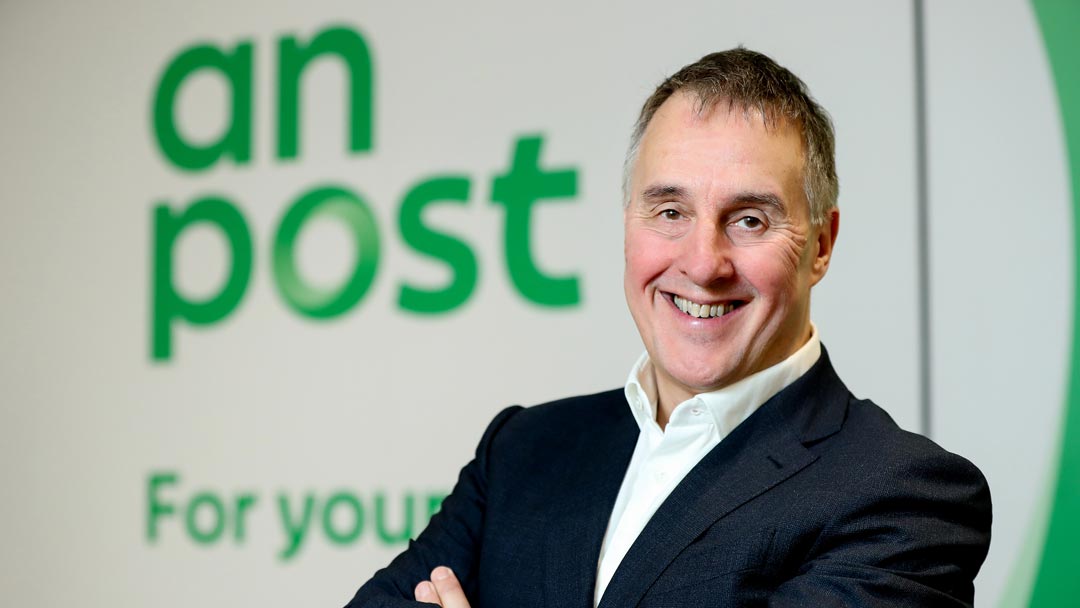
David McRedmond
CEO of An Post
22
APPEARANCES
6
PODCASTS
Oct 20, 2026


Anton SavageHOST
The priest presiding over those funerals has described the incident as an act of total evil.

David McRedmondGUEST
You know, if we look at anything from the road instance, driving up the wrong way in the motorway, if you go back to some of the issues in the centre of Dublin, the rights of Dublin, you now look at this, you know, it is a real concern.
David McRedmondGUEST
And, uh, he had, he left to set up a consultancy, paid a former office manager in, uh, the intelligence agency to slip him, uh, confidential information, including information that was just for the chancellor.
David McRedmondGUEST
I mean, the initial thing you think he's selling it to Russia, but included some Russian military plans, uh, included plans for I- I- Iran's nuclear facilities.
David McRedmondGUEST
Um, and he also, it says that he, you know, you, you think spies hide quietly, but it says that he rubbed shoulders with politicians and writers such as John le Carré, who I also knew, 'cause he was a cluster of mine in a bookshop I opened in Hampstead in London.
Anton SavageHOST
Comedy Central, DC, Food Network, all getting conglomerated into a single entity.

David McRedmondGUEST
The real harm here actually is done to UK or to British companies, British SMEs, smaller companies.
David McRedmondGUEST
In, [laughs] in An Post, and I give you a secret, we always call them the Norfolk jam companies.
Anton SavageHOST
possibility for you, which is that if this one is costing us somewhere between 12 and 17 billion, maybe Building 3 might be cost prohibitive.
David McRedmondGUEST
You know, today the central bank came out with a report and said the Irish savings ratio has gone up from, I think, 12% to just under 20%.
Anton SavageHOST
The latest of those, Sam Altman says... that we're right to be afraid of AI, but that we should trust the firms developing it.
David McRedmondGUEST
And actually, I think now we're looking at a row getting pretty serious when defendants are being released.
David McRedmondGUEST
I mean, it was Mary Rose Gertie, Judge Mary Rose Gertie, who delivered the verdict and ordered the immediate release from jail of eight defendants who had been refused bail.
David McRedmondGUEST
You know, the remedy of unconditional release is not some kind of bonus granted to an undeserving chancer, but a basic constitutional right.
David McRedmondGUEST
And now it was going through a tough time then because of a mail volume decline, letters, people stopped sending letters.
David McRedmondGUEST
But, you know, like all companies are dying, you have to find the next thing.


David McRedmondGUEST
But we've done that so that we can invest and grow our parcel business and get to the point where the growth in parcels exceeds the decline in mail, and that's happened last year.
David McRedmondGUEST
And we're now seeing that parcel growth is now, you know, the main driver of An Post for much of the past, uh, 15, 20 years, was mail decline.
David McRedmondGUEST
The main driver of it, the economics now, is, uh, parcel growth, or what I like to call trading growth.
David McRedmondGUEST
This is, this is a fundamental shift in how we live and work and play in our world, and e-commerce is one of the two or three really seismic shifts.
9 MINS LATER

David McRedmondGUEST
But we've done that so that we can invest and grow our parcel business and get to the point where the growth in parcels exceeds the decline in mail, and that's happened last year.
David McRedmondGUEST
And we're now seeing that parcel growth is now, you know, the main driver of An Post for much of the past, uh, 15, 20 years, was mail decline.
David McRedmondGUEST
The main driver of the economics now is, uh, parcel growth, or what I like to call trading growth.
David McRedmondGUEST
This is, this is a fundamental shift in how we live and work and play in our world, and e-commerce is one of the two or three really seismic shifts.
9 MINS LATER
Anton SavageHOST
And we start with, I mean, it's the start of a long journey potentially to get there, but the potential of SIP2 balloting strike action.
David McRedmondGUEST
The public pay deal ended in June, so they now need to get a new public pay deal.
David McRedmondGUEST
It's quite a difficult negotiation for government because it pretty much sets the floor for all pay talks.
David McRedmondGUEST
Because once the price is agreed there, then you're going to get, certainly for any other union talks, you're going to get unions saying, look, this is what it was.

David McRedmondGUEST
And I think that's a pity because, you know, fiction is, I often describe it as just the non-fiction of our inner world.
David McRedmondGUEST
How else are we to know how we are? How are we to know what life was like if we don't have fiction? So...
David McRedmondGUEST
Austerlitz deals with the most difficult story of all, which is the Holocaust.
David McRedmondGUEST
And it's the story of a kid who grows up in Wales, a miserable life with some Methodist foster parents.
David McRedmondGUEST
Well, we're on post is responsible for delivering 40 percent of what comes from outside the EU.
David McRedmondGUEST
And and this three euro charge is an EU charge and it's designed to stop so many goods coming in cheap goods from China.
David McRedmondGUEST
But they come in bulk into Amsterdam or wherever and are then shipped from there.
Anton SavageHOST
This is a suggestion that we would pour millions and millions and millions into the redevelopment of the GPO to make it what?
David McRedmondGUEST
they've done really well online and really pushing their online and I think they've done almost better than anybody else and, you know, it's great to see a different way to generate revenue and, you know, It goes back to a theory I always have.
Shane ColmanHOST
David, just tell us about this charge and why you're looking for it to be deferred.
David McRedmondGUEST
Shane, the charge is a three euro charge, as you said, on items which will come in from outside the EU.
David McRedmondGUEST
And it will be a charge to consumers per item that they order, largely affecting e-commerce.
David McRedmondGUEST
And it's an attempt by the EU to to reduce the amount of goods coming in from China.
7 MINS LATER


David McRedmondGUEST
And started their travel retail, which now that's an interesting story because I started their travel retail, I was given the railway station stores to look after, and I thought, "Oh, my God, what an awful job." And, and but I finally got over myself, found a great team, and then it worked out.
David McRedmondGUEST
All these people going through railway stations and airports and, and we established and said, "Let's set up separate supply chains, different types of merchandising, uh, different pricing, all of that," and it worked fantastically.
6 MINS LATER

David McRedmondGUEST
And started their travel retail, which now that's an interesting story because I started their travel retail, I was given the railway station stores to look after, and I thought, "Oh, my God, what an awful job." And, and but I finally got over myself, found a great team, and then it worked out.
David McRedmondGUEST
All these people going through railway stations and airports and, and we established and said, "Let's set up separate supply chains, different types of merchandising, uh, different pricing, all of that," and it worked fantastically.
6 MINS LATER
David McRedmondGUEST
Um, it reminds me that, uh, recently, Janan Ganesh from the Financial Times, he had this theory, which I think is really interesting, is that, you know, we're at a particular stage of real chaos in the world with a group of men in their late 70s fighting for their legacy.
David McRedmondGUEST
You know, in this world of trade wars and trade imbalances and productivity and China has won.

Ciara DohertyHOST
What role do you think drone delivery is going to play in terms of delivering our ordinary mail on a daily basis here in Ireland? I think...
Anton SavageHOST
The kind of HGV heavy haulage or heavy torque and power output stuff that tractors will be doing EV hasn't been quite as successful there yet.
David McRedmondGUEST
We power our trucks with HVO, which is an alternative fuel, and that removes about 85% to 90% of the carbon emissions.
David McRedmondGUEST
I think this, you know, I kind of see the heavy myths of PR companies all over this.
David McRedmondGUEST
And, you know, Italy is a major manufacturing manufacturer in Europe, particularly actually in plastics.
David McRedmondGUEST
And, you know, so I presume that these are vape companies that are lobbying the Italian government.
David McRedmondGUEST
You know, who needs vapes? We didn't have them before and nobody needed them.
Anton SavageHOST
Are you heartened, therefore, by what we're seeing in Galway? The Ring Road is getting planning approval after 30 years? Yeah.
Anton SavageHOST
This makes it sound like oil and gas is a disposable thing that you use on a whim.
David McRedmondGUEST
But looking at the papers today, they're also talking about moon flight and people that this Artemis expedition to the moon and.
Anton SavageHOST
Potentially an awful lot of sick people attending that GP practice, but one would hope that all of those six certs are entirely legit.
David McRedmondGUEST
You know, when I read this, and look, we've all been seeing this, this has been coming for some time, actually.
David McRedmondGUEST
Apple Steve Jobs, you know, dictum, which is don't build technology, create solutions for customers.
David McRedmondGUEST
But the problem, virtual reality doesn't seem to be doing much of a job of replacing reality.
Anton SavageHOST
do we feel sort of a modicum of guilt about the manner in which we did it? The fact that we used EU market access, the fact that we used tax incentives, the fact that we used things like the double Irish, do we feel a bit grotty that we went that way?
David McRedmondGUEST
You know, I think I actually think there's great progress has been made, but there's an awful lot more to do.
David McRedmondGUEST
You agree something, you get it done and take straight away the political system so much more involved.