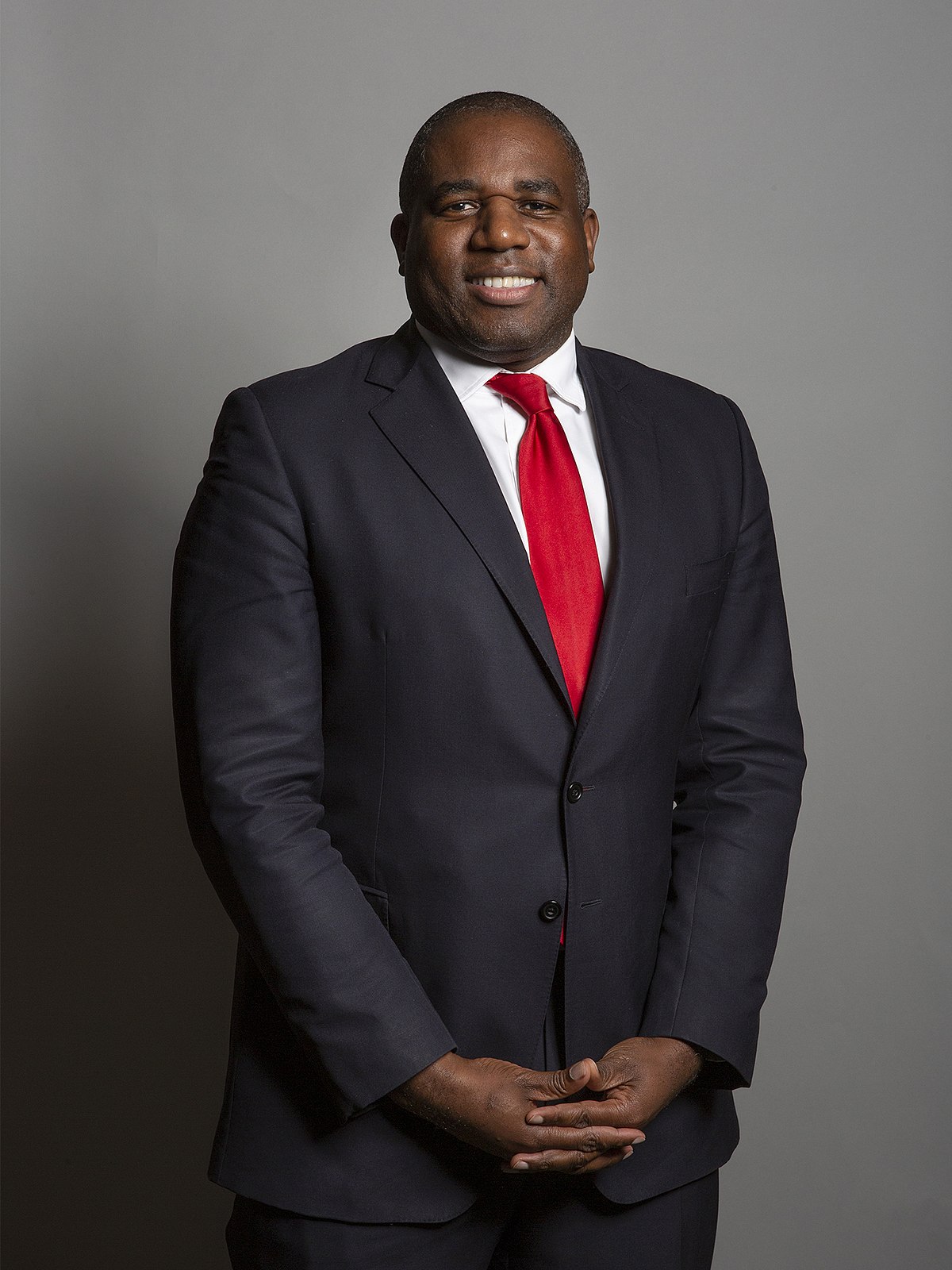
David Lammy
Member of Parliament of the United Kingdom
9
APPEARANCES
8
PODCASTS
Jul 11, 2026


David LammyGUEST
What I know is that in opposition, I was really clear that we would reconnect with Europe.
David LammyGUEST
I was the first Foreign Secretary back around the table with European foreign secretaries, because in the end, both in terms of our largest trading partner, in terms of the war in Ukraine, and a whole raft of issues, it is hugely important that we are properly engaged alongside our European partners.
David LammyGUEST
It was predicated very clearly on the manifesto and the red lines that we laid out in that manifesto.
David LammyGUEST
Uh, I'm not gonna predict where policy might lead to in the years ahead, but I'm very, very proud of the work that I've led to reconnect with our European partners.
George ParkerHOST
Finally, when you look back at Keir Starmer's time in office, do you feel he got too sucked into dealing with foreign policy to the detriment of domestic issues?


David LammyGUEST
... that the United States is seeing Europeans step up In terms of our commitment to defense and to spend across Europe, I think we must recognize the progress that we're seeing from Ukraine on the battlefield.
David LammyGUEST
We also see in Russia recession beginning to bite, um, a huge casualty loss now of soldiers, well over a million, uh, dying.
David LammyGUEST
Uh, and so I think we also recognize that this is the moment to keep Ukraine in the fight, to increase aggre- um, uh, our, our suppression, if you like, of, uh, what the Russians are doing, and to support Ukraine to the very end.
speaker_3UNKNOWN
... with the rest of the G7?
David LammyGUEST
You saw also the interdiction from the UK, uh, of the Russian shadow fleet just a few weeks ago.


Trevor PhillipsHOST
David Lammy, what were your feelings as you watched the death of Henry Novak?
David LammyGUEST
Trevor, many years ago I was out with police in Camden when a young man was stabbed and I remember standing alongside him and in a sense seeing that footage of Henry Novak at the end of his life was deeply, deeply traumatic.
David LammyGUEST
I just, it was so painful, so harrowing, so horrendous and my heart goes out to that family for the grace and dignity with which they are now having to conduct their lives sort of in the full lights basically of not just UK attention on this but now global attention on this desperate, desperate tragedy.


Nick FerrariHOST
but deputy prime minister if you say you should have rights why is consultation necessary
David LammyGUEST
So, for example, we're saying that if you've been in an enduring relationship for three years, that's about the right length where those rights should happen.
David LammyGUEST
What are the circumstances in which those rights kick in? That's the balance we've struck.


Oli DugmoreHOST
How do you understand the similarity between his time as prime minister and the world that we find ourselves in now?
David LammyGUEST
I, I just think having served in both governments, now it is important to say that obviously I served in the Tony Blair government as a junior minister.
David LammyGUEST
Clearly in this government, um, uh, you know, I'm right in the driving seat of power alongside, um, the PM, but there are big differences.
David LammyGUEST
Um, you know, when I look back on the Tony Blair era, it was, um, every single year we had growth, um, in the economy.
David LammyGUEST
Uh, our inheritance this time is chronically underfunded public services and a very bad economy, and in fact, an economic, uh, um, downturn that's really been happening since two thousand and eight.
11 MINS LATER
Oli DugmoreHOST
I feel like I do anyway, and I'd invite you to talk about this, whether or not we've lost sight of the fact that there's a very significant ethnic minority portion of people in this country who are themselves victims of crime as well, and I just don't know whether that's fully recognized in our national media discourse.


Nick RobinsonHOST
At the end of this incredibly turbulent week, people will want to step back and sort of ask a question: What just happened? Have we just seen a desperately uncomfortable public row in the NATO family, or have we seen a long-term rupture of the transatlantic relationship?
David LammyGUEST
China sits alongside them, and as a consequence of that, the Indo-Pacific, um, is the other half of the US brain, and that has consequences for the transatlantic, and it has consequences for Europe.
David LammyGUEST
Um, it means that over this next century, Europe will be playing a much bigger role, leading within NATO, I suspect.
17 MINS LATER
Nick RobinsonHOST
So when I said in the introduction, America is a country that you probably have more knowledge of than almost anybody around the Cabinet table, perhaps anybody, that's because it's part of you and your story.
Nick RobinsonHOST
At the end of this incredibly turbulent week, people will want to step back and sort of ask a question: What just happened? Have we just seen a desperately uncomfortable public row in the NATO family, or have we seen a long-term rupture of the transatlantic relationship?
David LammyGUEST
China sits alongside them, and as a consequence of that, the Indo-Pacific, um, is the other half of the US brain, and that has consequences for the transatlantic, and it has consequences for Europe.
David LammyGUEST
Um, it means that over this next century, Europe will be playing a much bigger role, leading within NATO, I suspect.
17 MINS LATER
Nick RobinsonHOST
So when I said in the introduction, America is a country that you probably have more knowledge of than almost anybody around the Cabinet table, perhaps anybody, that's because it's part of you and your story.


24 MINS LATER
speaker_1HOST
Whose fault was that?

David LammyGUEST
They just disappeared off the streets, and, um, you heard stories of being beaten up badly by the police, being framed, but you also knew that there was a lot of criminality.
David LammyGUEST
Um, and so prison was this deep fear of being locked up, taken away, out of control, and it did, did, uh, f- f- for my, my youthful imagination landed on this, and it, it, it, it...
David LammyGUEST
And, I guess, um, a, a trip that I made to, to a prison, I think it was Maidstone, um, uh, very, I must've been, you know, 10 or 12, um, stayed with me.
33 MINS LATER

James O'BrienHOST
How frustrated have you been by the things that you can't do? And, and most obviously with, with reference to Gaza and, um, the, the, the difference between being in opposition and being in power?