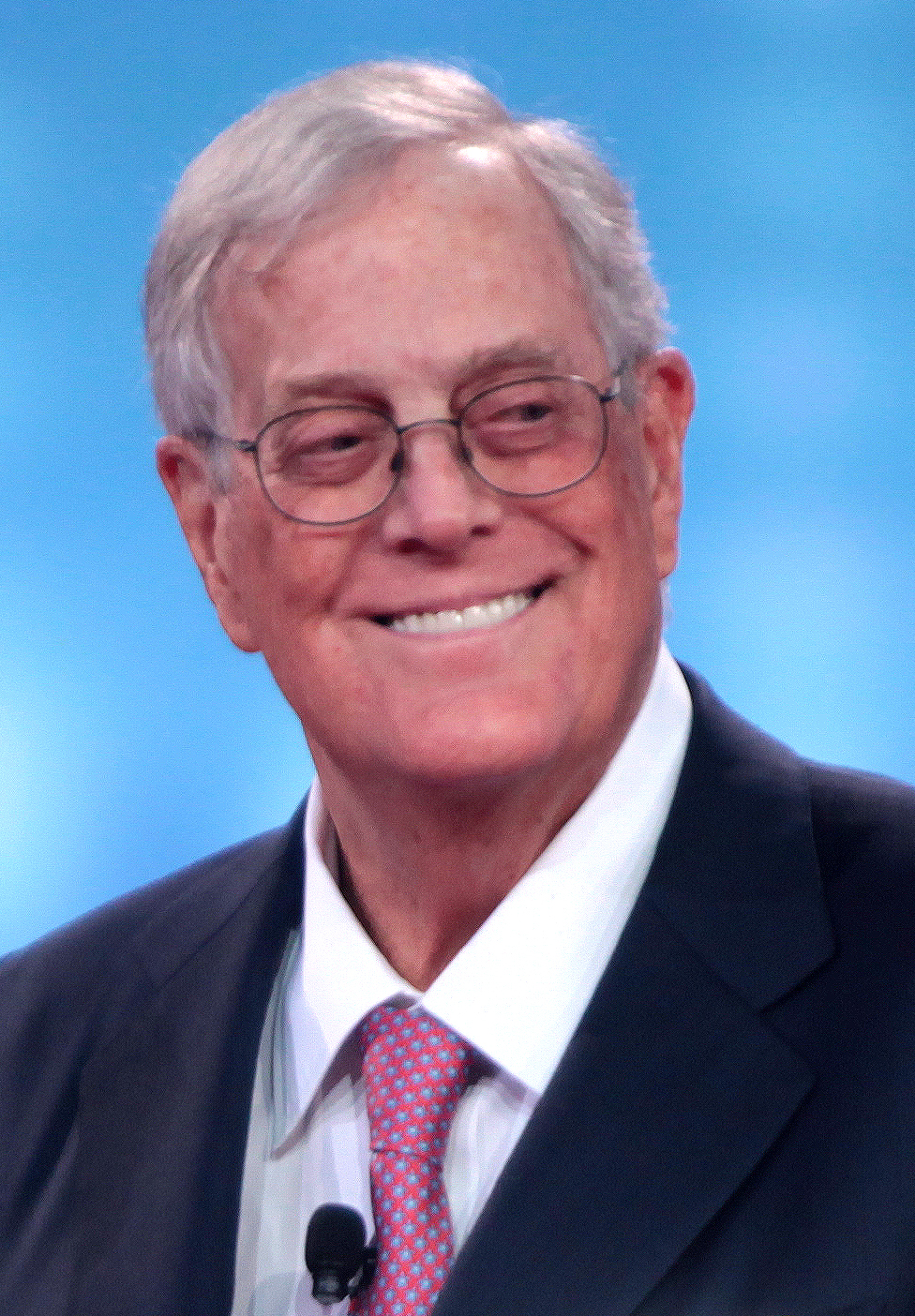
David Koch
American businessman and philanthropist
29
APPEARANCES
19
PODCASTS
Nov 22, 2026


David KochGUEST
Why the EV tax breaks, fringe benefits tax to buy an EV? Well, it has come in 10 times more than budgeted.

David KochGUEST
50, 60 satellite vans, mobile homes, NBC from America was there, BBC from the UK.
David KochGUEST
There was French, German, Japanese television as the whole world held their breath to see if these two miners could be rescued.


David KochGUEST
Oh, look, yes, because administration really gives a company a breather to see, number one, if there's anyone else prepared to buy it, and number two, it gives the administrators a chance to say, hey, let's look at the business model and find out how we could re-engineer this business to work better.
David KochGUEST
It's pretty well known throughout the industry that David Jones have just got too many stores.
David KochGUEST
And it's the stores that aren't at the high end, like David Jones in the city of Sydney, David Jones in Melbourne, which are... flagship stores, high-end at Chadstone, for example, a high-end shopping mall there, they're going pretty well.
David KochGUEST
But it's the other fringe ones that don't do so well, you know, like Ringham Mall in Sydney on the outside of the main city.
David KochGUEST
And I think the administrators will be looking, okay, if we cut the number of stores, say, in half, and just focus on the profitable ones, the profitable high-end David Joneses.

David KochGUEST
The decisions made around the cabinet table are the ones that are offsetting and countering all the good work we're doing around the kitchen table.

Chris SmithHOST
There were days they would announce a $12 billion lolly or a handout on a sector, and there was no discussion in the press conference about where the money was coming from.
David KochGUEST
The decisions made around the cabinet table are the ones that are offsetting and countering all the good work we're doing around the kitchen table.
Chris SmithHOST
There were days they would announce a $12 billion lolly or a handout on a sector, and there was no discussion in the press conference about where the money was coming from.

6:59

But Koshi's biggest issue is that he believes government actions are causing the Reserve Bank to have to keep increasing our interest rates.
David KochGUEST
Average Australians are feeling a bit betrayed at the moment because we thought, yep, we're going to do what Michelle Bullock and the Reserve Bank wants us to do.
David KochGUEST
But when what we're doing is being countered and offset by governments, so what we're doing is useless in terms of fighting inflation, that's when Australians go, well, hang on.
David KochGUEST
If we're going to be lectured here and told to change our behaviour, everyone's got to change their behaviour with the one ambition, and that's to get inflation down.


David KochGUEST
So she's been very passionate in not wasting money, not leaking money that you could use elsewhere and donate to community or charity.
David KochGUEST
There are jobs for being part of a family and you don't get paid for, as Lib said.
9 MINS LATER


David KochGUEST
Look, we've had five interest rate increases to try and slow down inflation, and it hasn't worked.
David KochGUEST
You add in an increase in petrol prices, which is like an extra interest rate increase on the household budget, filling up because of global oil prices.
5 MINS LATER
LozHOST
Is that the sort of...

David KochGUEST
It's all about getting life in order before you, you get into a long-term relationship, and particularly if you're going to share financial commitments and things like that, and you gotta talk about it.
David KochGUEST
You're a team in life, you're a team in finance, you're a team in love, and with money, you gotta work as a team, always.
David KochGUEST
And I always say to people, once a month, um, spend 15 minutes, I call it, um, love money.
11 MINS LATER
13:01
So what happens if your best endeavor's to find out what's going on, to have those conversations, if actually you can't because somebody is trying to abuse you and conceal that from you, that information?

Natalie BarrHOST
Is there something wrong with all those other countries and we're doing something right?
David KochGUEST
You could sense the frustration in Michelle Bullock, the Reserve Bank Governor, yesterday at a press conference when she was asked, oh, global oil prices are driving inflation around the world.

17:26
I have to pay a bit more towards it to help take the pressure out of the economy." So how have we ended up in this position then if there are other measures and other tools where we're made to believe that this is the only tool?
David KochGUEST
So what's happening, and I think there's a sense of frustration amongst Australians saying, "We're doing it tough.
David KochGUEST
We're doing the right thing by the Reserve Bank and inflation, yet we're on team fight inflation with the Reserve Bank.
David KochGUEST
How come it's not working?" Now, obviously, there are a whole bunch of things out of our control.
David KochGUEST
In fact, filling our car up has got more expensive because of global oil prices, which we've got no say in, nothing to do with at all.
21:42
It's only what we have to spend on"? You know, it would be unpopular, right?


Chris KennyHOST
You recognise, of course, the Reserve Bank governor can't dictate government policy, but in essence, what's your message to Michelle
David KochGUEST
that you've talked to average Australians over the last two years and said, we've got to fight inflation, we've got to tighten our belt, we've got to live within our means and not keep fuelling price rises.
5 MINS LATER
Chris KennyHOST
Now, Koshi, people will have their different views of Jim Chalmers and the Labor government on this policy or that, but he can't be right, can he? They're doing everything right, that this is sustainable.

Michael McLarenHOST
What you'd want is just a little bit of transparency and honesty about how we're in this predicament.
David KochGUEST
In fact, probably the federal government does a better job than the states that are just spending outrageously at the moment.
David KochGUEST
But, you know, we were asked... a year ago that you say the interest rate rises over here.
David KochGUEST
Interest rates so far, on the average mortgage, have added over $4,000 a year in mortgage repayments.

David KochGUEST
Um, you know, it is a nightmare if you've got a-- if you're an average Australian household with a mortgage.
David KochGUEST
Uh, financial markets are saying, uh, almost a hundred percent chance that there'll be yet another increase in official interest rates.
David KochGUEST
But I thought a letter from all of us to express our disappointment with what is going on around us, um, in terms of the average Australian, and we're the ones going to cop the bill with higher interest rates for things that, that we're not to blame for.

Shane McInnesHOST
So then why are my interest rates going up and I keep being more and more out of pocket each time the Reserve Bank meets? So in effect, is the average Australian family paying the price of the Australian government spending too much?
speaker_0HOST
Koshi, first off, why did you do it? Why did you feel you needed to send this to Michelle Bullock?
David KochGUEST
Look, it's a plea from Australian households to say, don't keep... punishing us for inflation.
David KochGUEST
For years, you've told Australian households, Michelle Bullock, we've got to tighten our belts.
speaker_0HOST
do

David KochGUEST
Well, the lead up to the Reserve Bank board meeting on Monday, Tuesday, it is a nightmare if you're an average Australian household with a mortgage.
David KochGUEST
Financial markets are saying almost 100% chance that there'll be yet another increase in official interest rates.
David KochGUEST
But I thought a letter from all of us to express our disappointment with what is going on around us.
David KochGUEST
in terms of the average Australian, and we're the ones going to cop the bill with higher interest rates for things that we're not to blame for.
Shane McInnesHOST
And this is why, as opposed to just sitting on the fence time and time again.


David KochGUEST
Okay, well, the announcement this morning was to initiate the Code of Amendment approval for Alberton Square.
David KochGUEST
If you like, in terms of the planning process and rezoning, this was the green flag from the dropping of the green flag by the state government to say, yes, we're happy with the project.
David KochGUEST
We're encouraging it to go through and you officially start that rezoning process to kick it off from today.
David KochGUEST
So, you know, it's great to have a dream for Alberton Square, but turning it into a reality needs the state government to say, yes, yes.
David KochGUEST
Okay, well, the announcement this morning was to initiate the Code of Amendment approval for Alberton Square.
David KochGUEST
In terms of the planning process and rezoning, this was the green flag from the dropping of the green flag by the state government to say, yes, we're happy with the project.
David KochGUEST
We're encouraging it to go through and you officially start that rezoning process to kick it off from today.
David KochGUEST
So, you know, it's great to have a dream for Alberton Square, but turning it into a reality needs the state government to say, yes, yes.


Mark BerettaHOST
And you both had an incredible connection with the audience, but that was something you really drove, wasn't it? Connected with people, reading their emails, the right
David KochGUEST
I always thought media was pretty arrogant, that it would tell people what it thought they wanted to know.
David KochGUEST
And the emails and the whiteboard on Sunrise, having a whiteboard on the set of Sunrise, so people would email questions or topics that they wanted answered.
David KochGUEST
We'd put it on the whiteboard and it would stay there until we got an expert in to answer them.
David KochGUEST
And all the research showed that that was... just one of the most powerful marketing exercises, because it said to a viewer, yeah, it is my show, and hey, they do take me seriously.
54 MINS LATER

12:38
Why do you think people don't quite understand that? Is it the banks are not telling us enough about it, or is it we go in a little bit blindly? I
David KochGUEST
They should be advised with the lender, and the lender often says you need to get your own independent advice to each of the borrowers.
David KochGUEST
Now with... with AI and if you subscribe to Claude or one of those, you can put the terms and conditions into Claude and say, what do I need to watch out for in these terms and conditions? And Claude very quickly puts it through.
6 MINS LATER
19:26
instead of it being the 10 things you do before you get emotional after they leave, what about the 10 things you do as you're right in the throes of emotion?
Helen SmithHOST
And speaking about some of those caps that will be increased, how many Australians will be able to access this scheme?
David KochGUEST
So the government comes up with a, a whole bunch of, [laughs] of different figures on this, but it's a couple of hundred thousand that will be able to access it if they want to access it.
David KochGUEST
Yes, it's going to be easy to access finance, but you still got to make sure you can afford the repayments.
David KochGUEST
[laughs] Um, and when you have interest rates coming down, lending ceilings widen.
David KochGUEST
And then you add on the 5% deposit that previously excluded a lot of people, uh, they're now included.


Gary HardgraveHOST
So is it true you've come to Brisbane today to compare Brisbane to the rest of Australia? Is that what you're doing? Well, in terms of lifestyle, how can you beat it? No, it's only winter in the shade here.
David KochGUEST
It's coming up to do more work and some of the studies that we've done, particularly insurance and supermarkets.
5 MINS LATER
Gary HardgraveHOST
So is it true you've come to Brisbane today to compare Brisbane to the rest of Australia? Is that what you're doing? Well, in terms of lifestyle, how can you beat it? No, it's only winter in the shade
David KochGUEST
But it's It's coming up to do more work and some of the studies that we've done, particularly insurance and supermarkets.
5 MINS LATER
David KochGUEST
43 percent difference in price that's enormous i i get stunned by it every year that we do this of the 20 essential items and it just adds up as you're saying 3400 a year that gets you a couple of economy class tickets to london yes how was the research conducted in the first place okay Well, it's 20 items, not just food, but it's household cleaning products, hygiene products, body wash, that sort of thing.
David KochGUEST
And we do the same ones every year, go to the two biggest supermarkets and compare brand names against their home brand lines.

Larry EmdurHOST
Whether we're talking about mouthwash or toilet paper, you are looking at these two products and you think, like, how do we know that that's as good as the legacy brand we've been using for 20 years on our bums? Yeah,


David KochGUEST
Um, um, obviously I'm still pretty g- uh, very close to Nat and, uh, and the team at, uh, at Sunrise.
David KochGUEST
And when the Logies came out, uh, the nominations for the Logies, I thought, "Here we go again." Um, that Sunrise is the, the dominant breakfast program and just does, hardly ever gets nominated.
David KochGUEST
And I felt bad for the team because I know how they work so hard to, uh, maintain their leadership.
David KochGUEST
Sunrise has, has won every single day in the ratings this year, sometimes by as much as 30% is the difference.
Scroll for more appearances