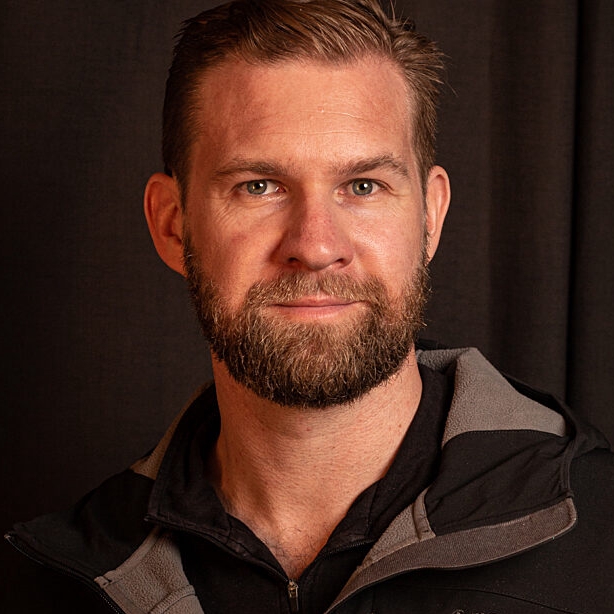
David Knoff
Australian Antarctic expedition leader (Davis Station, 537 days), former Army officer and DFAT diplomat, author of "537 Days of Winter" and leadership speaker.
9
APPEARANCES
5
PODCASTS
Oct 19, 2026


David KnoffGUEST
So we found out – so about two-thirds of the way through our trip, 23rd of June, so just after midwinter's day where we celebrate the winter solstice, we got told that, hey – Due to a whole range of very complicated logistical and operational reasons, we can't get you out as planned and we don't actually have a plan for when we can get you out.
David KnoffGUEST
So we'd spend an additional... summer down there we'd be home by early to mid 2021 and that ended up being the case but we didn't know that for sure and your analogy is perfectly right and i use marathon as a good example like if you're 30k's into your marathon and someone just walks up to you and says hey you've um You've taken a wrong turn or how you're now just running an ultra marathon.
8 MINS LATER


Tom MuellerHOST
And can you share a few details about that? And what are your leadership takeaways from that?
David KnoffGUEST
Yeah, so just on the eve of Christmas 2020, so we'd been there just over 12 months and we still had a while to go, we had...
David KnoffGUEST
If when you've got one crisis and there's one problem, it's often there's going to be more.
David KnoffGUEST
So at one point, the doctor walked into my office and just said, hey, how would we evacuate someone at the moment if we had an issue? And I'm like, almost impossible, mate.
10 MINS LATER
Tom MuellerHOST
Tell us what was the sort of most interesting thing about pulling that all together for you?
David KnoffGUEST
The average age was in the low 30s, oldest in their sort of early 50s, youngest sort of high 20s.
David KnoffGUEST
So they've got a little bit of life experience and they've been through some screening processes for physical conditions.
9 MINS LATER
Tom MuellerHOST
What does this mean? So as a leader, how did you sort of work through that and help people cope with that?

SanaHOST
David, in your words, take us to that actual moment.
David KnoffGUEST
Yeah, well, I mean, as you described there in the intro, so me and the team at 24, we set out in October 2019 on what was supposed to be a 12-month expedition to run Australia's Antarctic Research Station at Davis down in East Antarctica.
David KnoffGUEST
And it had gotten to a point where those annual expeditions went fairly, pretty much like clockwork.
16 MINS LATER
SanaHOST
So what did that combination actually prepare you for? Like what did the Antarctic experience test in you that probably neither of those careers had tested before?

Jimmy SmithHOST
So tell us, tell us David, some of the coping mechanisms, coping strategies that you and the 24 person group used in that time.
David KnoffGUEST
Yeah, I mean, the main ones I talk about now as well and what helped us throughout the year was really focusing on what you can actually control.
David KnoffGUEST
And rather than focus on, oh, geez, when are we going home or what's going to happen next? Okay, what can we actually control about today and this week and this month and your own? This is where routine comes into it.
David KnoffGUEST
You can then become too stuck in your routine and it reduces your flexibility, which you always need.
Jimmy SmithHOST
Can you explain, David, literally the difference between a winter and a summer in Antarctica?
Jimmy SmithHOST
Can you explain, David, literally the difference between a winter and a summer in Antarctica?
David KnoffGUEST
So in summer, you've got about 20, you got 24 hours of daylight in the summertime down there and you'll, you will get temperatures above zero.
David KnoffGUEST
Um, and you'll still get temperatures as sort of minus 10, minus 15, uh, in the summertime down there.
David KnoffGUEST
But, You speak to a Canadian or a Norwegian or someone and they'll laugh at that.
David KnoffGUEST
But in the wintertime, yeah, you're looking at 24 hours of pitch darkness for about six to eight weeks at most of the Aussie stations and down to minus 30, minus 40 degrees ambient.


Jimmy SmithHOST
Can you explain, David, literally the difference between a winter and a summer in Antarctica?
David KnoffGUEST
So in summer, you've got 24 hours of daylight in the summertime down there and you will get temperatures above zero.
David KnoffGUEST
and you'll still get temperatures of sort of minus 10, minus 15 in the summertime down there.
David KnoffGUEST
But you speak to a Canadian or a Norwegian or someone and they'll laugh at that.
David KnoffGUEST
But in the wintertime, yeah, you're looking at 24 hours of pitch darkness for about six to eight weeks at most of the Aussie stations and down to minus 30, minus 40 degrees ambient.
Jimmy SmithHOST
Can you explain, David, literally the difference between a winter and a summer in Antarctica?
David KnoffGUEST
So in summer, you've got about 24 hours of daylight in the summertime down there and you will get temperatures above zero.
David KnoffGUEST
And you'll still get temperatures of sort of minus 10, minus 15 in the summertime down there.
David KnoffGUEST
But you speak to a Canadian or a Norwegian or someone and they'll laugh at that.
David KnoffGUEST
Um, but in the winter time, yeah, you're looking at 24 hours of pitch darkness for about six to eight weeks at most of the Aussie stations, um, and down to minus 30, minus 40 degrees ambient.


David KnoffGUEST
I remember, you know, kind of playing, staying in full-time army service and doing that.
David KnoffGUEST
And to me, you know, I was 22, 23 or so at the time, didn't really appeal to me.
18 MINS LATER