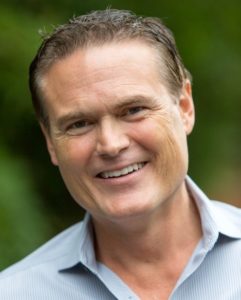
David Gardner
American entrepreneur
9
APPEARANCES
9
PODCASTS
Sep 17, 2026


David GardnerGUEST
And the only way this ever happens is not because I loaded up on it in the first place.
David GardnerGUEST
And as something like Amazon grows and I watch and learn it and I become... increasingly comfortable with it over time.
David GardnerGUEST
And it becomes safer than if I were a small business person with 80% of my wealth in my own company, because Amazon at this point is such a big, important company worldwide.
20 MINS LATER


Jeff SantoroHOST
So we're curious how you got to like, how did you get to be a rule breaker? How did you figure out rule breaker investing and land there to the point where it became your philosophy and something you could write a book about?
David GardnerGUEST
I think that, first of all, a critical element to that was that just being raised in a family where the idea of buying stocks directly was natural.
David GardnerGUEST
And in fact, when I came of age 18, I didn't even really know what mutual funds were or why you would even ever want one.
David GardnerGUEST
I had only been coached or taught by dad to buy stocks, buy companies we admire, buy great companies.
David GardnerGUEST
And I would say especially dad had a couple of key things that I've always valued.
David GardnerGUEST
And so that's just generally good form anyway, when you can find very profitable companies.
58 MINS LATER

David GardnerGUEST
And he, he was teaching us about the stock market and making it very understandable.
David GardnerGUEST
David, in the same way that you have made economics and other subjects that people find very complex, uh, understandable, intelligible, that's what we've been doing with the stock market.
David GardnerGUEST
So as we came of age, then we had our own portfolios, and the first thing that I did was I moved it from the old line bank where it had resided since he started, to something crazy at the time, a discount broker.
David GardnerGUEST
And, uh, at the time, these were upstarts, and they were charging, you know, a much smaller middleman fee for buying or selling a stock.
David GardnerGUEST
And so right away, I think my father wanted me to make it my own, and the first thing that I did as the eldest child of our, our family was to move the account and to start.
30 MINS LATER

David McWilliamsHOST
But are you saying that's the moment to strike, when The Economist, The New York Times, the Financial Times, all those reputable, JP Morgan, Goldman Sachs, when they say it's overvalued, go in and hunt?


Vasant DharHOST
But David, you know, why don't you start by just telling us a little bit more about yourself, you know, where you grew up, what influenced you and, and ultimately led you to be a Fool?
David GardnerGUEST
Um, so I, I was born in Washington, D.C. to the, uh, to two parents, one of whom was a Harvard educated lawyer who was here in Washington, D.C. working in banking law.
David GardnerGUEST
Uh, although my father, Paul Gardner Jr.'s true passion was and is, happy to say he's still with us, uh, the markets.
David GardnerGUEST
But, uh, and then my mother, from an Irish family, um, although a few generations hence, uh, a homemaker, an artist, a society woman.
David GardnerGUEST
And I would say in, in my own, um, youth, she was the rule breaker in our family.
12 MINS LATER
Vasant DharHOST
How do you get to your, quote-unquote, "Rule Breaker portfolio"? Does picking those huge winners and figuring out how much of your money to allocate to them require a certain kind of process or discipline? How do you get there?


Caleb SilverHOST
When it's, the darkness, uh, is surrounding us, you know, how do we get through that and how do we remain invested and remain true to our convictions?
David GardnerGUEST
So, um, in my experience, and again, you and I are, are around the same age and era.
David GardnerGUEST
That is that when something new shows up, a lot of people are gonna talk it down.
6 MINS LATER

David GardnerGUEST
Um, and so as I analyzed looking back over my career, what I realized is the biggest opportunity cost I paid was when I sold a stock and then it went up 20 times in value.
David GardnerGUEST
Uh, if you do the math, I lost a lot more money that way than any of the bad picks that I ever made.
David GardnerGUEST
And so I just wanted to show that other side of the coin because if anyone's gonna spend a little time going back over their results and trying to learn, do see if you notice the same thing I do, which is what really cost you is that you didn't keep holding Apple or Amazon or, um, any number of other stocks that people come up to me at a book signing or a Motley Fool event and say, "I, I should have held on to Netflix.
David GardnerGUEST
I only kept it for a year or two." Those are really the most costly mistakes we make, not...
10 MINS LATER
Owen RaskHOST
And I'm curious, maybe this is two questions in one, David, is how did you come across Tesla? Like, why was it so interesting to you to get the conviction to recommend it when everything was saying flashing red lights, this is probably not gonna work? Uh, and then secondly, like, what was your, the process beyond that? Like, how do you get conviction that this is the top dog and, you know, the first mover? Like, how do you actually determine that?

Mahan TavakoliHOST
What I wonder, though, is do you at any point consider pull the cord and sell? Or is it that if you have a 20, 30-year perspective, a long-term perspective, you hold through the ups and downs no matter what?
David GardnerGUEST
So the answer is we do sell sometimes, and I'll give an example or two in a sec.
David GardnerGUEST
Let's just talk about the entire market, just the stock market and its performance.
David GardnerGUEST
What's the time that you should sell, if ever? And the answer to me is never.
16 MINS LATER


David GardnerGUEST
Yeah, that's a great question because, uh, there are a lot of familiar elements.
David GardnerGUEST
We definitely have been through cycles and, and the cycles used to be more defined by consoles, hardware, so there were major improvements in performance of the underlying chips.
David GardnerGUEST
And it took a long time for those to get put into the next wave of hardware, so you'd have kind of five to six-year cycles.
David GardnerGUEST
But the majority of the market, as we were talking about earlier, is actually mobile, and mobiles are continuously updated, so there really isn't the kind of platform cliff that, uh, you have on console.
David GardnerGUEST
Um, but, um, I think the challenges we've seen is that the, the industry still has a bit of indigestion from massive expansion during the COVID years where, you know, we sort of started th- believing that, uh, yeah, you know, all this, uh, all this revenue growth, uh, belongs to us and will, will stay.
33 MINS LATER

David GardnerGUEST
... shared out, and you could see why they're so successful, 'cause how they treat their employees and the standards that they hold, where doing good actually leads to doing well.
David GardnerGUEST
And again, many people think that's a trade-off or they don't actually think that's real.
David GardnerGUEST
So I, I specifically want you and I to make our portfolios reflect our best vision for our future, and so every company that...
David GardnerGUEST
I already, like, inveighed against an entire industry, the gaming industry, earlier.
David GardnerGUEST
[laughs] Sorry gamers, but by the way, I'm a gamer, but I play video games and board games, not, uh, 50/50 and the house takes 10%, uh, game.
David GardnerGUEST
But I, I would say that you, you're looking for the people who are doing good or within their industry, they're admired for how they treat their employees, how they win for their customers, and how their partners and suppliers are proud to be associated with them.
7 MINS LATER

Barry RitholtzHOST
And our final question, what do you know about the world of investing today might've been useful back in 1993 when you were first getting started?