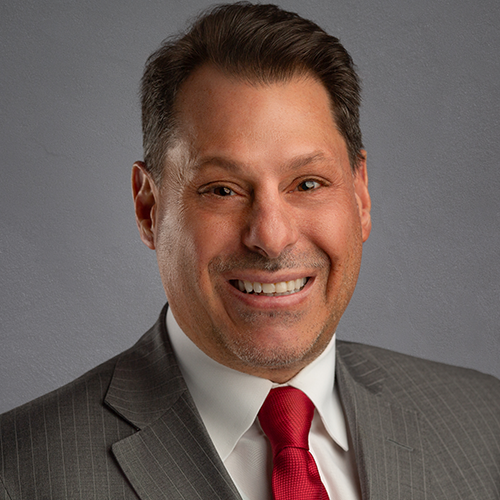
Dave Spano
31
APPEARANCES
6
PODCASTS
Oct 19, 2026

Dan O'DonnellHOST
But what we are seeing now, a little over two weeks to go before the midterm elections, is the market starting to perhaps price in Democrats at the very least winning the House of Representatives.

Dave SpanoGUEST
Of course, talking about baseball and the Brewers, man, I think everyone should stick around.


Brian JacobsenGUEST
But eventually there is that competition as far as if Apple wants memory chips or if they want the semiconductors, they're having to compete with these other businesses that, you know, if they can get a return on equity of more than, let's say, 30 percent, does it matter to them if their cost of financing goes from five to seven or even to 15?
Dave SpanoGUEST
And that leads right into higher interest rates as well because there is demand for debt.
Dave SpanoGUEST
And again, that's going through, making its way through the economy to higher mortgage rates.
36 MINS LATER
Dave SpanoGUEST
But, you know, there are different perspectives when you, when you talk, talk about inflation.
Dave SpanoGUEST
And of course a lot of people are saying because of higher oil prices, that that's making its way through the system.

Brian JacobsenGUEST
Eventually, there is that competition as far as if Apple wants memory chips or if they want the semiconductors, they're having to compete with these other businesses that, you know, if they can get a return on equity of more than, let's say, 30 percent, does it matter to them if their cost of financing goes from five to seven or even to 15?
Dave SpanoGUEST
And that leads right into higher interest rates as well because there is demand for debt.
Dave SpanoGUEST
And again, that's going through, making its way through the economy to higher mortgage rates.
29 MINS LATER
Dave SpanoGUEST
So peak headwinds is I think is where you're going with this, and economic headwinds that are in front of us have been pretty significant.
Dave SpanoGUEST
You think about higher oil prices, higher diesel prices, and of course, and of course there's things like all of these tech bottlenecks that are out there, can't get the memory, uh, that they want.
Dave SpanoGUEST
And then just of course there's some really structural issues, like in aging demographics and, you know, central bank tightening, all of these things that are in front of us.
Dave SpanoGUEST
But at the same time, in all of, all of that, all of this negativity is in front of us, there is really good earnings.
Dave SpanoGUEST
And the earnings season that is setting up, starting really tomorrow, is really setting us up for another great earnings season.
Dan O'DonnellHOST
Are there any tea leaves that we can kinda read right now in terms of which stocks are really over-performing, the Democrat-aligned ones or the Republican-aligned ones, that suggests what Wall Street thinks will be the end result of this midterm election?
Dave SpanoGUEST
It's gonna tell us that, uh, that the CPI is-- continues to stay higher than what we wanted.
Dave SpanoGUEST
I mean, uh, the largest gain that we saw in five months, and it was basically because of gasoline prices.
Dave SpanoGUEST
Core, however, is, is-- has continued-- The core inflation number is continued to be, you know, a moderate number.
Dave SpanoGUEST
You saw that Trump was thought that he was trying to make a deal with Russia, uh, to get some, uh, some of their diesel price or diesel over here, and then they decide that they're gonna just accelerate their attacks, which they did.
8 MINS LATER

Dave SpanoGUEST
It's gonna tell us that, uh, that the CPI is, continues to stay higher than what we wanted.
Dave SpanoGUEST
I mean, uh, the largest gain that we saw in five months, and it was basically because of gasoline prices.
8 MINS LATER

Dave SpanoGUEST
We all know about the market corrections in October all the way back to 1987 and some famous corrections.

Steve ScaffidiHOST
What will they tell us about the direction of the Fed, including on where those rates go?
Dave SpanoGUEST
And for some reasons, I think some of the mantra is political, not from the Fed, but the way people frame this conversation in that, well, rates are up because of inflation is up.
Dave SpanoGUEST
And I think the Fed minutes are going to show you that rates are up because the economy is good.
Dave SpanoGUEST
And so you look at really what's happening and the fact that the economy continues to heat up.
Dave SpanoGUEST
And that's, by the way, folks, that's why the Federal Reserve raises rates to slow down the economy.
Steve ScaffidiHOST
How does that shape this conversation about the, the markets and the economy and, and even financial planning? 'Cause it doesn't seem realistic to me.
Dave SpanoGUEST
And, and, you know, particularly the, the people that he's trying to help, which are, you know, the seniors who face higher costs and, you know, there, there should be some relief there.
Dave SpanoGUEST
If you're gonna ch- send someone a check, uh, to help them out, it's not that much different, uh, than to say conceptually saying, "We're, we're gonna help you with healthcare or free rent," right? I mean, it's, it's a handout to so- to some extent.

Dave SpanoGUEST
It s- certainly was, and of course, the playoffs have started, and the Brewers will play their first playoff game today, Saturday.
Dave SpanoGUEST
And you know, one of those things that goes into it though, and not to be a Debbie Downer, is people ask me all the time about the Major League Baseball player stoppage that could happen after the Brewers win the World Series, which would be a part of the story, but player stoppage could be, it's likely that it would happen, but it could be anywhere from a month to longer.
Dave SpanoGUEST
And if there's a player stoppage, hopefully it isn't a '94 thing where it's the entire season, that we get back to baseball, like I said, because you'll be donning a ring at that time, a World Series ring.
Steve ScaffidiHOST
Your takeaways on that meeting from a financial planning and investment perspective.
Dave SpanoGUEST
Yeah, you know, so just to catch people up, the United States and China got together and agreed to reduce their tariffs by $60 billion of goods, right? And so that is a good thing.
Dave SpanoGUEST
And the good news is, of course, is that if we can get to a point where we have confidence from the business owners, and that is part of this.
Dave SpanoGUEST
So if it's confidence building from people who are trying to buy from China, that is a good takeaway.
Dave SpanoGUEST
And I, I think it's, it's less of a political question than a ge- geopolitical question, right? And so the fact of the matter is, you know, will you start to see some relief? You know, you have things that are happening not only in the Straits, but you have Ukraine, uh, bombing some of the Russian refineries.
Dave SpanoGUEST
And so there's, those are things that we clearly don't have any control over, and that's probably going to come out in the election.
Dave SpanoGUEST
And, and you're starting to see some of these poll numbers showing Democrats, uh, winning the House and perhaps even the Senate.
Dave SpanoGUEST
And so that could have a change in policy starting next year, and the market's gonna react to that.
Kristin BreyHOST
So Dave, with the tariffs going into play as of midnight last night, what are we seeing as far as how we expect that to impact the market or any of the other services you provide? Like, what are you advising for your clients as of now, as long as these are in place?
Dave SpanoGUEST
Yeah, first of all, I still believe this too shall pass, despite the rhetoric that even continues to heat up right now.
Dave SpanoGUEST
At some point, they are our neighbor, and I'm sure it's going to get worked out.
Dave SpanoGUEST
But, you know, the flip side, if you really want to go to the negative side of it, you know, what happens, Canada is trying to do is protect their workers, right? So there could be a situation where they go to an auto manufacturer, for example, in Canada and say, why don't you come to Detroit or come to Cleveland or something? And then you bring those services and things that can be built there here to the United States.
Kristin BreyHOST
but uh as we said right before the break so they're getting two price checks it's this week right there's both the price index report the producer price index report and the consumer price index report what are the differences between those and what are they going to tell us dave

Dave SpanoGUEST
And you can think about the reasons why the opportunity is there because, number one, it's in the Western Hemisphere.
Dave SpanoGUEST
And that is a big deal versus trying to get away from the dependency of all of the Straits of Hormuz talk.
Dave SpanoGUEST
And you can think about the reasons why the opportunity is there because, number one, it's in the Western Hemisphere.
Dave SpanoGUEST
And that is a big deal versus trying to get away from the dependency of all of the Straits of Hormuz talk.
Dave SpanoGUEST
So it's energy, aluminum, lumber, a lot of those things that are, because they have a lot of great raw material.
Dave SpanoGUEST
And the United States is saying some of the things that they're bringing to the United States are hurting our folks.
Dave SpanoGUEST
Well, I mean, the vigilantes, they raise up r- they raise up rates, so that means it's higher cost for you and I.
Dave SpanoGUEST
You know, and part of that, I think, is, you know, I've talked about Kevin Warsh, Steve, uh, significantly, and, and he's the new chair of the Federal Reserve, and they have a number of tools.
6 MINS LATER


Dave SpanoGUEST
Yeah, and there's obviously these geopolitical things that go back and forth, but the market can look through that even though you're seeing these short-term fluctuations because we're going to have a deal, the strait's going to be open, it's not going to be open, oil prices, but the real reason why you're seeing the kind of movement you are is because of earnings.
Dave SpanoGUEST
And when a company, no matter what the company is, right, if it's a chip company or a memory company, if they sell more stuff, whatever it is, and then they have more earnings, you can put a valuation on that.
Dave SpanoGUEST
And right now, FactSet, which is one of the providers that we use, moved their earnings estimates from do i and i think i mentioned this last summer on they they expected twenty eight percent they move that to thirty eight percent it's now at forty eight percent so i wouldn't be surprised if you will see a plus fifty percent earnings gain and that is i can tell you i hate to say it i've been doing this forty years i've never seen anything like it

Dave SpanoGUEST
Well, it's interesting to watch it happen, but fortunately it was hitting the moon and not anywhere else, right? But they saw it coming, which was interesting.
Dave SpanoGUEST
yeah and uh... you know there's obviously geopolitical things that go back and forth but the market can look through that even though you're seeing these uh... short-term fluctuations because we're going to have a deal when you know straight's going to be open it's not going to be open oil prices but the real reason why you're seeing the kind of movement you are is because of earnings.
Dave SpanoGUEST
And when a company, no matter what the company is, right, if it's a chip company or a memory company, if they sell more stuff, whatever it is, and then they have more earnings, you can put a valuation on that.
Dave SpanoGUEST
And right now, FactSet, which is one of the providers that we use, moved their earnings estimates from, and I think I mentioned this last time we were on, they expected 28%.
Dave SpanoGUEST
It's now at 48%, so I wouldn't be surprised if you will see a plus 50% earnings gain.
Dave SpanoGUEST
And that is, I can tell you, I hate to say it, I've been doing this 40 years, I've never seen anything like it.
Steve ScaffidiHOST
discuss that and if you think that's a good thing or a bad thing how he's sort of less likely to just sort of hash this stuff out in front of the press.
Dave SpanoGUEST
And the hawks, they want inflation under control and the doves, they let it run.
Dave SpanoGUEST
uh... of these birds but he is different in the fact that he really does not want to do what other fed shares have done in the past and that's be very transparent effect he probably doesn't even like and i think it's pretty obvious he doesn't even like these f o m c live meetings as they're called so he really is trying to get away from that he's trying not to telegraph but Their job, they have two jobs, right? It's called the dual mandate, even though it's probably more than that.
Kristin BreyHOST
So you can talk a little bit about what's happened, but also just explain to listeners our relationship to the yen and how that impacts our dollar and our economy.
Steve ScaffidiHOST
Let's do a deep dive on some of the sectors that are working, why the economy seems, at least the market performance side of that, seems to be clicking so well.
Dave SpanoGUEST
yeah so again it's earnings uh... that the companies are reporting so far and we just started earning season only about nine percent of the s&p five hundred companies have reported so far but eighty eight percent of them have beaten and that is a really good way to get things uh... up and running but it's really it's where you are and where you're invested is which is the most important piece uh... right now about fifty percent of those s&p five hundred stocks in the s&p are doing better than their index.
speaker_0NARRATOR
Let's begin with your Monday market preview with Annex Wealth Management CEO Dave Spano on Point Taken.
Dave SpanoGUEST
[laughs] Well, the rain, I think the rain's gonna help later today, right? Yeah, I don't know.
6 MINS LATER
Steve ScaffidiHOST
The, the sectors that are working, why the economy seems, at least the market performance side of that, it seems to be clicking so well.
Dave SpanoGUEST
yeah you know uh... worse is uh... and capitol hill and he's talking to the ecp president as well the european central bank president as well and so you know generally he he's come out and said he's not going to show his hand but uh...
Dave SpanoGUEST
i would expect that you're not going to see much out of him you know he's a supply sider uh... will so those things are really going to tell you that uh...
Dave SpanoGUEST
he could probably is not going to tell much i i don't even in fact the uh... betting odds is that the fed is not going to make a move in july so we're gonna watch this information i think more importantly is not what he says but the actual math rate because he said he's going to be do it bates based on data dependency in later this week uh... tuesday and wednesday we're going to get a p p i report in a cpi report that's producer price index and then consumer price index the consumer price index is expected to decline in other words go down by point two-tenths of one percent what does that mean dave that really means that prices have declined and where you're really going to get that from steve is from oil prices going from over a hundred dollars a barrel into the sixties and so that is figured that is one of the numbers that is figured into the cpi So if now the way you calculate that, folks, is when you hear someone say it's two tenths or three tenths for the month, you multiply that by 12.
Dave SpanoGUEST
So if it's if it's point three times 12, that's three point six percent inflation.
Dave SpanoGUEST
Now, if it's point two negative, then that's just one month because oil prices aren't going to continue to go down.
Dave SpanoGUEST
But that would mean that it's starting to slow down the expectations now that inflation is going to be in the threes for 2026.
6 MINS LATER
Steve ScaffidiHOST
What else are you looking at that might be one of the driving factors in how the economy and the markets correspondingly perform?
Dave SpanoGUEST
The financial planning wealth management world is to try to parse through that and find out what is real and what is making the markets really move.
Dave SpanoGUEST
And so what's coming up now, we have earnings season every quarter, right? And so last earnings season was one of the best on record, up 29% earnings growth.
Dave SpanoGUEST
In this coming quarter, so you'll remember where we were three months ago, there's so much negative news, but the Senate has confirmed now Kevin Warsh, so you know who the Federal Reserve Chair is.
9 MINS LATER
Scroll for more appearances