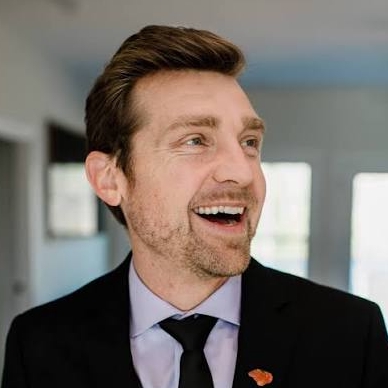
Darren Murph
Future of Work and AI Consultant; Founder & CEO of Page 52 Consulting; former Head of Remote at GitLab; recognized by CNBC as an "oracle of remote work" and named to Forbes Future of Work 50.
3
APPEARANCES
3
PODCASTS
Sep 16, 2026

NickHOST
What would be the guidance you would have from a people management or modern workforce kind of consulting perspective for situations like that?

Darren MurphGUEST
And if you have a vested interest in real estate, it's just going to be harder to uproot that.
Darren MurphGUEST
And I think people writ large really underestimate the power of human psychology when it comes to this.
Darren MurphGUEST
There's a theory called complexity theory within organizational design that essentially argues that humans can only stay in a state of chaos for so long before they revert back to their last known state of coherence, even if logically they know that it's not forward progress.
26 MINS LATER
NickHOST
But what do you think is going to happen the next like, you know, 12 or 24 months that you find interesting or things that maybe people aren't necessarily thinking about?


Jerry WanHOST
Was the trend going that way before the pandemic? And how have most organizations rebounded or sort of evolved from that since the post-pandemic world?
Darren MurphGUEST
Yeah, there was a line in there that I think is really important, which is, was the trend already heading there before the pandemic? And for my entire career, 20 years, I've worked across the spectrum of remote.
Darren MurphGUEST
And so I've been hybrid in office and remote well before there was a term for this, well before there were technologies like Slack and Teams.
Darren MurphGUEST
And so these teams have existed, but they were always a niche way of running a business.
Darren MurphGUEST
They were thrust into a new way of working, a new operational model without a choice and without a lot of time to prepare.


Darren MurphGUEST
So when I worked in fully remote organizations, there were certain things that we had to do in business that were non-optional.
Darren MurphGUEST
Some of these things were building what I call an org brain or having a proper POV on knowledge management.
15 MINS LATER