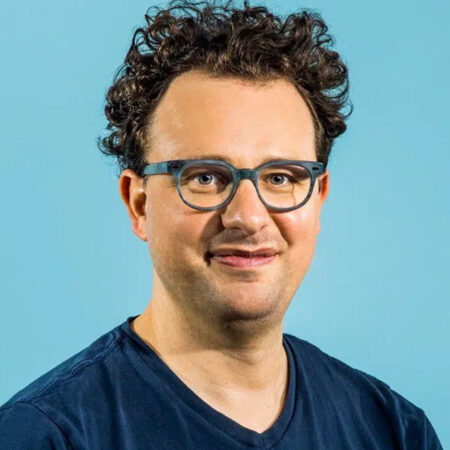
Dario Amodei
American entrepreneur
14
APPEARANCES
13
PODCASTS
Sep 15, 2026


Dario AmodeiGUEST
Yeah, so before I even get to that, I'm very grateful to see support for this proposal just in the first few hours of having put it out by Sam Altman, by Elon Musk, by various legislators and government officials.
Dario AmodeiGUEST
I think it's a positive sign about our ability to make something that looks like this plan work.
Dario AmodeiGUEST
But to get to your question, um yeah embedded evaluators so there is precedent for this um if you look at how banks are regulated right there's there's all kinds of you know there's all kinds of rules about you know how banks are allowed to do their business right because you know we don't want to have financial crises and one of the things that are done in some cases is i think they're called supervisors in the financial industry but they're they're folks who are independent of a company who are embedded in the company day to day to check their practices.
Dario AmodeiGUEST
We already have evaluators who check the finished model, who check the finished product.
Dario AmodeiGUEST
But as we know, if you were going to inspect food or something, it's not enough to just check the finished product.


Jim CramerGUEST
Tell me how this distinguishes you from other LLM models and why this is so exciting for you.
Dario AmodeiGUEST
Well, look, our, our view is that, is that Claude is the best model for integrating, uh, complex amounts of information.
Dario AmodeiGUEST
And, you know, as you can imagine, uh, the pace of things at Anthropic is, is, is, is, is, is, is incredible.
Dario AmodeiGUEST
Uh, and we have to both manage individual accounts, and we have to answer all these incredible strategic questions that change every time a new model and a new product comes out.
Dario AmodeiGUEST
And, and we've found that this, this combination product that we've built together is, is the most useful thing in accelerating it.
Jim CramerGUEST
I just want to be some surety that when you do this kind of thing, anyone who has Salesforce and uses Salesforce knows its data is safe with this agreement.

Dario AmodeiGUEST
The onus is on us, right? I think the government has a role in setting standards, in helping us identify and track down threats.
Dario AmodeiGUEST
So the government has to do its part as well, and I think government is starting to do its part.

Linsey DavisHOST
What might you say to those students, to Americans in general, that they might have a more optimistic outlook about artificial intelligence?
Dario AmodeiGUEST
I think the justified anger comes from the fact that there are real risks to this technology.

Dario AmodeiGUEST
... or schools? So, you know, these cyber attacks happen all the time, and Mythos, we found, not because we designed it to do this or because we designed it to be dangerous, turned out to be very good at both conducting cyber attacks and defending against cyber attacks.
Dario AmodeiGUEST
Um, we, we shouldn't, [laughs] you know, we probably shouldn't give it to e- everyone right away." And so the thing we came up with is we said, "We're gonna take some companies that are particularly core to the infrastructure of the internet," right? Some of the top banks.Some of the top, um, you know, software providers like Apple or like Microsoft or like Google, and h- you know, hand it to them and let them fix everything before it becomes widely available and things can be broken.
Dario AmodeiGUEST
Um, so we would kind of give it to the defenders before the, you know, before the attackers got ahold of it.
Dario AmodeiGUEST
We've, we've given the model to, you know, I think it's something like 40 companies now, and they're, you know, they're bus- bi- they're busily finding bugs.
8 MINS LATER

Oprah WinfreyHOST
Okay, and you wanna leave us, the public, knowing what? What is the most important thing you want us to know in this moment in time where we are in our AI journey?

Dario AmodeiGUEST
There may be some places where I've gotten more optimistic or things have gone better than expected.
Dario AmodeiGUEST
There may be places where I'm more pessimistic and where things have gone worse than expected, but on average they sort of cancel each other out.
Dario AmodeiGUEST
I would say I feel very good about how things have gone with areas like interpretability.
19 MINS LATER

Nikhil KamathHOST
So if you here partner with the IT services companies today, and there is a use case for them, are they not much like the man behind the steam engine 10 years from now where the relevance, if the tool works so simply that you don't need an operator, eventually what happens to the operator?


Dwarkesh PatelHOST
It's not even clear what exactly the story is of, is this supposed to be teaching the model skills? Is it supposed to be teaching meta-learning? Um, what is the scaling hypothesis at this point?
Dario AmodeiGUEST
So, so I have actually the same hypothesis that I had even all the way back in 2017.
Dario AmodeiGUEST
So in 2017, I think I talked about it last time, but I wrote a doc called the, The Big Blob of Compute Hypothesis.
Dario AmodeiGUEST
And, a- and, you know, it, it wasn't about the scaling of language models in particular.
Dario AmodeiGUEST
When I, when I wrote it, GPT-1 had, had just come out, right? So that was, you know, one among many things, right? There was-- back in those days, there was robotics.
45 MINS LATER
Dwarkesh PatelHOST
And so I'm trying to square this conservatism, uh, which seems rational if you have more moderate timelines, with y- your stated views about AI progress.


Dario AmodeiGUEST
Yeah, so, you know, I think for a little background, before I worked in AI, before I worked in tech at all, I was a, I was a biologist.
Dario AmodeiGUEST
Um, you know, I first worked on computational neuroscience and, you know, then I worked at Stanford Medical School on finding protein biomarkers for cancer, on, you know, trying to improve diagnostics and curing cancer.
Dario AmodeiGUEST
And one of the observations that I most had when I worked in that field was the incredible complexity of it.
Dario AmodeiGUEST
It's not enough to measure the level within the body or the level within each cell.
Dario AmodeiGUEST
You have to measure the level in a particular part of the cell and the other proteins that it's interacting with or complexing with.
10 MINS LATER

Zanny Minton BeddoesMODERATOR
But perhaps you can give us a sort of a sneak preview of what a year later your big take is going to be.
Dario AmodeiGUEST
And because it's incredibly powerful, it will do all these wonderful things, like the ones I talked about in Machines of Loving Grace.
6 MINS LATER
Zanny Minton BeddoesMODERATOR
Do you think it's gonna take longer than you thought last year when you said half of all- No, I

speaker_2HOST
Well, I am curious then, Dario, if you can kind of talk about specifically the anthropic tools, the idea here of standardizing how some of these AI agents actually connect to the various tentacles, if you will, the various applications out there.
Dario AmodeiGUEST
Some of the technologies that have been adopted quickly have been things like Cloud Code, the tool we produce to help with development.
Dario AmodeiGUEST
Claude, and we want to drive usage of the tool across areas like healthcare, life sciences, financial services, public sector, things that Anthropic has worked with for a long time.
5 MINS LATER
speaker_2HOST
Can you talk a little bit about that?


John CollisonHOST
And maybe the place to start is What is everyone doing with AI? Like there's coding, there's, you know, customer service work, but like where does all this revenue come from?
Dario AmodeiGUEST
I mean, I would say definitely, you know, the application that has grown the fastest, although it's not the, you know, very far from the only application, we have a wide range of them, is definitely coding.
Dario AmodeiGUEST
And my theory on why it's grown so fast, other than that, we focused on coding and the models are good at coding.
Dario AmodeiGUEST
It's actually really a statement about kind of societal diffusion, which is that if we look at today's AI models, I think in every area there's a huge overhang in terms of what they could do compared to, you know, how they're actually being deployed today.
Dario AmodeiGUEST
Because, you know, there's some Friction, people at large enterprises are not familiar with the technology.
40 MINS LATER


Dario AmodeiGUEST
it sounds like, you know, something, something designed to activate people's, people's dopamine.
Dario AmodeiGUEST
You know, I'm, I'm, I'm actually, you know, careful to criticize the use of those terms.
Dario AmodeiGUEST
Um, but I think, I think despite that, I am, I am indeed one of the most bullish about, about AI capabilities improving very fast.
Dario AmodeiGUEST
The thing I think is real that I've said over and over again is the exponential.
58 MINS LATER
Dario AmodeiGUEST
But, uh, just to back up a little bit, you know, I've been building AI for over a decade.
Dario AmodeiGUEST
And I think maybe the most salient feature of the technology and what is driving all of this is how fast the technology is getting better.Um, a couple of years ago, you could say that AI models were maybe as good as a smart high school student.
Dario AmodeiGUEST
I would say that now they're as good as a smart college student and, and, and sort of reaching past that.
Dario AmodeiGUEST
I really worry, particularly at the entry level, that the AI models are, are, are, are, are, you know, ve- very much at the center of what, what an entry-level human worker would do.

Anderson CooperHOST
Well, let me, let me just say because y- you've previously in the past said, your, the fu- you've described a future where cancer is cured, the economy grows at 10% a year, the budget is balanced, and 20% of people don't have jobs.


Sarah EisenCORRESPONDENT
Why Claude, Daria, why is it better than your competitors like Achachi, PT, or Gemini? Everybody's chasing enterprise right now.
Dario AmodeiGUEST
One is, you know, I think in terms of there's the general capability of the model, right? How smart, how capable, how intelligent it is.
Dario AmodeiGUEST
And, you know, I think in many cases and at many times, the Claude models have been the strongest in a general sense.
Dario AmodeiGUEST
But it goes beyond that and goes back to what I said about you know, anthropic specializing in serving enterprise and business.
Dario AmodeiGUEST
We focus a lot on that in our models, right? Our models are trained in a way that causes them to follow certain principles.
Sarah EisenCORRESPONDENT
What do you say to those that are questioning the narrative about whether all the hype is worth all the investment?


Dario AmodeiGUEST
So I think this is less about commercial competition, right? I worry less about DeepSeek from a commercial competition perspective.
Dario AmodeiGUEST
I worry more about them from a national competition and national security perspective.
Dario AmodeiGUEST
I think where I'm coming from here is, you know, we, we look at the, the state of the world and, you know, we have these autocracies like China and Russia, and I've always worried, I've worried, you know, maybe for a decade that AI could be an engine of autocracy.
Dario AmodeiGUEST
Um, uh, if you think about repressive governments, the limits to how repressive they can be are generally set by what they can get their enforcers, their human enforcers to do.
Dario AmodeiGUEST
But if their enforcers are no longer human, that, that starts painting some very dark possibilities.