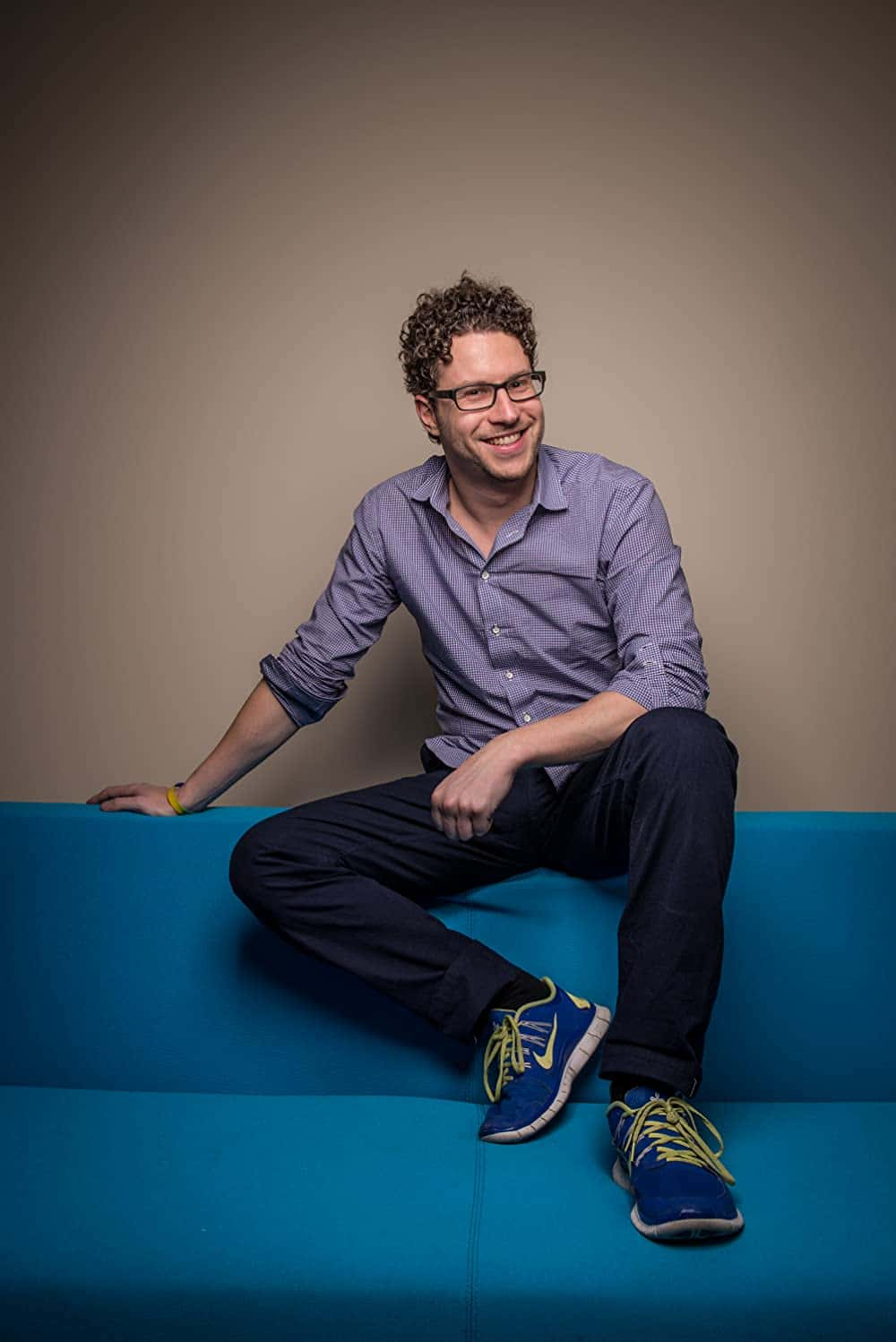
Daniel Nadler
Canadian entrepreneur and poet
5
APPEARANCES
5
PODCASTS
Sep 30, 2026


Daniel NadlerGUEST
I actually decided I was going to learn to draw well, so I studied drawing with a teacher from the Royal Academy in Britain.
Daniel NadlerGUEST
going through the basic motions of how do you draw a shade on an apple and these sorts of things.
Daniel NadlerGUEST
And it's a scary thing to accept that you can actually learn anything that you want to learn, because that feels like a lot of work.
Daniel NadlerGUEST
But if you accept that deep truth that you can learn rocket science, that you can learn medicine, that you can learn all of these things, then it's extremely empowering.
7 MINS LATER

Meena FlynnHOST
So maybe we can talk about that and then also maybe a little bit of the difference between what your model does versus what people might do if they're searching on some of the other LLMs.


Jake TapperHOST
Theoretically, how would this have helped my daughter back when this happened to her in 2021?
Daniel NadlerGUEST
If you type s- some of the factors that she experienced into an AI like OpenEvidence, it- it's not that it's going to identify, uh, the non-standard case as the most likely case.
Daniel NadlerGUEST
But what it's going to do is it's going to very quickly in the answer list the other things to look for, the other things to test for, the other things to consider.
Jake TapperHOST
Quote, "For a teenage female with generalized abdominal pain and a negative jump test, the differential diagnosis should include viral gastroenteritis, but also appendicitis."
Daniel NadlerGUEST
It's never gonna take a non-standard presentation of symptoms like your daughter has and say to the physician, "You know what? With certainty, it's definitely appendicitis.
Daniel NadlerGUEST
It's definitely this non-standard thing to look for." But what it will do is rapidly fill in, in maybe the second sentence or the third sentence or the fourth sentence, that you should consider this.


Daniel NadlerGUEST
Well, first off, so OpenEvidence is a AI co-pilot for doctors that helps them make high-stakes clinical decisions at the point of care.
Daniel NadlerGUEST
So a lot of AI, when I hear AI talked about, is discussed speculatively or as if it's in the near future.
Daniel NadlerGUEST
This year, more than 100 million Americans are going to be treated by a doctor using open evidence.
Daniel NadlerGUEST
In October alone, we saw 17 million AI clinical consultations from logged in, verified U.S. doctors and other health care professionals.

David FaberHOST
What's your competitive mode? I mean, what stops Alphabet from just saying, oh, we're going to put a team against this because this is an interesting opportunity and potentially eroding your market?

Daniel NadlerGUEST
So the physician is still relied upon to do everything that a physician was always relied upon to do.
Daniel NadlerGUEST
I see open evidence as a continuum or a continuation of a very traditional technology called search.
Daniel NadlerGUEST
So historically, physicians needed to search for findings in medical journals.

David WestinHOST
One of the reasons Open Evidence has become so popular with doctors so quickly is that it licenses the best medical literature from trusted sources, and it's free to doctors relying on advertising for its revenue.


Daniel NadlerGUEST
One way to sort of simplify it down is at its foundation, it's a search problem, but it's a very semantic search problem.
Daniel NadlerGUEST
So most search traditionally works with keywords, right? So like, you know, flights to Barcelona or hotels in Barcelona are Most of the, you know, most of the keywords there can be captured in like a couple of words and certainly in a sentence.
Daniel NadlerGUEST
Even if you were to think about clinical decision support as a search problem, simply describing your search query, if you want to think about it that way, usually takes many sentences.
9 MINS LATER

Sarah GuoHOST
What was the moment of decision to serve physicians versus consumers? Because you also think a lot like a consumer entrepreneur in terms of growth.