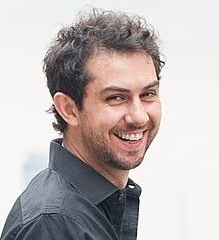
Daniel Hulme
Global Chief AI Officer at WPP, founder/CEO of Satalia (acquired by WPP in 2021) and Conscium, and UCL computer science entrepreneur-in-residence.
5
APPEARANCES
5
PODCASTS
Oct 30, 2026


Daniel HulmeGUEST
I guess as companies get bigger, you end up putting layers of hierarchy in place to deal with that complexity.
Daniel HulmeGUEST
And I think we know that in these types of structures, whilst it helps you get control of the complexity, people end up being in positions where they're not fit for purpose or they're not the right person to be making those decisions.
11 MINS LATER

Imran SyedHOST
What happens to middle management? Interesting, in your previous experience where you didn't have managers per se, but what happens to middle


Sam AndersonHOST
The promise is that this will transform the organizations, that we'll be able to do new and better things, but there's an awful lot of competition, right? So how is it that you can continue to stay ahead or reclaim the top spot, I suppose, when everyone else is entering the same arena?
Daniel HulmeGUEST
One is I often say that there are three things that will ultimately differentiate a business in the world of AI.
Daniel HulmeGUEST
Unless you're fortunate enough to be building foundational frontier models, which actually are in WPP, then it's data really that is the differentiator.
7 MINS LATER


Arjun KharpalHOST
As AI gets more advanced, as some of the changes happen that you talk about, does it mean that a lot of that value will continue to accrue to the digital platforms and effectively entrench what is a very dominant position that they hold right now.
Daniel HulmeGUEST
I think there are three or four things that an organization needs to be able to survive and thrive in the age of AI.
Daniel HulmeGUEST
And that's why, again, we have in WPP open intelligence, which is our data platform to understand human behavior that's constantly being enriched online.
5 MINS LATER
Arjun KharpalHOST
It'd be great to just kind of get a summary of what you mean by that and what the gist of that essay was for our audience.

GarethHOST
So can you tell us again, can you elaborate a little bit then on Satalia? How did that come about? I know you had many ventures, I understand, but how did Satalia come about? What problem were you trying to solve there?
Daniel HulmeGUEST
And the reality is there's a 22 years ago, it was actually impossible to model a million neurons in a machine.
Daniel HulmeGUEST
But the bottleneck in being able to scale those brains were both computation and data.
12 MINS LATER
GarethHOST
What type of advice do you give them in terms of putting the right foundations in place so that they can benefit and grow their brand using AI technology? What are the main things they should do?


Daniel HulmeGUEST
And I wanted to really focus on some big questions I think are facing humanity over the next several years.
Daniel HulmeGUEST
I'm interested in lots of questions ranging from what happens if we cure death to how do we... mitigate the impact of job losses.
Daniel HulmeGUEST
But one of the key questions for me is, well, two, one is what happens when people really start to attribute consciousness to these machines and build relationships with them? Some of those relationships are healthy.
Daniel HulmeGUEST
By the way, 60% of the population believe that large language models are currently conscious.
8 MINS LATER