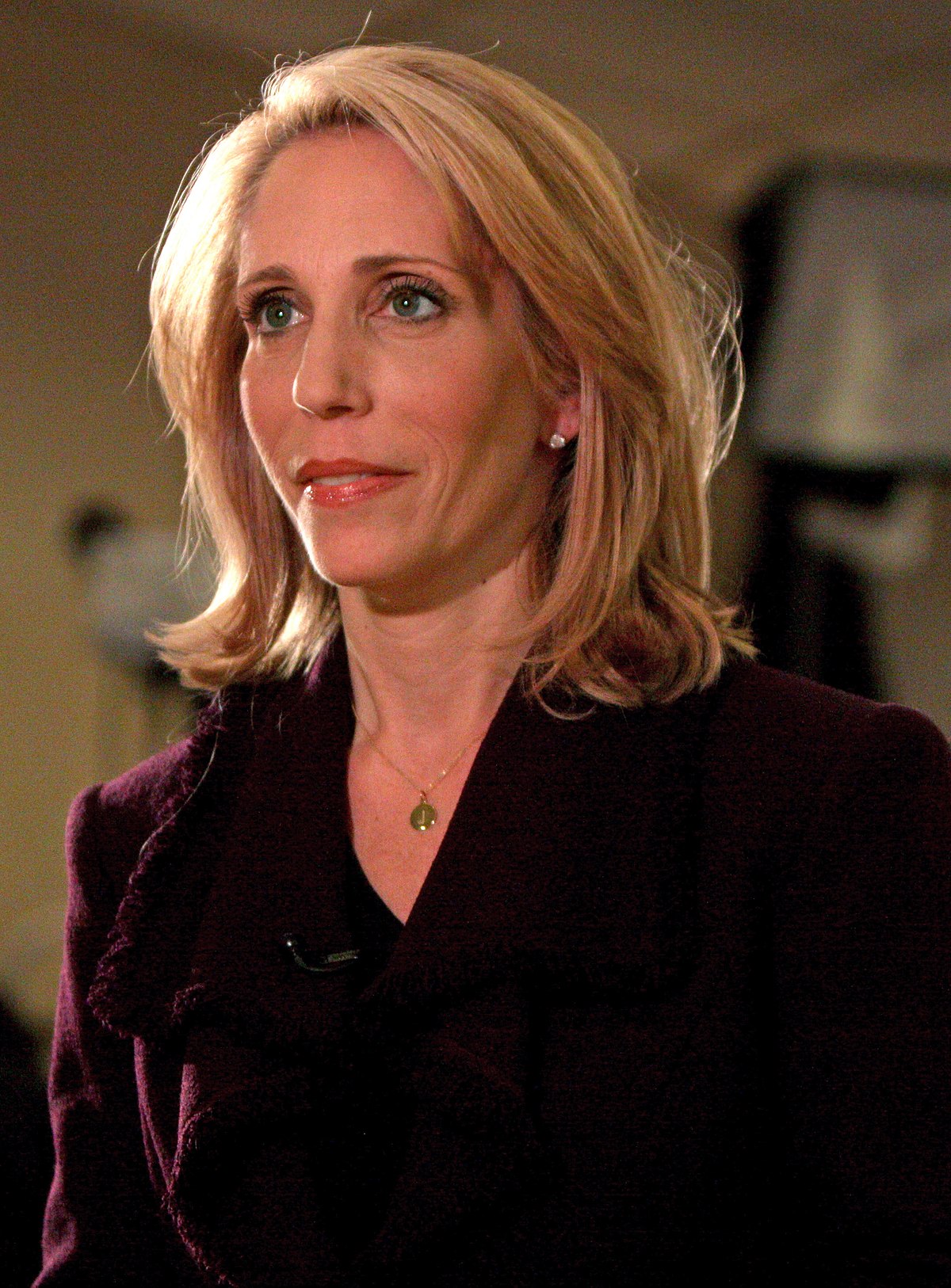
Dana Bash
American journalist
11
APPEARANCES
7
PODCASTS
Sep 20, 2026


Fareed ZakariaHOST
It was the one after Washington, right? 1800, which has some eerie parallels with the world we've been living in the last 10 years.

Dana BashGUEST
It was John Adams and Thomas Jefferson in the first election, which was the first real contested election.


Scott GallowayHOST
What's your sense of how these growing fears about an AI apocalypse and the backlash over data centers will impact the midterms?
Dana BashGUEST
I think it, it could be-- And it sounds silly to say that this is an October surprise because AI is not a surprise, but this Anthropic statement, uh, from Dario and the, the way that other companies and CEOs are responding, and more importantly to your question, the way that candidates are being forced to respond should be seismic.
Dana BashGUEST
And like everything else in politics right now, the way that Donald Trump is playing it is he is potentially not helpful to his fellow Republicans who are on the ballot because he keeps saying, in fact, he has a lengthy post, uh, out this morning about the fact that this is just a conspiracy and people like the head of Anthropic and others are just weak, and they don't have courage, and they don't understand that we can't cede this territory to China, and, and so forth, which the first part is obviously that's Trump, and he gets personal.
Dana BashGUEST
The second part is what we're hearing Mike Johnson, the House speaker, and other Republicans saying, "Okay, we do need to address this, but we can't-- We can pump the brakes, but not slam on the brakes because if we slam on the brakes, China's gonna pass us by." If this was in a, in a vacuum, it would be one thing, but the fact that this speaks to the larger set of anxieties that people have, not just on affordability, but on, like, what's next, and we don't know who to trust.
18 MINS LATER


Dana BashGUEST
To, no, but to answer your question, uh, we decided to pick elections for, for good and bad that had major consequential changes in society.
Dana BashGUEST
Uh, we talked about not just elections for, uh, individuals in elected office, but, um, the, the Mayflower Compact, for example, which really set up a democratic institution for the people who were coming, uh, to this new land at the beginning.
Dana BashGUEST
Uh, but we talk also about Martin Luther King and, uh, um, about global elections, uh, that...
7 MINS LATER

Bill MaherHOST
You know, I always say, "You can't be more offended than the victim," and they like to be.


David RubensteinHOST
And as a result, what happens in Louisiana and the other southern states? Jim Crow
Dana BashGUEST
But I want to go back to what David was talking about, this Colfax massacre, because.
Dana BashGUEST
First of all, just to also say, did you know about the Colfax Massacre? I did not.
9 MINS LATER
David RubensteinHOST
So today, how has your job as a CNN anchor changed from the time you first started? Is it harder to cover political figures and presidents than it used to be or easier?
Dana BashGUEST
... governor of, uh, of Pennsylvania, running for re-election but also very much in the conversation about 2028.
Dana BashGUEST
And I asked him this question point blank: "Do you really think that a Jewish politician can win a Democratic primary for president in this environment for, for Jews?" And he gave an answer about how he's been talking about his faith a lot.
11 MINS LATER


Dana BashGUEST
Yeah, I mean, that's also noteworthy given the fact that we have, uh, an incumbent who, as you mentioned, is, uh, facing a lot of scrutiny, allegations of misconduct, who is getting thrown out by his own party in favor of, of another candidate.
Dana BashGUEST
The an- notwithstanding Debbie Wasserman Schultz, which is why I brought it up, 'cause it's so unique this year, the anti-incumbent fervor is very strong.
Dana BashGUEST
Well, it, you know, it, I guess it's a mixed bag, because as we started talking about at the beginning of our conversation, you had statewide Angie Nixon, uh, uh, on the far left winning over Alexander Vindman for the Democratic nomination, uh, for the Senate.
Dana BashGUEST
But in the case of Jared Moskowitz, this race, this Democratic primary, uh, against Oliver Larkin, w- who is a member of the DSA, was really largely about Israel.
Dana BashGUEST
And, uh, Moskowitz is unabashedly pro-Israel, does not think that, uh, money should be, US, uh, money should be withheld from Israel.


Dana BashGUEST
Um, look, people are very frustrated, angry, scared about their own, um, place in the world economically, socially, um, and they're looking for somebody who sees them and for somebody who listens to them and says that they will fight for them.
Dana BashGUEST
Before Donald Trump, not that long before, six years before, five years before, it was the Tea Party, and now it's, uh, you know, the, the Democratic socialists.
Dana BashGUEST
The question is, um, whether or not what we saw in New York, which is this connection between these people, including somebody who has no other job but to be an activist, so she is quite literally one of them, um, whether or not that really does have legs beyond.
Dana BashGUEST
Um, I was just with your, your governor, Josh Shapiro, and, uh, a little bit of a, a preview of, of our conversation, which will ultimately run on, uh, on July 4th weekend because it's, uh, it's...
10 MINS LATER

Wolf BlitzerHOST
Just ahead of her big debut, Dana's joining us here in this situation to tell us a little bit more about this elephant.
Dana BashGUEST
Okay, so we all need a moment of soul cleansing and just a pure, unadulterated joy.
speaker_20SOUNDBITE_SPEAKER
You're her best friend in the whole world right now.

Dana BashGUEST
So they were safe until 1944 in Hungary because Hitler didn't invade there until close to the end of the war.
Dana BashGUEST
So my grandparents were in the United States and they were receiving some letters from my grandmother's parents.
6 MINS LATER
Wolf BlitzerHOST
And I give the Polish government and the Polish people a lot of credit for keeping Auschwitz as a symbol and as an area where people can go and see what exactly happened.

Dana BashGUEST
You know, I can tell you from hearing it from him directly, because I covered the Bush White House from the end of 2002, which was the run-up to the Iraq War, until just before the midterm elections in 2006.
Dana BashGUEST
And I had the opportunity to travel with him internationally on a couple of trips.
Dana BashGUEST
And during those trips, he talked to, I mean, you remember this, he talked to reporters who were on his plane, like a lot between all of his meetings because he really wanted the press to understand what was going on inside and what the policy implications were and what the sort of context was around it.
Dana BashGUEST
And in those conversations, he was very upfront about the fact that as chief of staff to Gerald Ford in the wake of the Nixon resignation, the whole executive branch was changed.
Dana BashGUEST
And there was a lot of, Congress clawed back a lot of power and he didn't like it.
Dana BashGUEST
And one of the things that he was intent on doing when he became vice president was taking some of the power back into the executive.

Dana BashGUEST
That's why on October 7th, I instantly knew that the barbaric, disgusting murder of more than 1,200 men, women, and children...
Dana BashGUEST
the capture of more than 250 hostages, I knew that along with the condemnation, there would be people justifying it and even unleashing more hatred towards Jews.
Dana BashGUEST
What I didn't anticipate was the widespread twisting of facts, truth, and reality that exploded around the world, especially here in this country.