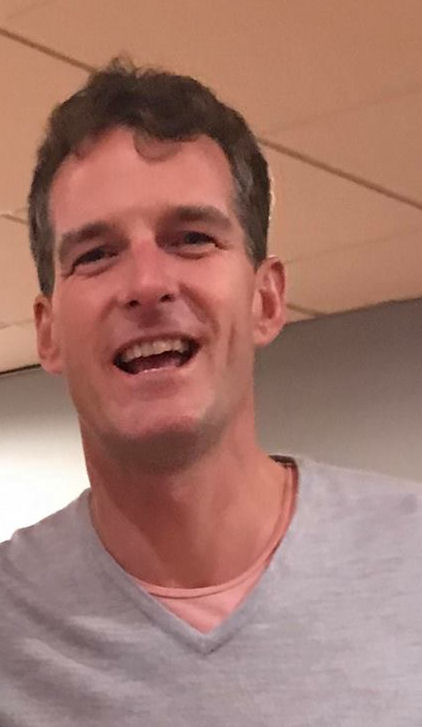
Dan Snow
British-Canadian historian and writer
30
APPEARANCES
19
PODCASTS
Nov 10, 2026


Jen BaldwinHOST
But he is also listed on the Tiefel Memorial on actually the same pier and face as Samson, 7B.

Dan SnowGUEST
And why no known grave, it's difficult to talk about, but the battlefield was physically torn apart.
Jen BaldwinHOST
So the question is then what does that memorial look like now? And now that we know the people behind the names, what's an experience like that?


Guy de la BédoyèreGUEST
Despite the corrosion, that means it's been lost fairly early in its life.
Dan SnowGUEST
Dan, where did the coin come from? That coin came from about three inches below this marker that we've put in here, right on the top of the lowest piece of material in the ditch.
Dan SnowGUEST
So we've still got a fair way to go to get right to the bottom, but it's looking good.
20 MINS LATER

Dan SnowGUEST
And if it's linked with farming and landscape and field systems, for instance, I think it's just too big and it's too clean.
speaker_3NARRATOR
But Samson does not return.
12 MINS LATER
Jen BaldwinHOST
So could you just for our listeners, can you give us a bit of an overview of Forrest, Dan?

13:47

But I mean, you went to Dudley Castle for this series, didn't you? And so there's this, the kind of insight there about how he's operating from an early stage.
Dan SnowGUEST
Yeah, Dudley Castle is, is a interesting place because it actually belonged to a distant cousin of his.
Dan SnowGUEST
It'd gone down a different line, and then the cousin was running short of money, and Dudley lent him money, uh, uh, in, on, on no doubt terms that are very favorable to himself, and then foreclosed on the mortgage, basically.
Dan SnowGUEST
And I guess if you're a king, you want people, you've got a reasonably small pool of people that you can select from to do things for you, and you want people that are gonna get the job done.
30 MINS LATER


Jason KingsleyHOST
But when you're presenting, when you're putting together your ideas for history, how do you start with them and how do you reflect on it? Do you write scripts or do you extemporise and as you're presenting, explore the idea?
Dan SnowGUEST
I think just on your first point about the Math Monday and all that sort of stuff, I think, isn't it interesting also how this year, suddenly with the pandemic, Black Lives Matter, awareness of violence towards women that we've all had here in the UK recently, And maybe around, you know, big government versus little government.
Dan SnowGUEST
And also, sorry, I keep thinking of the list, but also the reemergence of like great power rivalry between China and the US, between arguably China, Russia and the US.
Dan SnowGUEST
Suddenly, those things that I wouldn't have been sensitive to if I'd written it when I was writing a book about the Battle of Quebec 10 years ago, suddenly I'm like, should I have talked about slavery more in this book? Like, it's kind of weird.
5 MINS LATER


Dan SnowGUEST
both to the East Indies and to the Americas, just nightmarish, you're obviously constantly thinking how to make your ships better.
Dan SnowGUEST
Uh, the, the great advantage that Europe has, people, people, um, have used, used China as a counterexample here, is that Europe is incredibly competitive.
9 MINS LATER


Dan SnowGUEST
So in the, in the Navy, as I've said a thousand times in this podcast, so I apologize to anyone listening, it was, it's one thing in the Army to be, you, you give all the, lot, lot of com- You can, you can let the king's son command an army.
Dan SnowGUEST
You don't need much training, 'cause all you've gotta do when you're in charge of a group of men with muskets is stand ramrod straight when bullets are whipping 'round your ear.
Dan SnowGUEST
And, and it's an old expression, officers show men how to die, sergeants show men how to fight.
29 MINS LATER


Dan SnowGUEST
Uh, and he says, "Ultimately, you know, the Jews have undone me, and, uh, and I was right all along." You know, it's just aston...
21 MINS LATER

Dan SnowGUEST
We love the fact that we, uh, have been largely-- We, we were briefly very dominant all over the world, and it's a very fascinating, wonderful story.
Dan SnowGUEST
Britain's greatest successes came as part of coalitions, right? It, it was a coalition that won the Battle of Waterloo.
Dan SnowGUEST
There were, there were Prussians, there were Dutch, as you say, there were all sorts of people from Germany, the endless people.
Dan SnowGUEST
Now, why is he gonna go to the Pacific? Because Spanish money is int- the whole Spanish imperial project is dependent on this massive mountai- literal mountain of silver in Peru, and that, that gets mule trained down to the coast in, in what is now Lima, in the, in the c- on the coast, and then it sails up the coast to Acapulco.
Dan SnowGUEST
It's to Panama, where it's then put, say, over the isthmus, another mule train, and then it sails off to Spain across the Atlantic.
Dan SnowGUEST
Or they, it plugs into East Asian trade 'cause the Spanish also in the Philippines, they trade with China and various other places.
Dan SnowGUEST
And, and so there's a huge trading highway to Acapulco in Mexico, uh, over to the...
24 MINS LATER

Maddy PellingHOST
Uh, let's go to a break, and then we're gonna find out how exactly they go about doing this.

Rebecca CooneyHOST
And you were saying you were kind of lost for words, having one channel of the year.
Dan SnowGUEST
Yeah, I'm lost for words because it's, you know, we're all hearing a lot of bad news about the industry at the moment.
Dan SnowGUEST
And you come into this room, you see these sizzles, you see these showreels, you see the talent that's on display, you see the impact this country has internationally.


Dan SnowGUEST
No, because I think actually what polit- politics needs less sort of overconfident, posh blokes with square jaws who don't really know what they're talking about, but say it with, like I've just done, say it with great emphasis and certainty, right? I think we need area specialists.
Dan SnowGUEST
If I went to politics, really seriously problem, I would just sit there dreaming about, like, how to invade France and build...
10 MINS LATER
Dan SnowGUEST
I mean, uh, Qin Shi Huang, the first emperor of China, was bu-buried with his concubines, uh, q- uh, servants in, in, in his great, by the way, unexcavated sort of pyramid in China, which is the most amazing known archeological site on the planet, which has never been excavated.


Daniel SnowGUEST
Now, I don't, we don't tell them, "Oh, I don't wanna hear what you got to say." But the first sign of, "Well, this is what Daddy's money could buy." One guy said just a few days ago, he said, "Yeah." He said, "I didn't wanna go to all the trouble of pinpointing everything on this truck, so Dad just give this shop," I think, like, "250,000 or something and the truck, and said, 'Do something with it.'" Who, who wants that? I want things done my way, and the way to get that done is to do it.

Tom HanksNARRATOR
In the spring of 1942, the US Eighth Air Force begins construction on dozens of air bases, transforming a quiet corner of East England into one of the most vital fronts of the entire Second World War.
Dan SnowGUEST
So you get this massive, massive influx of American bombers carrying the most destructive weapons ever produced, and just as strikingly, young American airmen.
12 MINS LATER
Tom HanksNARRATOR
It's also home to over a million people.
Dan SnowGUEST
So for the Americans, there's lots of specific military industrial targets they can attack.
Dan SnowGUEST
But the Brits look at the types of housing there, and they think they're very vulnerable to fire.

Robert CitinoGUEST
So campaigning in the Mediterranean will not only knock over one of the three big Axis powers, Mussolini's Italy, it will also open a back door to Hitler's Germany.
Dan SnowGUEST
What are we doing? Why are we dancing around the edges here with this Mediterranean nonsense?" And they think that Franklin Roosevelt is being persuaded by Churchill's pretty words.
35 MINS LATER
speaker_11SOUNDBITE_SPEAKER
One up and two to go.
Dan SnowGUEST
However, the liberation of Rome is going to be entirely, you know, overshadowed because the next day is going to be the launch of D-Day.
Tom HanksNARRATOR
The Afrika Korps' success has left Prime Minister Winston Churchill depressed and politically vulnerable.
Dan SnowGUEST
But as one Labour MP says, "Well, you keep winning the debates, but you lose the battles." Winston Churchill is in need of victories.
9 MINS LATER
Tom HanksNARRATOR
Roosevelt and Churchill will meet numerous times throughout the war, and derive great benefit from face-to-face meetings.
Dan SnowGUEST
Churchill can now play the part of the great imperial warlord that so far he's been only through his speeches.
Dan SnowGUEST
Now he can do it on the ground, and he does what he does best, which is he rolls out the maps and talks about grand strategy with the US president.

1 HR 22 MINS LATER
Casey BaughHOST
Is that why you're like so fulfilled in your, like what you do professionally? It's gotta be because you're like helping people grow.

Saul DavidGUEST
I think they were, they were astonished that a, a non-European race could defeat Europeans in battle.
Dan SnowGUEST
After the Japanese land in Malaya, Singapore's governor, Sir Shenton Thomas, allegedly says, "Well, I suppose you'll have to shove the little men off."
24 MINS LATER

Dan SnowGUEST
Imagine being a 19 or 20-year-old American kid, and you're in a foxhole, maybe with one other person, right? One guy sleeps, the other is on watch, and you can hear the other foxholes with your compatriots, but they're not visible in the dark.
Dan SnowGUEST
And remember, these islands are really black as night, and you hear screaming from another foxhole.
Dan SnowGUEST
We can still preserve our independence, we can still preserve our empire, if we make a deal with Hitler.
Dan SnowGUEST
And the way to do that is talk to an intermediary." Well, that's the Italian fascist dictator Benito Mussolini.
10 MINS LATER
Tom HanksNARRATOR
In the coming months, he'll institute the first peacetime draft and call for the production of 50,000 war planes.
Unknown podcast
When Was the Revolutionary War Won?
May 25 · 48m
Dan SnowGUEST
And the Middle Colonies, the Southern Colonies, they, they may be a little more Tory, they may be a little more relaxed about the idea of the British Empire, and there is perhaps some truth in that idea.
Dan SnowGUEST
And they thought, "All we need to do is just build a wall between these two groups." So we've got a, "Let's get a force moving down from Canada, advancing south towards Albany, down that great invasion corridor that's seen so many armies marching to and fro over the, over the decades.
Dan SnowGUEST
We'll get an army marching from Lake Ontario east towards Albany," so that's another prong coming in from Lake Ontario, coming towards Albany.
Dan SnowGUEST
"And then we get a force moving up from New York, where we've captured New York and, and, and passed New Jersey, so they come due north up the Hudson Valley.
Dan SnowGUEST
And so from three different directions we kind of arrive at Albany, and we cut off New England from the rest of the colonies." The problem is, none of those forces do what they're supposed to, and none of them arrive at the right time, and none of the commanders do what they're supposed to do.
10 MINS LATER

Jonathan BrattenGUEST
Dan, what state are things in for the British at the time of Yorktown?
Dan SnowGUEST
Well, it's just this, it, it's this old problem, which is the British Army can move around America, sometimes carried by ships, this overwhelming maritime strength.
Dan SnowGUEST
But the problem is that every time they go somewhere and they liberate somewhere, [laughs] or they, or they, they get the Union flags out, as Jonathan says, and the crowds all come out and say, "Okay, fine, King George, we're back," the minute they leave town, like the Viet Cong in Vietnam, or, or like the Taliban, I guess, in Afghanistan, the Patriots, the rebels just drift back in and, and reassert their control.
Dan SnowGUEST
The British armies march all the way into this p-part of Virginia, and they haven't got anything to show for it.
Dan SnowGUEST
What they then try and do is they do whatever British, they do exactly what British armies have always done.
Jonathan BrattenGUEST
And they're not getting the Navy because of the French.
Dan SnowGUEST
I'm aware at the moment we're still talking about Europe and I, I know that you deal with, uh, lots of things going on outside Europe as well, so I want to come to that.
Dan SnowGUEST
I'm interested in this idea, something we talked about before, how the, how the idea of female sexuality, enjoyment of sex, orgasming, how does that change over the centuries? Like, was there ever a time when you suspect the orgasm gap was narrower or possibly inverted? I mean, what, what's, what, what's your sense of how it, things have developed over the centuries?
20 MINS LATER

Kate ListerHOST
So where did people learn about it in the past? I mean, if the Queen of France didn't have all the information, where did people learn about it?
Dan SnowGUEST
Yeah, there's a great moment in a Stefan Zweig book that I read the other day about how the, the Second World War came about, and he's just musing about his childhood.


Matt ChorleyHOST
I mean, that's what, almost getting on for almost 200 years ago, and that could be, that [laughs] that could be lifted straight from one MP just told me someone tweeting online.
Dan SnowGUEST
Yeah, i- isn't it interesting how s- the, the past can feel, it doesn't feel that long, far away sometimes.
Dan SnowGUEST
But look, there's a deeper point here as well, right? If you look at Britain's, roughly speaking, Britain's trajectory, yes, there were, there is chaos.
8 MINS LATER
Matt ChorleyHOST
Is there a, whether, whether politically or in history generally, are there bits that you're just not interested in 'cause nothing happens?
Scroll for more appearances