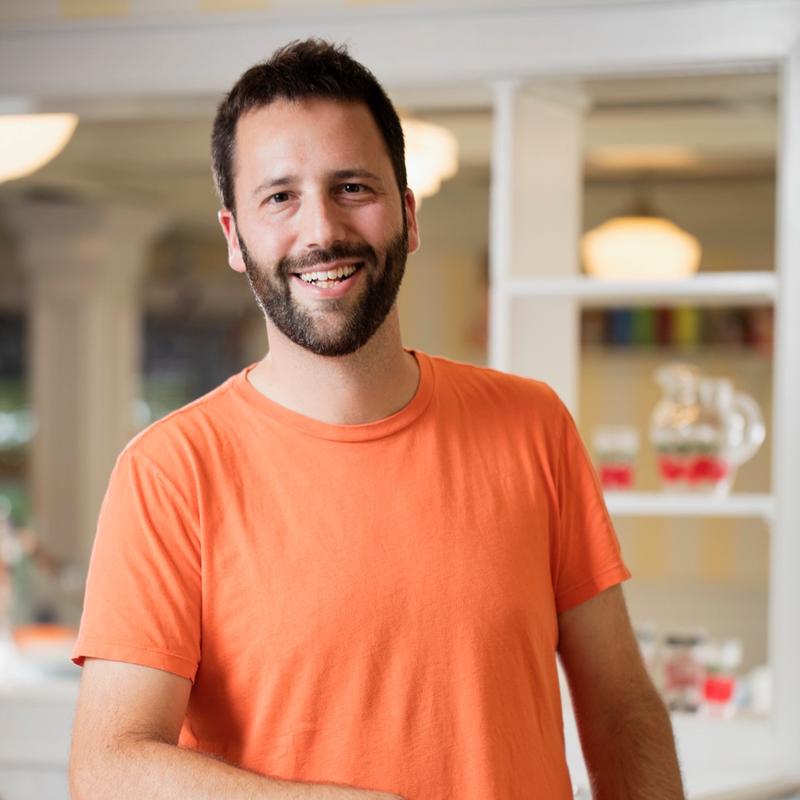
Dan Pashman
Host and author
10
APPEARANCES
8
PODCASTS
Oct 27, 2026

Catherine SmartHOST
Can you speak a little bit to this career evolution of The Sporkful and how the show has evolved?

Dan PashmanGUEST
I think the evolution of the show has been a combination of like seeing what other people are doing and what direction trends are going in.
Dan PashmanGUEST
And then also being like, well, how can I be influenced by that without copying it? You know, I think that we all, any creative person, it's okay to be influenced by work.
Dan PashmanGUEST
I think it's great to be influenced by work that other people are doing, but you still want to be able to make it your own.
Dan PashmanGUEST
And, you know, yes, the sportful in the first couple of years was very sort of absurdist.
8 MINS LATER
Catherine SmartHOST
And so I'm curious, as all these new projects and ideas come into your head or more opportunities present themselves, how do you decide what does belong in the Dan Pashman universe and what doesn't? Like, what does that look like? And maybe how has that evolved?

Dan PashmanGUEST
[laughs] I have laid awake at night thinking about delicious sandwiches and how I would make them if I was gonna make them, for sure.
Dan PashmanGUEST
The two most basic principles of sandwich construction are l- are like my version of like Newton's...
Dan PashmanGUEST
I think it's his first law of motion, force equals mass times acceleration, which I interpret to mean that you wanna build a sandwich such that the force of the bite does not cause the mass of the sandwich to accelerate out the back.
Dan PashmanGUEST
One is how crusty is this bread? How much bite force will be required to pierce the bread and get into the center of the sandwich? And then the second variable you wanna consider is how slippery are the sandwich fillings? And h- and where...
Dan PashmanGUEST
when they are slippery, can we keep the t- keep multiple slippery components from being on top of each other? How can we add friction to prevent slippage? And, uh, and also, at the same time, as you say, Mike, we also need to be worried about soggage.
11 MINS LATER

Dan PashmanGUEST
The Honeycrisp was kind of the first big breakout produce star that came out of these changes.
Dan PashmanGUEST
It was developed at the University of Minnesota, and in 1991, they started licensing out Honeycrisp trees to growers for a one-time fee of around a dollar a tree.
Dan PashmanGUEST
A couple decades later, the University of Washington did even better with their Cosmic Crisp apple.
10 MINS LATER

Kenny MaloneHOST
But, okay, why is this happening? Well, part of the story has to do with growers trying to escape this classic economic pitfall known as the commodity trap.


Dan PashmanGUEST
I think that's right, Chris, and, and since you so generously offered to provide that experience to me, um, I'm just gonna start wandering the woods of Vermont, calling your name, and, uh, I'll find you there, and I assume the table will be set.

Dan PashmanGUEST
Story is giving it a lot of credit, but it's just sort of a funny anecdote, I guess, which is that I think I recorded something for this podcast the longest, shortest time that Andrea worked on.
Dan PashmanGUEST
But when I was little, every Sunday morning, my dad would take me and my brother out for breakfast.
27 MINS LATER
Paul KarolyiHOST
And then, I don't know, the story – the story is so fascinating, but I guess I kind of wanted to just talk to you, Dan, about like, what was interesting about this to you? Why did you want to talk about this?


Dan PashmanGUEST
Like I ho- I had a show in, a college radio show, and I graduated from college in 1999, and I wanted to host a radio show.
Dan PashmanGUEST
Uh, so I started off like as a low-level producer, thinking I would work my way up.
Dan PashmanGUEST
And long story short, like when I came out of college, the radio industry was kind of in decline.
11 MINS LATER

Dan PashmanGUEST
Like I h- I had a show in, uh, college radio show, and I graduated from college in 1999, and I wanted to host a radio show.
Dan PashmanGUEST
Uh, so I started off like as a low-level producer, thinking I would work my way up.
Dan PashmanGUEST
And long story short, like when I came out of college, the radio industry was kind of in decline.
11 MINS LATER
Dan PashmanGUEST
So for example, in the state of Colorado, certain bars are required to serve sandwiches and snacks in order to maintain their liquor licenses.
Dan PashmanGUEST
So the- the bars went to the- the law officials and said, "What does that mean? What are sandwiches?" So a ruling was issued that said sandwiches, as used in articles 47 and 48 of Title 12 CRS, are defined as single serving items such as hamburgers, hot dogs, frozen pizzas, burritos, chicken wings, et cetera.
Dan PashmanGUEST
Well, so- so this is another interesting, uh, bit of case law I thought I would share with you, Chris.


Leo SidranHOST
You had to really believe that there was something there, that there was a real potential in investing years plus in telling a story that nobody was gonna hear for a long time.
Dan PashmanGUEST
And I must have said to my producer, Emma, five times, I was like, it almost doesn't matter if the pasta shape is good or not.
7 MINS LATER
Dan PashmanGUEST
Well, you know, I, I don't know if you feel this way, Chris, you know, 'cause I, I w- I worked in news radio for a long time before I got into the world of food, and I always was passionate about food as a hobby, but when I decided to make food my career, I was worried that I would fall out of love with it, that if it became a job, I wouldn't get the same amount of pleasure from eating and cooking.
Dan PashmanGUEST
And that makes those of us who cook Thanksgiving at home feel like, "Wait, am I doing it wrong? Is there a better way? Maybe the thing I make every year isn't good enough." And so you feel inadequate and you feel pressure to change up your game.
Dan PashmanGUEST
But the wheel of the anxiety is that then our readers and listeners, and they want me to say something new on Thanksgiving on The Sporkful, a- and, and-