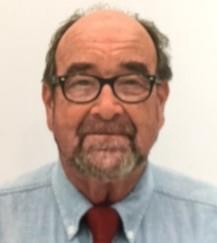
Dan Luzadder
Pulitzer Prize-winning investigative journalist and TrineDay author of "The Manchurian Journalist"; member of the Scripps Howard Journalism Hall of Fame.
10
APPEARANCES
1
PODCASTS
Oct 21, 2026

Dan LuzadderGUEST
But the journey for me over time as an investigative reporter was one from a lot of naivete to the point of skepticism.
Dan LuzadderGUEST
And so I think a lot of reporters, when they're young, they assume that when the FBI comes around and shares a tip with you, that their motives are pure and they're after justice.
Dan LuzadderGUEST
But as I came to know more about the world And later when I was working on the Manchurian Journalist, it became pretty clear to me that there were agendas different than the ones that I assumed were accurate those years earlier.
Dan LuzadderGUEST
So, you know, I think in the, you know, in the world in which I came up in journalism, the The newspapers were pretty good at reporting on things that were of average and regular interest and that did a fairly good job of accuracy.
24 MINS LATER


Mark HarrisGUEST
But law enforcement at the local and state, state and federal level have arrogantly, defiantly refused to investigate the crimes that caused it.
Dan LuzadderGUEST
You know, from the perspective of, of news organizations not picking up the story or not covering, uh, the issues written about in the book, I, I know that, that the media, uh, even when it was more vigorous than it is today, had reluctance to go after individuals unless there was authority involved.
Dan LuzadderGUEST
So the, so the roadblocks that you ran into consistently with authorities getting them to take action, uh, it complicates things for reporters trying to step into those stories because their natural reaction is to talk to you and then talk to authority, and then they get discouraged by, uh, the idea that authority's taking no action.
Dan LuzadderGUEST
So it is difficult to expose, uh, corruption within, um, government entities when, uh, it is easier for them, and often, um, expedient for them to do nothing as opposed to stepping into these situations and, and assisting as legally they should.
Dan LuzadderGUEST
At the outset when you first raised these issues of sexual abuse, um, uh, it, it seems b- beyond odd that, that normal procedures for, uh, sexual crime investigators were not followed.
Dan LuzadderGUEST
Do you attribute that to relationships that existed initially between local investigators and, um-
13 MINS LATER

Kris MilleganHOST
You know, I mean, seems to me, you know, genocide, not quite live on TV, but in the news every night, Dan, Lou Satter from, from a standpoint of a, of a journalist, what what's going on?
Dan LuzadderGUEST
Well, I think it's hard to describe in a lot of ways, but I just had a conversation with a couple of folks at dinner last night.
Dan LuzadderGUEST
They're not typically engaged in political things, but they're extremely concerned about where things stand.
Dan LuzadderGUEST
And part of our discussion centered around the fact of the difficulty in getting accurate communications that tell us what is really happening, especially behind the scenes.
Dan LuzadderGUEST
Here we're witnessing this past week the President of the United States declaring that certain news media outlets cannot participate in the White House press pool.
15 MINS LATER
Kris MilleganHOST
How was that talked about in the newsroom and what did you guys think about it?
Dan LuzadderGUEST
One of the Pulitzer Prize was endorsed as the most accurate record of what was going on behind the scenes.
Dan LuzadderGUEST
And, of course, Lawrence Wright, the author of that book, had extensive experience in, or so they said, in doing investigative reporting.
Dan LuzadderGUEST
You know, the media reaction to his book was extensive and it was well endorsed from the New York Times, the New Yorker, to all of the major outlets.
19 MINS LATER
Kris MilleganHOST
So, Mr. Luzader, what's your view from the, you know, the heart of the country here?
Dan LuzadderGUEST
My end of the bankruptcy investigation involved trucking company bust-out scams that were tied to organized crime.
Dan LuzadderGUEST
In the Leroy Motor Freight case in Ohio, Gary Hart's campaign manager was the attorney over this bankruptcy proceeding where millions of dollars of tractor trailers disappeared.
Kris MilleganHOST
From a standpoint of being a reporter at a major newspaper in the United States, I don't know if you weren't really on the science beat, I don't know, but how much biowarfare and stuff like Adam is talking about crossed your desk?
Dan LuzadderGUEST
Well, virtually nothing until I was working on the Manchurian Journalist and then was exposed to the work the Church of Scientology had done researching the CIA's use of chemical agents in the streets of New York using puffer suitcases and things like that.
Dan LuzadderGUEST
in order to spread agents that they could test for later or discover distribution patterns and that sort of thing.
Dan LuzadderGUEST
But in the common world of day-to-day reporting, Science reporters were thin to non-existent, mostly at standard size, mid-sized newspapers across the country.
Dan LuzadderGUEST
So there was not a lot of expertise to follow up on those things, nor a lot of interest on the part of media that I'm familiar with to dig into those particular things.
Dan LuzadderGUEST
At other levels of the Times or major newspapers, there were different things going on that I wasn't familiar with, but in the arenas where I worked, I would say there was not a lot of attention to those sorts of issues.
22 MINS LATER
Kris MilleganHOST
the personal computer and the internet okay where you know if uh you want to you you could you can stand up and say stuff you know so uh let's let's uh have some some last words um let's start off with with with dan
Kris MilleganHOST
And if you can explain a little bit about Manchurian journalist and Mr. Wright and what your story is and what you found out there.
Dan LuzadderGUEST
Well, you know, Chris, I got the opportunity to take a look at Lawrence Wright's background because of my work with the Church of Scientology editing their magazine.
Dan LuzadderGUEST
And they had asked me to take a look at some of the coverage of the church and to determine whether or not I thought it was accurate and fair.
Dan LuzadderGUEST
And, of course, Lawrence Wright wrote a big book about the Church of Scientology called Going Clear, the Prison of Belief.
Dan LuzadderGUEST
And so in the course of doing that, I started pulling apart Lawrence Wright's own background.
Dan LuzadderGUEST
I had the benefit of a memoir that he had written when he was a young man, a younger man, I guess.
Dan LuzadderGUEST
And he had talked a lot about his father who was in the military and that they had had certain conflicts.
45 MINS LATER

Kris MilleganHOST
Did you guys hear about it? Did, did it report or any thoughts that you have about this?
Dan LuzadderGUEST
I mean, for the most part, you have to go looking for information if you want to find it when you don't see it regularly, importantly played up in the mainstream press.
Dan LuzadderGUEST
But, you know, there's an anecdotal story that I haven't yet published, and it's not well known, but on the subject of blackmail, pedophilia, and being gay in society.
Dan LuzadderGUEST
In the 1950s in Phoenix, The son of the man who actually controlled the Chicago mob from the era of Prohibition on through the 50s, Jake Guzik, his son was homosexual and he was living in Phoenix in the early 50s.
30 MINS LATER
Dan LuzadderGUEST
Well, you know, there have been rumors about political people being involved in sex trafficking, et cetera, for as long as I can remember.
Dan LuzadderGUEST
Even in Indiana, when I was a young reporter, there was rumors of something called the upper 400, as it used to be referred to among journalists, people who were connected in various ways to sex.
Dan LuzadderGUEST
You know, I did some investigations some years ago into sex trafficking in Asia and its links to individuals in the U.S., And it's hard to develop information that's credible.
Dan LuzadderGUEST
This looks a l- a lot, uh, more interesting to us," or, or, "Here's an alternative." But I can tell a, an anecdotal story about how that, that all works from my experience when I was with The Indianapolis Star, uh, in Indiana back in the, in the '80s, and, uh, and up to 1990.
Dan LuzadderGUEST
I was, um, I was investigating, um, a truck driver training school, and they were running campuses all over the country, uh, teaching people how to drive semi trucks.
Dan LuzadderGUEST
And I came across them when I was investigating bankruptcy fraud in the federal bankruptcy courts, and found out where they were, uh, obtaining, uh, uh, uh, semis and, and trailers from, uh, bankruptcy proceedings, uh, uh, including some that had disappeared from bankruptcy proceedings.
Dan LuzadderGUEST
And as I got further and further into the story, I saw that this company had political connections, and they were raising a lot of money for primary political candidates, while they were also ripping off the guaranteed student loan program for about 900 million bucks.
Dan LuzadderGUEST
And so as I started investigating and digging deeper, I, I, uh, had complete support from the newspaper.
17 MINS LATER
