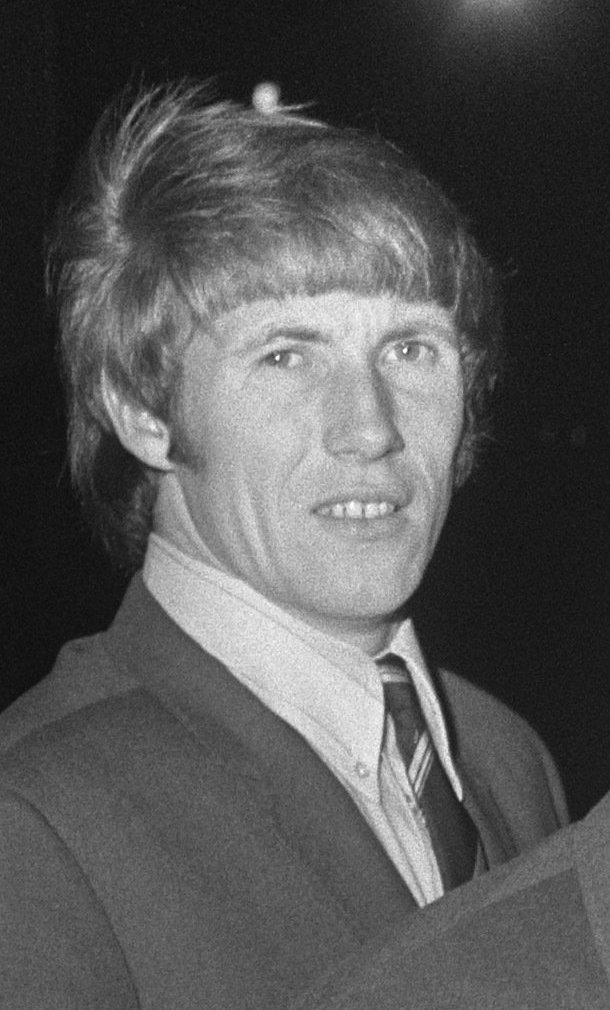
Colin Bell
English footballer
11
APPEARANCES
8
PODCASTS
Aug 19, 2026

Tad HusseyHOST
... um, just I'm sure people wanna know, what are the differences even just between something like Microbial Mass and Mammoth P, considering they're both consortia of, of microbes, of bacteria?
Colin BellGUEST
The, uh, you know, nothing but love for, for Microbial Mass and, and them horticulture.
Colin BellGUEST
And the reason I jumped on with that group after I left Mammoth late in 2022, uh, just because of some internal issues I needed a break from, uh, some of the decision makers in, in that group, and that's why the company was u-under some distress, was because I love the microbes.
Colin BellGUEST
I'm a microbiologist by training, a PhD in microbiology, invented Mammoth P, had a really good time building that company up, Mammoth Microbes.
23 MINS LATER


Colin BellGUEST
Well, 13 years ago we lost our son Kevin in a hit and run in New York and such was the support we got from the people of Newry here in County Down, that's where we're from.
Colin BellGUEST
So a week after Kevin's funeral, we heard of a young fellow from carried off in Belfast had died in Thailand.
Colin BellGUEST
And so we reached out to his parents and said, we have this money, we'll pay to bring your son home.
Colin BellGUEST
Well, 13 years ago we lost our son Kevin in a hit and run in New York and such was the support we got from the people of Newry here in County Down, that's where we're from.
Colin BellGUEST
So a week after Kevin's funeral, we heard of a young fellow from carried off in Belfast had died in Thailand.
Colin BellGUEST
And so we reached out to his parents and said, we have this money, we'll pay to bring your son home.


Greg HughesHOST
But you don't actually... stepping away you're just restructuring a little bit is that right?
Colin BellGUEST
Yeah well actually I mean it has grown so big and it's really too big for the small staff that we had there was only for 10 years 12 years there was only myself and and A raid in the office and we're at a stage now where there are so many repatriations.
Colin BellGUEST
So we have appointed a new director of operations, Jamie McCauley, and Olivia has joined the staff.
12 MINS LATER
Greg HughesHOST
Which is the biggest strain on a family? Is it the cost or the logistics of even knowing where you might begin? Well, I mean,

Greg HughesHOST
But you don't actually... stepping away you're just restructuring a little bit is that right?
Colin BellGUEST
Yeah well actually I mean it has grown so big and it's really too big for the small staff that we had there was only for 10 years 12 years there was only myself and and A raid in the office and we're at a stage now where there are so many repatriations.
Colin BellGUEST
So we have appointed a new director of operations, Jamie McCauley, and Olivia has joined the staff.
12 MINS LATER
Greg HughesHOST
Which is the biggest strain on a family? Is it the cost or the logistics of even knowing where you might begin? Well, I mean,

Colin BellGUEST
Were we prepared to lose money on artists over a period of time putting out albums that didn't sell? Well, we probably couldn't afford to.
Colin BellGUEST
Yes, we did, because it's very expensive keeping acts on the roster when they're not really s- making money or selling records, and you have to go into three or four albums.
Colin BellGUEST
It's the sort of thing you can do at EMI or Sony or even Mercury, but it's not the sort of thing that we actually could afford to do.


Colin BellGUEST
And as soon as word hit Newry that Kevin had been killed, the whole town just went and south down in South Armagh, because they were very, very well known, Kevin was especially, and they went into a frenzy of fundraising.
Colin BellGUEST
But of course it didn't cost that and the week after Kevin's funeral we saw on the news about a young fella from Kerryduff in Belfast had been killed in Thailand.
Colin BellGUEST
got in contact with his parents and said, we have this money, we'll pay to bring your son home.
6 MINS LATER
10:02
But the thing is, it's not that you're stepping back, but people might not realise this column, but like you were on the end of a phone any time, night or day for the past 13 years, even on holidays.
Colin BellGUEST
One was the sheer distributional aspect of it, which is getting the records in the shops and making sure you had enough records in the shops.
Colin BellGUEST
And traditional old-fashioned marketing put a great emphasis on things like point of sale material.
Colin BellGUEST
But in actual fact, by the time we got to the arrival of t- music on television, marketing became very much about photographs and imaging.
13 MINS LATER


Siân PattendenHOST
And but you were absolutely drawn to Bronski Beat and The Communards, and it was almost like a realization like, "Oh, there's something out here that might be for me, and maybe this is me." You know? It was kind of amazing, really.
Colin BellGUEST
We were always looking for the idea, you know? I mean, the concept of this man with a high singing voice, with a political agenda, who was totally anti-image and, and not prepared to compromise was as unique a concept as Boy George being glamorous and saying, "Oh, I only cu- take cups of tea.
Colin BellGUEST
I'm not gay," and all that stuff, you know? But Jimmy, Jimmy c- came from a really political background, you know, Glasgow streets and, and, and was a, was a f- was a fighter and was not going to compromise on the political message.
Colin BellGUEST
It was at least as important to him as a, as, as, as being a successful pop star.
Colin BellGUEST
But deep down, you also want to be Shirley Bassey" Right? At which point he would look to me and laugh.


Jake HumphreyHOST
And we want to find out from you today what it takes to fly into hell, and most importantly, what it takes to come home again.
Colin BellGUEST
We had to defeat the Germans because they had some very nasty plans of what they were going to do over here if they ever subjugated us.
Colin BellGUEST
I always remember that Sailor Malan, who was a Battle of Britain pilot, a very experienced Battle of Britain pilot, he said that in his experience, survivors were those possessed of not too much imagination.
8 MINS LATER


Tessa DunlopHOST
And I think Colin tonight will explain to us, I hope, as somebody who's fought a war, what it means to him and why he believes it's important.
Colin BellGUEST
What does it mean to me? Well, I think the first thing to bear in mind is that we were fighting a war for survival.
Colin BellGUEST
Uh, the Germans had some very, very nasty plans afoot if they ever came over and subjugated us.
Colin BellGUEST
So the first credit goes to the fighters of, uh, in, in the Battle of Britain, the heroes in the Battle of Britain that defeated the Luftwaffe.
Colin BellGUEST
Uh, if they hadn't defeated the Luftwaffe, then we'd have had the Germans over here.
6 MINS LATER
Tessa DunlopHOST
You know the story about the Canadian guy who was very scared and you went and tried to, to make him feel better about his first raid?