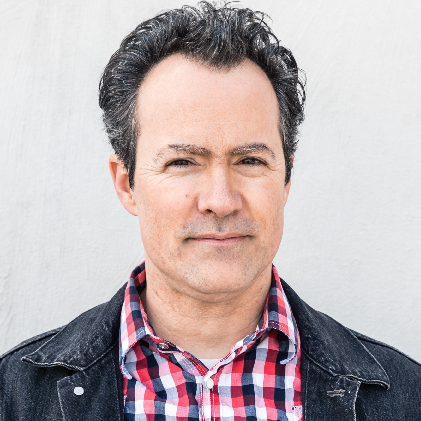
Clive Thompson
Retired Swiss private banker (former Managing Director at Union Bancaire Privée, Geneva, and Coutts & Co) now a YouTube educator on gold, silver and monetary risk.
10
APPEARANCES
7
PODCASTS
Oct 13, 2026


Clive ThompsonGUEST
So let's go back to the Portuguese banknote scandal, which was probably the biggest fraud ever perpetrated because basically the guy virtually printed half of 50% of the entire currency of Portugal and spent it.
Clive ThompsonGUEST
So that, in relative terms at the time, was probably the biggest fraud we've ever seen in history.
Clive ThompsonGUEST
But if you had held a gold coin before the new money arrived and you still held it 100 years later, it would still buy as much as it bought then.
Clive ThompsonGUEST
But if you happen to hold one of those banknotes, today they're absolutely worthless, of course.
38 MINS LATER


Ben LeavittHOST
So what is the process of how a currency reset can happen? What are the steps and the warning signs? Well,
Clive ThompsonGUEST
the warning that it's coming is when everybody is rushing to buy anything, whether it be razor blades or toilet rolls, or in this case, silver and gold.
Clive ThompsonGUEST
um but you know when people fear when people are afraid that uh something is going wrong this could be a war it could be civil unrest it could be supply chain destruction it could be a pandemic it could be a natural disaster you don't know that things can happen without warning uh it could be a currency crisis it could be a bond crisis suddenly the bank the government can't finance itself and then the how they're going to spend money.
22 MINS LATER
speaker_1ADVERTISER
Check responses, setup required, compatibility and availability varies 18 plus.


Anthony FatseasHOST
So do you think this is going to just be, they're just going to keep finding more and more ways to try and improve the bond yields? Or how do you see this sort of...
Clive ThompsonGUEST
Well, I was saying up until a few weeks ago that I think the US government does not want bond yields above the 30-year, above 5.32, 5.3, because they seem to intervene at around that level.
Clive ThompsonGUEST
We're now at a level on the 30-year of 3, 5, let me just check that, 5 point, click it up, yeah, 5.41. You can see on the chart there, It's literally the highest in many years.
Clive ThompsonGUEST
For example, if I go back, I'll go back five years and you can see it's pushing here over the five years.
Clive ThompsonGUEST
It's really at the highest level that is creating a crisis for the Treasury because it makes funding that as they have the maturing debt maturing, which is at low interest rates, they have to run it over.
Clive ThompsonGUEST
It makes the funding that more difficult because the interest cost to the Treasury is rising rapidly.
29 MINS LATER

Jesse DayHOST
How bad could this get, and what could the economic implications be for the United States and the world at large?
Clive ThompsonGUEST
So whether we're looking at the European bond markets, the Japanese bond market, the UK bond market, or the US and Canadian and Australian bond markets, they're all doing the same thing.
Clive ThompsonGUEST
We're seeing, uh, very high yields, the highest in, in some cases in twenty or thirty years, in other cases certainly for many years, um, a- on the ten-year yield and the thirty-year yield.
Clive ThompsonGUEST
This is a problem for all of these governments because they have debt which is maturing, and most of that debt was taken out at a time when interest rates were much lower than they are today, and most of that debt was taken out at a time when the national debt in each country was much lower than today.
9 MINS LATER
Jesse DayHOST
Obviously, these are complicating factors, so I wonder how you see all of this playing out for gold markets.

Clive ThompsonGUEST
So they were buying 30 to 40,000 ounces per month, um, in September, October, November, December, January, February, this, th- through to this year.
Clive ThompsonGUEST
And then in February, they suddenly stepped up their purchases from the 30,000 ounces to 160,000 ounces.
Clive ThompsonGUEST
They increased it again in April to 260,000 ounces, and again in May to 320,000 ounces, and in June to 480,000 ounces.
Clive ThompsonGUEST
And then the astonishing figure we had in July, which has just come out, is the 640,000 ounces of silver- of gold that they bought.
Clive ThompsonGUEST
As you said, Daniela, the question is, why? Now, I'm gonna look at the positive side and say I think that they like the price.
Clive ThompsonGUEST
But a lot of people have written to me and said, "No, no, Clive, you've got it wrong.
9 MINS LATER

Daniela CamboneHOST
Um, your, your, your thoughts on the overall market and what you want the people at home to know.


Clive ThompsonGUEST
And, uh, indeed, last week he gave a speech which, uh, kind of, in a way, sort of reaffirmed that.
Clive ThompsonGUEST
Uh, he said, you know, "The Federal Reserve will not be interfered with by government, and we're very independent, and, um, we, the inflation target of 2%, we, we, you know, we have to get there.
Clive ThompsonGUEST
Uh, inflation's too high at the moment." So people, you know, he is perceived as hawkish.
Clive ThompsonGUEST
Now, higher interest rates are generally bad for precious metals, at least that's the way markets perceive it.
12 MINS LATER
Jesse DayHOST
What are the main catalysts you currently see driving gold? And although we're down a decent amount since gold also hit all time highs in January, do you still think the long term trajectory is higher prices over the long run for the gold market?
Clive ThompsonGUEST
I think it's almost inevitable that gold will continue to push higher over the coming years.
Clive ThompsonGUEST
There's quite a few things which are in favor of gold, and all the ducks seem to be in a row.
Clive ThompsonGUEST
The one which perhaps we would worry about in the short term is the direction of interest rates.
Clive ThompsonGUEST
First of all, we have a situation for government debt where across the world, but I'm going to talk mainly the United States, we've reached a point which is somewhere between we can just about manage it and there's actually no hope for the government debt.
21 MINS LATER
Clive ThompsonGUEST
Now, a real rate is the interest rate you can obtain minus the inflation rate.
Clive ThompsonGUEST
And what we're seeing, according to the official numbers, which we know are made up, we can see that the official inflation rate is now rising very, very sharply around the world, not just in the USA.
15 MINS LATER

Clive ThompsonGUEST
So first of all, as a generality, the price earnings multiples of these gold mining stocks are pretty reasonable.
Clive ThompsonGUEST
There's plenty around which are price earnings multiples around 10 or low teens.
Clive ThompsonGUEST
And when you compare that with the rest of the stock market at 25 times, it's relatively cheap.
Clive ThompsonGUEST
And the other point about all gold mining and silver mining stocks is that the profits are set to grow very rapidly.
34 MINS LATER

Jimmy ConnorHOST
But what are your thoughts on AI? Like, do you think it's just another bubble waiting to burst? Or is it overhyped? Does it have a lot more to go?
Clive ThompsonGUEST
I think there's one thing which is changing a little bit, and that is the perception of how soon the Federal Reserve is going to be forced to pivot.
Clive ThompsonGUEST
Now, what does pivot mean? It basically means they change from what's called quantitative tightening to quantitative easing.
7 MINS LATER
Jimmy ConnorHOST
And if I'm hearing you right, you think there's a high risk or high probability of interest rates going a lot higher is that correct