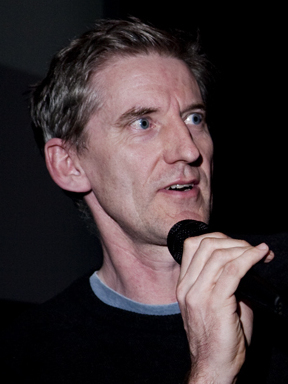
Clive Stafford Smith
British attorney
19
APPEARANCES
10
PODCASTS
Oct 9, 2026


Clive Stafford-SmithGUEST
Um, one of the shocking things to me, uh, is how bad the system is, and I've been doing a study right now with people who have been executed since 1977, which is what we call the modern era of the death penalty.
Clive Stafford-SmithGUEST
And we're, uh, it's looking at the people who may well have been innocent, and we're doing a thorough investigation, and we're batting about a 13% error rate according to what I'm finding.
Clive Stafford-SmithGUEST
So, so often you don't know, and indeed- It's much worse when, when you're at the beginning of the system.
Clive Stafford-SmithGUEST
I was always doing trials, so you meet someone for the first time before they're on death row, and you try to prevent that.
Clive Stafford-SmithGUEST
And at that point, the number of people who they've arrested who are just the wrong person is, is much higher.

Fran McNultyHOST
Do you think about those six people often? I, uh, it strikes me as a job that is difficult to get away with, given that the stakes are, get away from, given that the stakes are so high.

Clive Stafford SmithGUEST
this?Well, we haven't had public executions since the 1930s, and so there's not a lot of stuff that we've litigated [laughs] in my lifetime at least.
Clive Stafford SmithGUEST
The first thing is gonna be that I would predict that either by late today or Monday, the Democrats will introduce a bill in Congress to try to put a stop to this because there are so many reasons it's a very, very bad idea, including children watching it.
Clive Stafford SmithGUEST
There's gonna be issues of, of exposing children and other people to this kind of thing, and then there'll be many, many other issues in terms of how they go about it, the protocol, the bullets they use, who fires them, how much they fire.

Clive Stafford-SmithGUEST
I mean, look, it's hard to say that there's a case from 1946 where This young African-American kid was electrocuted by Louisiana.

Nick FerrariHOST
What impact has the Krista Pike case had on American view towards the death penalty in the number of states? I think is it still about half the states that have the death penalty, broadly speaking? Has the view changed at all?


Iain DaleHOST
And how is the legislation in the United States? Uh, how, how does it govern this? Is it, is it individual states that decide whether they have the death penalty or not?
Clive Stafford SmithGUEST
There are thirty-two states with the death penalty, but most of those don't actually use it.
Clive Stafford SmithGUEST
Ultimately, you'll be surprised to hear, guided by Michael Portillo, um, because when we showed just how awful lethal injection was, and some of the states started not being able to do that anymore, um, [chuckles] Mr. Portillo, who, uh, you know, had a similar, um, Damascene conversion.
Clive Stafford SmithGUEST
He was in favor of the death penalty and voted for it in parliament a few times, and then he came against it.
Iain DaleHOST
What, what do you put it down to that, that really we, we don't talk about it very much anymore? I mean, there are people, I think Dominic Lawson, um, and Lord Glasman have both written articles in r-recent memory, uh, advocating that it should be brought back, but it's a very fringe issue now.


Clive Stafford SmithGUEST
We once did an experiment in the science museum about whether we could get veins, um, by trying ourselves, and I would make a terrible executioner.
Clive Stafford SmithGUEST
And the problem for Christa is she had very small veins, as they were all born.
Clive Stafford SmithGUEST
Uh, that's often true of people who have had, uh, the tragedy of too much drugs and drug abuse in their childhood.
Clive Stafford SmithGUEST
The second is that, um, they don't have very good drugs because the drug companies really don't want their materials used to kill people.
6 MINS LATER

EddieHOST
It's business.
Clive Stafford SmithGUEST
Well, and, and we're not making that up because General Musharraf wrote a book called In the Line of Fire, and if you look at page 234 of his rather terrible book, uh, it boasts right there that, you know, more than half of the prisoners in Guantanamo Bay- Were sold for bounties to, to the CIA.
6 MINS LATER
EddieHOST
What, what, what, uh, what could the average person do to, to help you, to help this, uh, this case?

speaker_8UNKNOWN
Now,
Clive Stafford SmithGUEST
Not to my satisfaction, but in order to get someone out of there, you have to get all six of the top U.S. intelligence agencies to say, this guy's no threat to anyone.
6 MINS LATER
EddieHOST
What could the average person do to help you, to help this case?

Clive Stafford-SmithGUEST
And I was young and arrogant and thought I knew everything and I'd never lost a case and all that nonsense.
Clive Stafford-SmithGUEST
And back then, we thought legal technicalities was what would save someone's life.
Clive Stafford-SmithGUEST
They really honestly believe I'm not going to go to heaven if I don't do it.
Clive Stafford-SmithGUEST
Every time I saw him, he insisted that we have a little time set aside for him to tell me about becoming Muslim.


Clive Stafford SmithGUEST
And I found a person who I have to look up to, both physically and metaphorically.
6 MINS LATER
Clive Stafford-SmithGUEST
I, I'm going to do something the day after tomorrow on Palestine action because I feel fundamentally that, uh, I don't agree with everything Palestine Action says and does, but I think they have a right to protest.
Clive Stafford-SmithGUEST
And what Kirsten is doing is just fundamentally hypocritical and stupid.
Clive Stafford-SmithGUEST
And so I want to go as close to the line of getting arrested as I possibly can, because I can do that.
Clive Stafford-SmithGUEST
And nothing would give me more pleasure than to have these poor cops come and waste their time arresting me so I can make a point.
7 MINS LATER

Andrew GoldHOST
of people stopped trusting some of the human rights issues, particularly due to the trans issue and some of the immigration
Clive Stafford-SmithGUEST
And then when they recognized five months in she was pregnant, the doctors said, you've got to have an abortion.
Clive Stafford-SmithGUEST
Well, no. It's probably more in some ways, and it depends what you're dealing with.
Clive Stafford-SmithGUEST
In some ways, what some people do in their antisocial way when they're trying to get rich and rich and richer is far more premeditated.
Clive Stafford-SmithGUEST
I just think we need to have a system where we're trying to teach people to be decent to each other.
Clive Stafford-SmithGUEST
And, you know, Britain, the Americans come here and they say, we are a communist socialist society.
Clive Stafford-SmithGUEST
They say all sorts of other things about whether our cities, whether we can walk out of the door at night.
Clive Stafford-SmithGUEST
Britain's not a socialist society, but it's a much more socialist than America.
Clive Stafford-SmithGUEST
And there are other countries that are more socialist than Britain, and I think it's great.
Clive Stafford SmithGUEST
It's not that different than things that have happened in Britain forever.
Clive Stafford SmithGUEST
But when we were going around the world doing our imperialist thing, we very much had elections or what passed for elections based on people saying, I'm going to go and invade this country over there.
Clive Stafford-SmithGUEST
about picking an American jury is it is my little utopia in a microcosm.
Clive Stafford-SmithGUEST
That you've got 12 people, all of whom have to say something that I fundamentally disagree with.
Clive Stafford-SmithGUEST
And so I'm talking to 12 people who I am just not on the same planet as really.
Andrew GoldHOST
Is there anything that movies can't convey to us that you saw in that room? Oh, yeah, of course.
Clive Stafford-SmithGUEST
But of course, the biggest part of it is, as you say, that very often people have been waiting for it for 20.
Clive Stafford-SmithGUEST
He's got a very strong innocence case in Florida right now who's been on death row for 49 years.
Clive Stafford-SmithGUEST
And, you know, Chris Maharaj told me about Jesse Taffaro, who was close to him on death row in Florida.
Clive Stafford-SmithGUEST
And, you know, people become friends, and then their friends are taken away.
Clive Stafford-SmithGUEST
But what you've got to think about is everyone I've ever represented has loved ones.
Clive Stafford-SmithGUEST
And if I were to ask you about the most despicable thing you've ever done in your entire life that you're most ashamed of...

speaker_6UNKNOWN
(laughs)
Clive Stafford SmithGUEST
I'm way out there on the spectrum of believing things that most people don't believe, and I believe them passionately, and I will argue to the death on them.
Clive Stafford SmithGUEST
I was eight years old when I was sent away to boarding school, a place called Old Buckingham Hall School.
Clive Stafford SmithGUEST
It was a miserable experience that I think only the British would do to each other's children.
16 MINS LATER
Jon RobbinsADVERTISER
(dial tone)