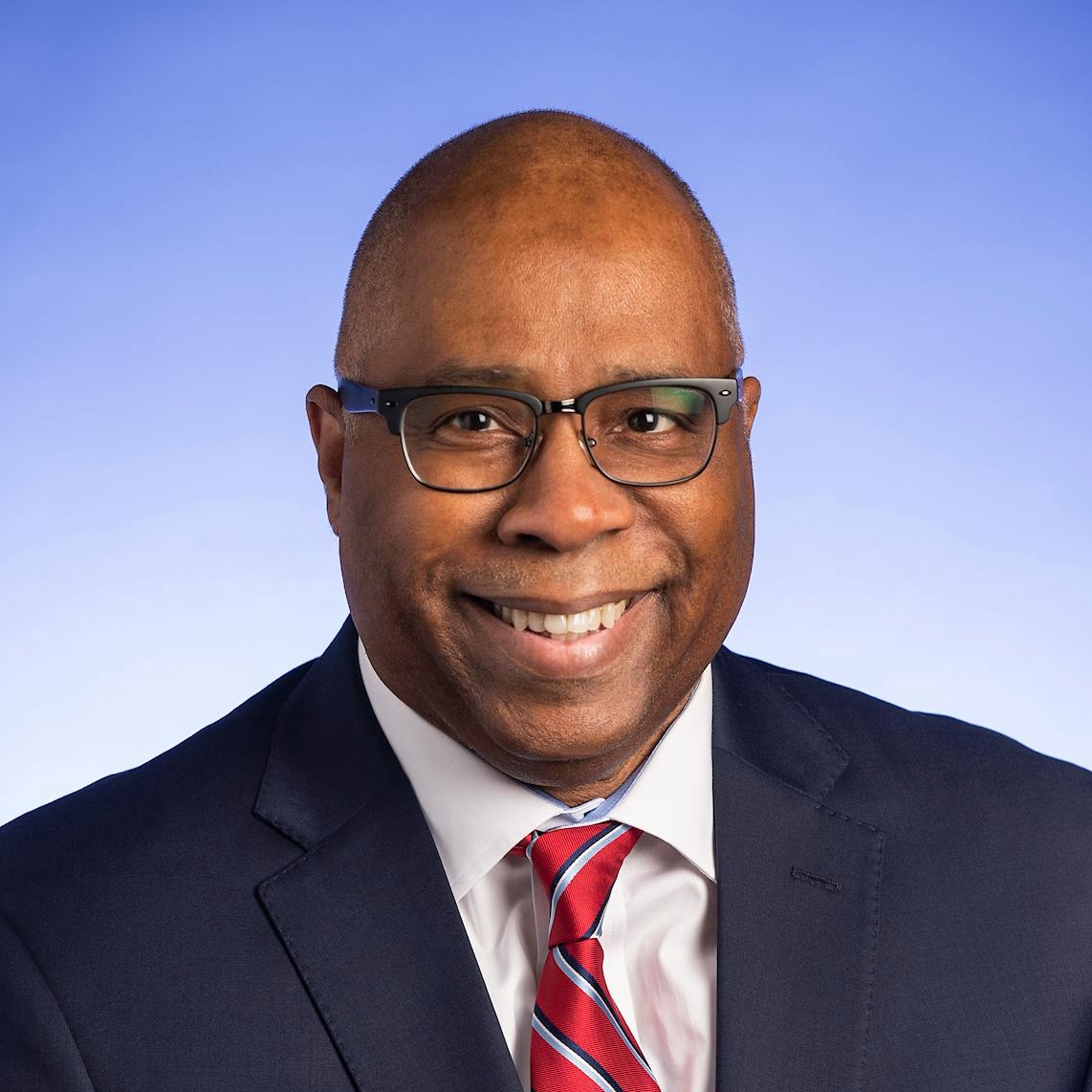
Clarence Carter
Commissioner of the Tennessee Department of Human Services and author of "Our Net Has Holes in It."
6
APPEARANCES
4
PODCASTS
Sep 28, 2026


Michael KeeganHOST
What does that look like in practice within your state of Tennessee? And what's your model for building those relationships across these areas?

Clarence CarterGUEST
As the size and scope of government has increased in this effort of supporting our most vulnerable.
Clarence CarterGUEST
It has had one of the unintentional consequences of squeezing out other parts, other sectors of our community from being part of the problem solving.
Clarence CarterGUEST
With this notion of an arrogant government that believes it's the principal problem solver.
Clarence CarterGUEST
Part of our vision is government needs to check its weapons at the door and ask for help from the rest of the community.
Clarence CarterGUEST
Say we have this very big problem that we've got in Tennessee two million of our neighbors that need our collective help.
6 MINS LATER

Michael KeeganHOST
What does that look like in practice within your state of Tennessee? And what's your model for building those relationships across these areas?
Clarence CarterGUEST
As the size and scope of government is, has increased in this effort of supporting our most vulnerable.
Clarence CarterGUEST
It has had one of the unintentional consequences of squeezing out other parts, other sectors of our community from being part of the problem solving.
Clarence CarterGUEST
With this notion of an arrogant government that believes it's the principal problem solver.
Clarence CarterGUEST
Part of our vision is government needs to check its weapons at the door and ask for help from the rest of the community.
7 MINS LATER

Clarence CarterGUEST
One thread is that I believe that we have, over the course of time, become a very instant gratification society, a belief that it has to happen for us right this minute.
Clarence CarterGUEST
Well, Joe, you know, in your own life, you had to put building blocks in place to ultimately get to where you have gotten to in your life.
Clarence CarterGUEST
You built it a little bit at a time, okay? And we have gotten away from that in our society to believe that, one, it's supposed to happen today.
Clarence CarterGUEST
The second thread, okay, is that we also have gotten to be a society which is comfortable living beyond our means, okay? And we have to get to a place where not that we don't aspire, but that we do understand that, you know, before we have that complete version of the American dream that we want.
5 MINS LATER
Michael KeeganHOST
What does that look like in practice within your state of Tennessee, and what's your model for building those relationships across these areas?
Clarence CarterGUEST
Le-let me, let me a little further d-define the issue, okay? As the size and scope of government has increased in this effort of supporting our most vulnerable, it has had the, one of the unintentional consequences of squeezing out other parts, other sectors of our community from being part of the problem-solving, with this notion of an arrogant government that believes it's the principal problem-solver.
Clarence CarterGUEST
Part of our vision is government needs to check its weapons at the door and ask for help from the rest of the community.
Clarence CarterGUEST
Say we have this very big problem that we've got in Tennessee two million of our neighbors that need our collective help.
Clarence CarterGUEST
So let us construct an approach that meets those neighbors where they are and addresses the challenges that has them in a place where they need that help.
Clarence CarterGUEST
Michael, I think it was President Reagan that said that, um, "The nine most dangerous words in the English lexicon are, 'I'm from the government and I'm here to help.'" And so part of my argument here is w-we wanna turn that around, and we wanna say, "We are from the government, and we are here asking for your help.
Clarence CarterGUEST
Asking for your help to build a Tennessee where everybody has the opportunity to grow and thrive." What we did early on is we reached out to, um...
6 MINS LATER

Caleb CollierHOST
Uh, so for the, for the audience here, can you kinda give a, a, you know, 30-second overview or whatever of what is wrong with the system currently?
Clarence CarterGUEST
So let me, let me begin with a slight explanation, okay? That when, when, when I use the term public safety net, I'm referring to the system of federally authorized programs that were each designed with the intention of addressing some dimension of human vulnerability.And so there are currently 114 of those programs that were all developed singularly to, to address a single aspect of the human condition.
Clarence CarterGUEST
And, um, and because there was no overarching intention in the build of the system, it is literally just an aggregation of single-purpose programs with no true north.
Clarence CarterGUEST
And I make the argument in the book that we have to begin with a shared vision, and that I propose that that shared vision ought to be in concert with the principles of the Founding Fathers.
23 MINS LATER
Caleb CollierHOST
But we don't seem to have that right here in America as we're looking at, at what's being spent on, uh, you know, our citizens for, for these safety nets.
Michael KeeganHOST
What does that look like in practice within your state of Tennessee? And what's your model for building those relationships across these areas?
Clarence CarterGUEST
As the size and scope of government is, has increased in this effort of supporting our most vulnerable.
Clarence CarterGUEST
It has had one of the unintentional consequences of squeezing out other parts, other sectors of our community from being part of the problem solving.
Clarence CarterGUEST
With this notion of an arrogant government that believes it's the principal problem solver.
Clarence CarterGUEST
Part of our vision is government needs to check its weapons at the door and ask for help from the rest of the community.
7 MINS LATER