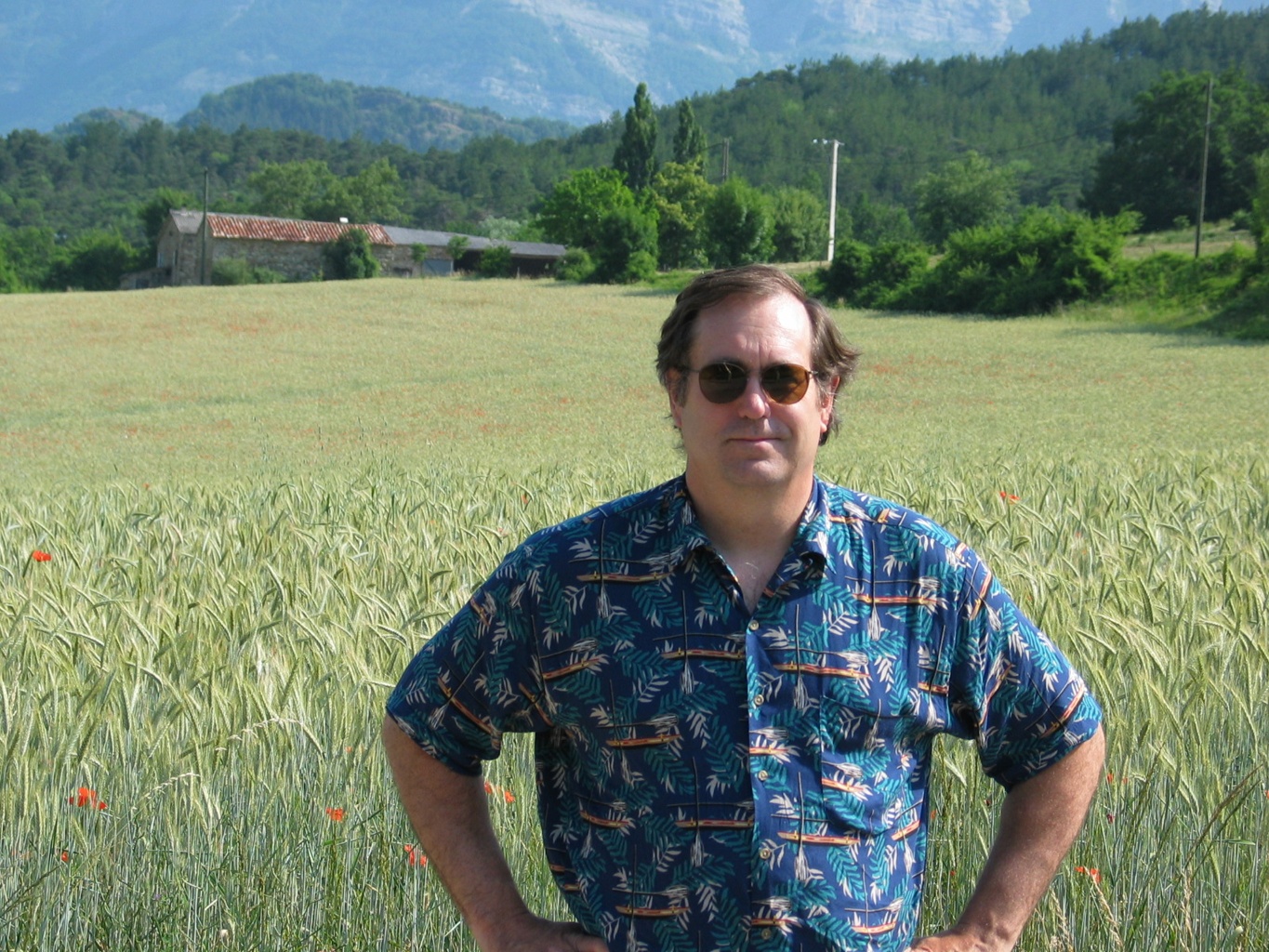
Chuck Benbrook
American economist
5
APPEARANCES
3
PODCASTS
Oct 30, 2026

John KempfHOST
Tell us about the background of the history of glyphosate and your perspective on glyphosate being carcinogenic and all the other challenges that it has.

Chuck BenbrookGUEST
second part of my career where I've spent a lot of time and made most of my income from serving as an expert witness in high-dollar pesticide litigation.
Chuck BenbrookGUEST
The first half of my career where I came back into Washington, D.C., and got engaged with the policy process was at the end of the Carter administration a long time ago in the late 70s.
Chuck BenbrookGUEST
And From the 70s through the 90s, I was heavily involved in pesticide use and regulation and risk assessment and became a known national figure and expert in pesticide regulatory policy and pesticide science.
Chuck BenbrookGUEST
I moved out of DC and was living on the Grand Ronde River in Northeast Oregon.
29 MINS LATER
John KempfHOST
and and i have a a leading question into that you just you mentioned the ubiquitous presence of glyphosate today in water in rainfall everyone is peeing it out the argument that gets made is that it is present in such infinitesimally small quantities in a few part per billion concentrations or perhaps a bit more than that that it doesn't really have a biological impact at those levels

Chuck BenbrookGUEST
Um, I got a call from an attorney in Houston that had been hired by the, the two young men that have started this, uh, localized, uh, web-based, uh, uh, system to help people around the country identify sources of, you know, high-quality organic local food to, um, improve their diet and their, their health and, and support local food systems, which, uh, as you know, Dave, is a, is a, a trend and a cause that people all over the country are, are, are promoting.
Chuck BenbrookGUEST
So these two, uh, young men in, in Texas built an app that, um, uh, people spend, I think it's like 59 bucks a year to subscribe to the app, and then the users, they just type in their zip code and the food that they're after, and it pops up all sorts of local sources or mail order sources of the product that they're, uh, interested in, in procuring.
Chuck BenbrookGUEST
I, I, I think they have on the order of 700,000 subscribers, which, you know, is a, it's a lot of people.
Chuck BenbrookGUEST
And, um, one of the ways that they've, uh, attempted to expand their, uh, the use of their app and, and encourage o- other people to use it in new ways is, uh, they feature educational information on it and kind of highlights of what's going on in the food and ag space, and sometimes they poke big ag in, you know, in, in, in the underbelly.
51 MINS LATER
Chuck BenbrookGUEST
What, what does the law say we're supposed to do, and what tools does the law give us to achieve those objectives? And this, this is the heart of the, the, you know, the, the, the debate and the, and sort of the crisis that has come about because of this Supreme Court decision.
Chuck BenbrookGUEST
The FIFRA statute says that pesticides have to be registered and labeled by the EPA, and that they can't be misbranded.
Chuck BenbrookGUEST
They can't contain a label that is untruthful or unclear or inconsistent with some requirement of the statute, which kind of makes sense.

Dave ChapmanHOST
So there's some sense to that, except they actually knew differently, didn't they?


Charles BenbrookGUEST
But where did all of this, uh, tension about glyphosate come from? Well, a couple things that, that, that stand out.
Charles BenbrookGUEST
A- as you know, and most of your listeners know, glyphosate is a broad-spectrum herbicide, and pretty much anything that is green and growing, if you spray it on it, it kills it.
Charles BenbrookGUEST
So before the advent of genetically engineered crops that, that were genetically modified to tolerate glyphosate being sprayed on them, farmers could only use glyphosate before their crop came up, or they, they sprayed it on their crop, they'd kill the weeds and the crop.
Charles BenbrookGUEST
Or it could be used a- after the harvest to kind of clean things up and get a field ready for the next year.
Charles BenbrookGUEST
So the, the agricultural market for Roundup herbicides, which came on the market in '74, was quite limited by the very way that the product worked until 1996, the year that the first genetically engineered so-called Roundup ready crop came on the market, which was Roundup-ready soybeans and Roundup-ready cotton.
Charles BenbrookGUEST
These new technologies, which require genetically engineering the seed to express a gene that allowed the soybean plant and the cotton plant to, "Go ahead, spray Roundup on me.
57 MINS LATER
Dave ChapmanHOST
Have there been studies that... show outcomes of just let's say eating an organic diet are there are there studies that are uh reputable and peer-reviewed that have demonstrated that uh over a period of time eating organic food is in fact does have in fact have better health outcomes
Chuck BenbrookGUEST
yes there there are literally, globally, hundreds of published studies that have reached a conclusion that is supportive of the, say, the hypothesis that eating organic food will incrementally lead to more positive public health outcomes.
Chuck BenbrookGUEST
I think there's no, there really should be no doubt about this in anyone's mind unless they've got a reason to be biased.
Chuck BenbrookGUEST
I mean, it's like, why would you, why would you want to consume food that has toxic chemicals in it fairly regularly compared to food that doesn't? Why would you want to eat food that lacks the kind of the flavor and the, the, the character of good organic food compared to conventional food? It's sort of, you know, to me, it's kind of a no brainer.
Chuck BenbrookGUEST
If we could grow all fruits and vegetables organically, it would be good for the country.
32 MINS LATER