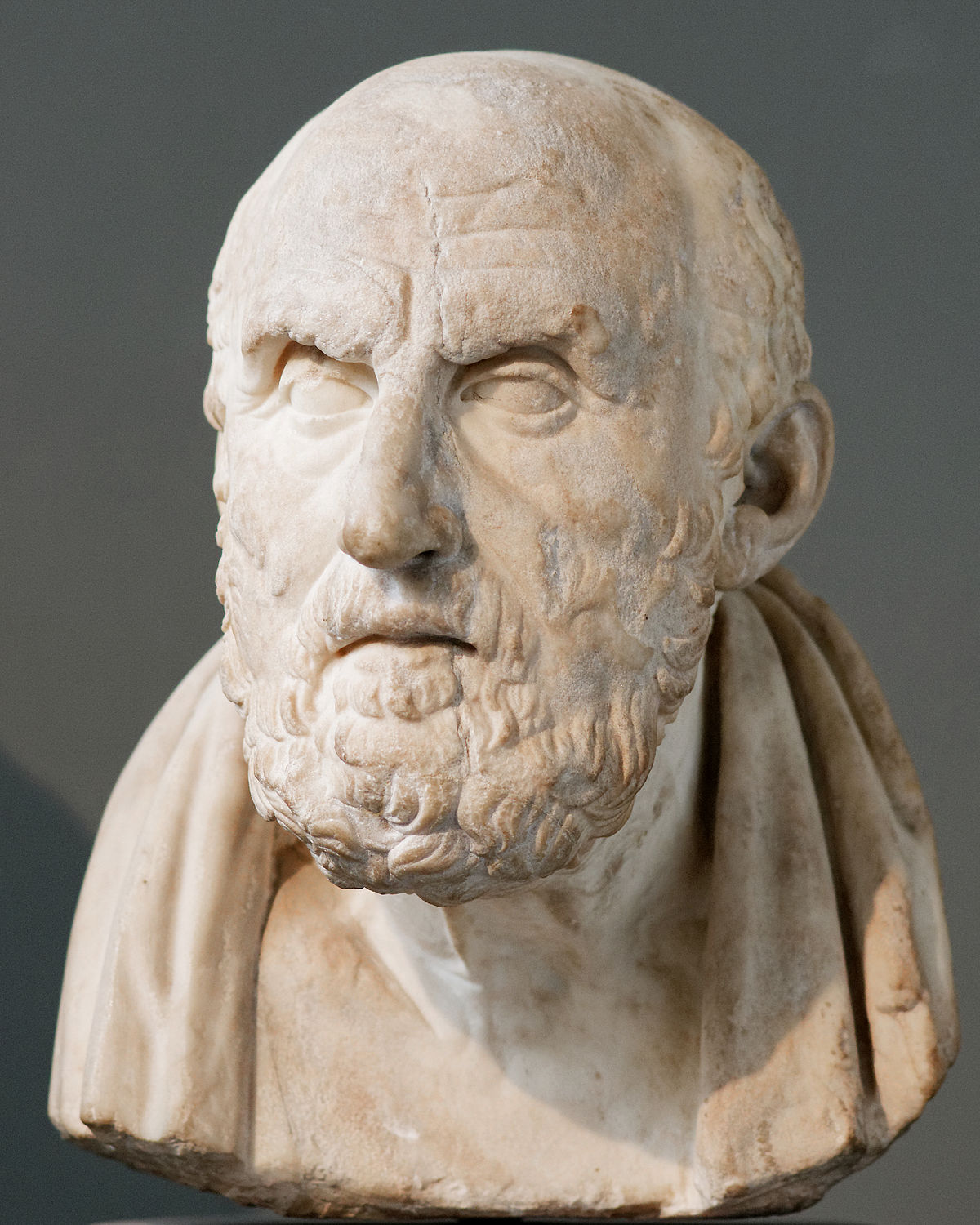
Chrysippus
Greek philosopherWikipedia
205
MENTIONS
46
EPISODES
38
PODCASTS
Search complete. 205 mentions across 46 episodes found for "Chrysippus".
Sep 19, 2026

Bill BoerstNARRATOR
End quote.
Bill BoerstNARRATOR
The last words are worth noting as showing that even with Chrysippus, who has been called the intellectual founder of Stoicism, the whole stress of the philosophy of the porch fell upon its moral teaching.
Bill BoerstNARRATOR
It was a favorite metaphor with the school to compare philosophy to a fertile vineyard or orchard.
Bill BoerstNARRATOR
Ethic was the good fruit, physic the tall plants, and logic the strong wall.
6 MINS LATER
Bill BoerstNARRATOR
Rhetoric and dialectic were thus the two species of logical virtue.
Bill BoerstNARRATOR
Zeno expressed their difference by comparing rhetoric to the palm and dialectic to the fist.
Bill BoerstNARRATOR
Instead of throwing in poetic and grammar with rhetoric, the Stoics subdivided dialectic into the part which dealt with the meaning and the part which dealt with the sound, or as Chrysippus phrased it, concerning significance and significates.
Bill BoerstNARRATOR
under the former came the treatment of the alphabet of the parts of speech of solecism of barbarism of poems of amphibolies of metre and music a list which seems at first sight a little mixed but in which we can recognize the general features of grammar with its departments of phonology accidents and prosody The treatment of solecism and barbarism in grammar corresponded to that of fallacies in logic.

speaker_6NARRATOR
place,
speaker_4NARRATOR
they are unlearned persons, though you may find their houses cramped with plaster casts of Chrysippus.
speaker_4NARRATOR
For their greatest hero is the man who has bought a likeness of Aristotle, or Pythagoras, or bids his shelves preserve an original portrait of Cleanthes.
speaker_4NARRATOR
Men's faces are not to be trusted.

John PetersonNARRATOR
In one word, he keeps watching guard on himself as his own enemy, lying in wait for him.
John PetersonNARRATOR
Chapter 49 When a man prides himself on being able to understand and interpret the books of Chrysippus, say to yourself, If Chrysippus had not written obscurely, this man would have had nothing on which to pride himself.
John PetersonNARRATOR
What is my object? To understand nature and follow her.
John PetersonNARRATOR
I look then for someone who interprets her, and having heard that Chrysippus does, I come to him.
John PetersonNARRATOR
But I do not understand his writings, so I seek an interpreter.
John PetersonNARRATOR
So far there is nothing to be proud of.
John PetersonNARRATOR
But when I have found the interpreter, it remains for me to act on his precepts.
John PetersonNARRATOR
That and that alone is a thing to be proud of.

LambdaNARRATOR
The dialogues entitled Cephalion, the Icthias, the Jactov, the Leopard, the people of Athenians, the Republic.
LambdaNARRATOR
one on moral art, one on wealth, one on love, the Theodorus, the Hypsias, the Aristarchus, one on death, a volume of letters, seven tragedies, the Helen, the Thistis, the Hercules, the Achilles, the Medea, the Chrysippus, and the Oedipus.
LambdaNARRATOR
But Sosicratus, in the first book of his Successions, and Satyrus in the fourth book of his Lives, both assert that none of all these are the genuine compositions of Diogenes, and Satyrus affirms us that the tragedies are the work of Felicicus, the Argentian, a friend of Diogenes.
LambdaNARRATOR
But Sotian, in his seventh book, says that these are the only genuine works of Diogenes, a dialogue on virtue, another on the good, another on love the beggar the solomius the leopard the cassander the cephalion and the aristarchus the cespius the ganymede a volume of apothegms and another of letters are all work of there were five persons of the name of diogenes the first a native of apollyona a natural philosopher and the beginning of his treatise on natural philosophy is as follows It appears to me to be well for everyone who commences any kind of philosophical treatise to lay down some undeniable principle to start with.

speaker_5NARRATOR
place,
speaker_4NARRATOR
they are unlearned persons, though you may find their houses cramped with plaster casts of Chrysippus.
speaker_4NARRATOR
For their greatest hero is the man who has bought a likeness of Aristotle, or Pythagoras, or bids his shelves preserve an original portrait of Cleanthes.
speaker_4NARRATOR
Men's faces are not to be trusted.

Henry HawkHOST
It included an entire theory of reality.
Henry HawkHOST
The school begins with Zeno-Ossidium in the early 3rd century BCE and develops through thinkers including Cleanthes and especially Chrysippus, one of the greatest systematizers of the Stoic philosophy.
Henry HawkHOST
For the Stoics, the cosmos was not dead matter randomly bumping around.
Henry HawkHOST
It was ordered, structured, permeated by an active principle, and pneuma became part of their exploration to that order.

Maria Chiara RobustelliGUEST
About Aristocreon, uh, we know very little.
Maria Chiara RobustelliGUEST
Um, he was the nephew and pupil of Chrysippus, and he is mentioned also in other Pyrrhonian treatises in a list of Chrysippus' students.
Maria Chiara RobustelliGUEST
The-- We know that, uh, um, Chrysippus and Aristocreon were, were, uh, quite close to each other.
Maria Chiara RobustelliGUEST
So, uh, Aristocreon was also the beneficiary of many of Chrysippus' treatises, especially logical and ethical.
Maria Chiara RobustelliGUEST
So the mention of Aristocreon giving, uh, gives us an important chronological clue for, for dating the work.
Maria Chiara RobustelliGUEST
And, uh, we know, uh, for example, that his philosophical activity is generally placed in the very la-late, uh, third century BC, which mean that, uh, the work itself must be contemporary with or a bit later than that period.
Maria Chiara RobustelliGUEST
Uh, so we still don't know, um, whether his name is the subject of the sentence or if the author addressed, uh, directly him.
Maria Chiara RobustelliGUEST
And, um, however, the fact that his name appears in the final columns is, mm, important for suggest that Uh, Aristocreon may have, uh, had a certain importance since he's mentioned in the concluding section of the work.

John PetersonNARRATOR
In one word, he keeps watching guard on himself as his own enemy, lying in wait for him.
John PetersonNARRATOR
Chapter 49 When a man prides himself on being able to understand and interpret the books of Chrysippus, say to yourself, If Chrysippus had not written obscurely, this man would have had nothing on which to pride himself.
John PetersonNARRATOR
What is my object? To understand nature and follow her.
John PetersonNARRATOR
I look then for someone who interprets her, and having heard that Chrysippus does, I come to him.
John PetersonNARRATOR
But I do not understand his writings, so I seek an interpreter.
John PetersonNARRATOR
So far, there is nothing to be proud of.
John PetersonNARRATOR
But when I have found the interpreter, it remains for me to act on his precepts.
John PetersonNARRATOR
That and that alone is a thing to be proud of.

SteveHOST
But how do you actually act? Do you put it into practice or do you just talk about the theory? And we know that later on, Epictetus picks up on this as well.
SteveHOST
He was much more interested in putting things into practice than he was about hearing someone talk about Chrysippus all day long.
DanHOST
Yeah, to a lot of long-time Stoic practitioners, it might sound silly that someone might think that theory is more important than practice or even the equal of practice.
DanHOST
But that is because we approach philosophy as Stoic practitioners as an art of living, where we strive to use our philosophy to help us to make better decisions while trying to improve the world for ourselves and for our fellow humans.

David WalesNARRATOR
Above all, see that the child's nurse speaks correctly.
David WalesNARRATOR
The ideal, according to Chrysippus, would be that she should be a philosopher.
David WalesNARRATOR
Failing that, he desired that the best should be chosen as far as possible.
David WalesNARRATOR
No doubt, the most important point is that they should be of good character, but they should speak correctly as well.
6 MINS LATER
David WalesNARRATOR
Most of them attribute this view to Hesiod; at least such as lived before the time of Aristophanes the grammarian, who was the first to deny that the Hypothetae, in which this opinion is expressed, was the work of that poet.
David WalesNARRATOR
But other authorities, among them Eratosthenes, give the same advice.
David WalesNARRATOR
Those, however, who hold that a child's mind should not be allowed to lie fallow for a moment are wiser; Chrysippus, for instance, though he gives the nurses a three years' reign, still holds the formation of the child's mind on the best principles to be a part of their duties.
David WalesNARRATOR
Why, again, since children are capable of moral training, should they not be capable of literary education? I am well aware that during the whole period of which I am speaking we can expect scarcely the same amount of progress that one year will effect afterwards.
36 more episodes mention Chrysippus.
Create an account to see the whole feed, search across every transcript, and follow the entities you care about.